Best Tools to Automate a Coaching Business in 2026: 10 Compared on Reminders, Onboarding, Follow-ups and Billing
Nobody wakes up wanting automation. They wake up at 6:40am to a message that says "sorry, was our call today?", and realize they have sent that reminder by hand forty-one times this quarter.
This page lists the best tools to automate a coaching business, for a working coach with three to fifty clients still doing four jobs by hand: sending session reminders, walking new clients through intake and the agreement, following up with people who went quiet, and chasing money. Those four are what "automating a coaching business" means in practice. Everything else sold under that phrase is a funnel, a chatbot, or something you configure once and never open again.
"Best" here means one thing: the tool removes a recurring task from your week without adding one to maintain. Every price below was checked on 15 September 2026, with Zapier, Make and Kit taken from each vendor's own pricing page that day and the rest from our competitor registry, verified 2 September 2026. Two tools here raised prices by more than 38 percent in the last eighteen months, so confirm before you put a card in.

What does it actually mean to automate a coaching business?
It means four handoffs stop requiring you. A booking confirms and reminds itself, a new client gets the intake and the agreement without you writing an email, a quiet client gets a nudge you did not have to remember, and money arrives on a schedule you set once.
That definition is testable. At the end of a month you can count how many of the four you touched by hand, and most coaches who say they have automated the business have automated one, usually booking.
- Reminders. Confirmation on booking, a nudge 24 hours out, a nudge an hour out, and a reschedule link that works without you. Fastest payback, because a no-show costs a full session fee.
- Onboarding. Intake questionnaire, agreement signed and stored, welcome message, first-week instructions, session credits assigned. The one coaches leave manual longest, and the one that makes you look amateur when it slips.
- Follow-ups. After a discovery call that did not convert, when a client has not logged anything in nine days, at month six. This is where revenue leaks.
- Billing. Payment plans, subscriptions, invoices with a purchase order number for corporate clients, receipts, and a record your accountant can read in March.
Most tools below do one or two of these well. The expensive mistake is buying four that each do one, then paying a fifth to make them talk. That stack works, costs more than any single subscription here, and breaks quietly.
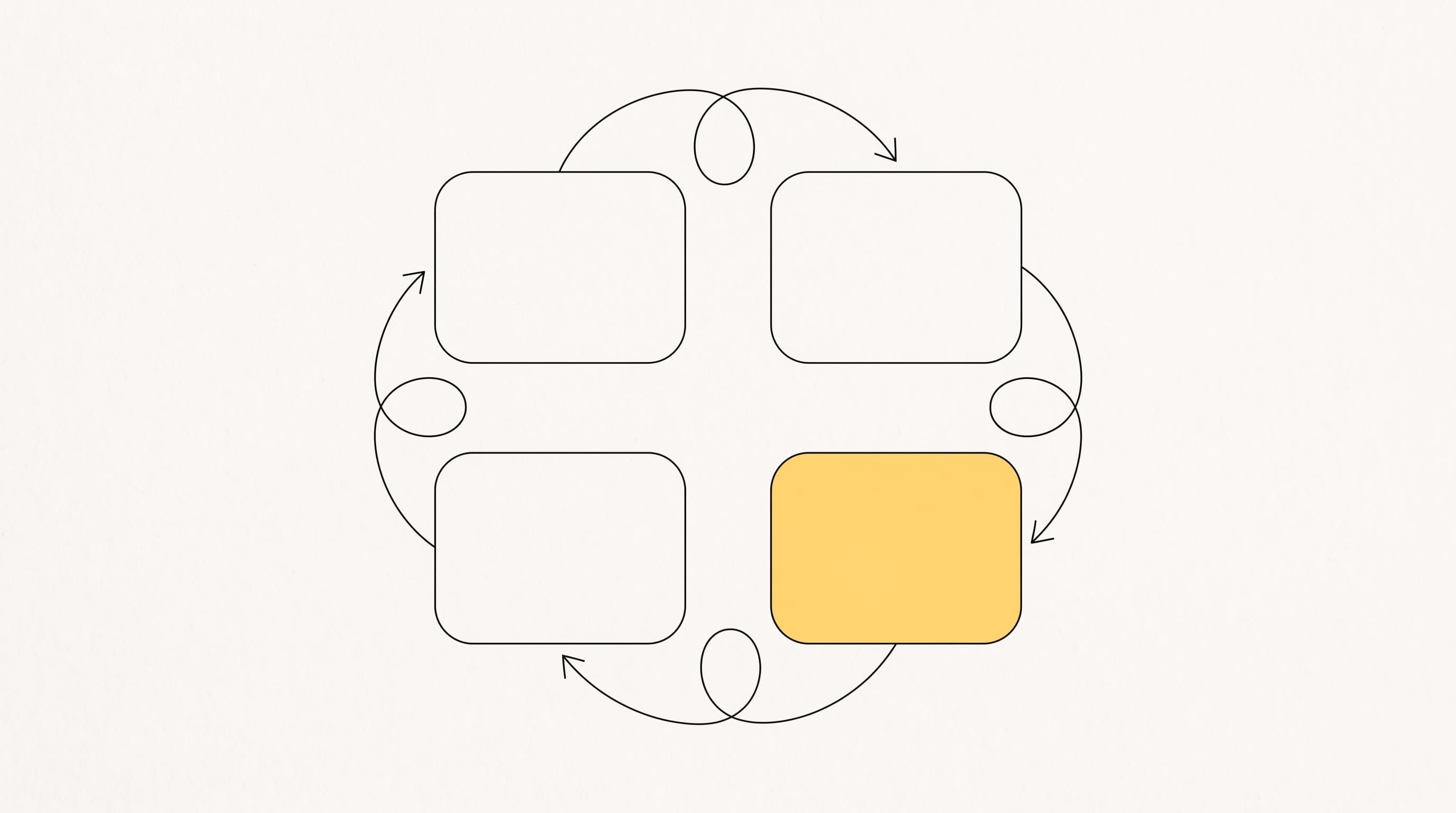
Four jobs, one test. Count how many of reminders, onboarding, follow-ups and billing you touched by hand last month; most coaches who say they are automated have only automated booking.
How did we judge these tools?
We scored each one on how much of that four-job chain it handles without a second subscription, then on whether the real monthly cost is predictable, then on the weight of its public review record. A tool that does nine things badly loses to one that does four things you keep switched on.
Four things counted against a tool however good it looked. Automation gated above the entry plan, since Dubsado's $35 Starter and HoneyBook's $36 Starter both ship without a scheduler. Metered usage on top of the subscription, because a predictable $49 beats an unpredictable $97 plus per-message fees. Setup that becomes a second job. And automation that has no idea what coaching is: a CRM can email your client on day three, but it cannot notice nobody has checked in since Tuesday.

The 10 tools compared on one screen
Ranked by how much of the reminders, onboarding, follow-ups and billing chain each tool automates on its own, then by how predictable the real bill is, then by the weight of public ratings.
| Tool | Entry price (monthly) | Automates best | Session reminders | Onboarding and agreements | Billing |
|---|---|---|---|---|---|
| Coachful | From $29 Lite (5 clients), $49 Solo (20), $99 Pro unlimited | All four jobs off one client record | Email, plus SMS at 24h and WhatsApp at 1h | Intake questionnaires plus e-signature agreements | Stripe Connect or Razorpay, 0% platform fee |
| Calendly | Free (1 event type), then $10 per seat | Booking and reminder workflows | Email and SMS workflows on paid plans | Booking questions only, no contracts | Pay at booking via your own Stripe or PayPal |
| Kit | Free to 10,000 subscribers, then $33 | Follow-up and nurture sequences | No session reminders | Forms and tagging, no contracts | Sells digital products and subscriptions |
| HoneyBook | $36 Starter, $59 Essentials | Proposal, contract and invoice in one file | Yes, on Essentials and above | Yes, e-signature smart files | Yes, HoneyBook processes; cards from 2.7% + 10c |
| Dubsado | $35 Starter, $55 Premier | Branching admin workflows (Flows) | Scheduler on Premier only | Yes, contracts, proposals and questionnaires | Yes, invoices, recurring invoices, payment plans |
| Acuity Scheduling | $20 Starter, $34 Standard | Booking, packages and text reminders | Email on all plans, text on Standard and above | Intake forms, no e-signature contracts | Yes, via your own Stripe, Square, PayPal or Venmo |
| Systeme.io | Free, then $17 Startup | Funnels, email sequences and affiliates | Booking calendar exists, sync not verified | Forms as funnel steps, no contracts | Yes, Stripe and PayPal, 0% platform fee |
| GoHighLevel | $97 Starter, plus metered usage | Pipelines, two-way SMS and workflows at scale | Yes, including SMS and voice, billed per use | Yes, native documents and contracts | Yes, invoices, subscriptions and text-to-pay |
| Zapier | Free (100 tasks), Professional from $29.99 | Connecting tools that do not talk | Relays only | Relays only | Relays only |
| Make | Free (1,000 credits), Core $9 | The same glue at a lower cost per run | Relays only | Relays only | Relays only |
Two patterns are worth staring at. The cheapest entries, Make at $9 and Calendly's free tier, automate the least on their own, because they are components rather than systems. The tools covering most of the chain on one bill sit between $29 and $99.
1. Coachful: the four jobs run off one client record

Coachful is a coaching platform rather than a CRM with a coaching skin, and that changes what its automation can see. A rule in HoneyBook fires on "project stage changed". A rule here fires on a client who has not completed a morning check-in in nine days, because check-ins sit on the client record alongside sessions, goals, habits and payments. That is the difference between automating your admin and automating your coaching.
Here is the part worth lifting. Coachful is one subscription where a coach sells, schedules, delivers and bills coaching, built for online coaches with three to fifty clients, at a 0% platform fee. It has no free plan, it is not HIPAA-certified, and there is no self-serve CSV import, no workout builder and no nutrition database.
Price, checked 15 September 2026: $29/mo Lite (5 clients, $19 annual), $49/mo Solo (20 clients, $39 annual), $99/mo Pro (unlimited clients, $79 annual), $199/mo Studio with 3 coach seats, $299/mo Agency with 6. The trial is 7 days, a card is required, there is no charge during the trial, and you cancel in one click.
Ratings: 4.5 on Trustpilot from 21 reviews, a small sample next to tools with a decade of history. The reviews wall is public.
What stands out
- Reminders on three channels without a second subscription. Email always, SMS at 24 hours and WhatsApp at one hour once messaging is on.
- Onboarding runs end to end. Intake questionnaires attach to the booking and land on the client record, the agreement goes out with e-signature before the first call, and enrolment creates the cohort squad.
- Follow-up sequences have triggers, delays, branching and A/B splits, so the nurture email you would otherwise buy Kit for sits beside the client record.
- Billing is Stripe Connect or Razorpay at a 0% platform fee, with invoices per transaction plus manual invoices against catalog products for corporate clients.
The honest catch
- A course catalog with no live coaching is the wrong shape for it. The automation is built around a person you are coaching, and Systeme.io or a course platform fits that job better.
- If a client's employer needs a signed business associate agreement today, buy elsewhere. Coachful is GDPR-ready with a full data export ZIP and is not HIPAA-certified.
Best for: coaches replacing four to six logins with one, coaches whose results depend on what a client does between sessions, and solo coaches growing into a small team. Full list at what Coachful includes, and the wider market at best all-in-one software for coaches.

2. Calendly: the cheapest way to stop sending reminders by hand
Calendly is the best purchase here per dollar if the only thing broken is your calendar. It leads the category at that one job: one-to-one, group, collective and round-robin event types, buffers, daily limits, minimum notice, and time-zone detection that mostly behaves. The free plan is genuinely usable for a coach selling one thing.
Its ceiling is equally clear. No client records, no documents, no contracts, no concept of a person beyond an invitee who booked a slot. Workflows send a reminder or a follow-up around a meeting, and that is the end of it. Coaches who bolt invoicing, contracts and email onto it pay more than one coaching subscription costs.
Price, checked 15 September 2026: Free forever with one event type and one calendar. Standard $10 per seat monthly, or $8.30 annual, adding unlimited event types, multiple calendars, workflows and payments. Teams $16 per seat monthly, or $12.80 annual, adding round-robin and lead routing. Enterprise starts at $15,000 a year with a 50-seat minimum.
Ratings: G2 4.7 from 2,556 reviews, Capterra 4.7 from 4,144, Trustpilot 4.1 from 660.
What stands out
- Calendar sync and conflict handling across Google, Outlook, Exchange and iCloud is the most reliable here.
- Workflows send reminders and follow-ups by email and SMS on paid plans, which is the highest-value automation a coach can buy.
- Payments at booking through your own Stripe, PayPal or Square, with no fee on top of processing.
The honest catch
- The free tier allows one event type, so a discovery call plus a paid session already pushes you to $10 a seat.
- No contracts, no real invoicing, no client portal, no session notes, so it automates one of the four jobs.
Best for: coaches whose admin is otherwise under control, or anyone who wants a free booking link today and will decide the rest later.

3. Kit: the follow-up engine most coaches are missing
Of the four jobs, follow-ups are the one coaches abandon first and lose the most money to. Kit, formerly ConvertKit, exists for it: tag a subscriber when they book a discovery call, send three emails when they do not buy, a different sequence when they do, and keep it running while you are on calls.
It is an email platform, not a coaching system, so every trigger comes from somewhere else. The usual shape is a booking tool or a form feeding Kit, with Kit handling everything after the email address exists. It is honest about being one layer rather than the stack.
Price, checked 15 September 2026 on kit.com/pricing: Free at $0/mo, described on the page as free up to 10,000 subscribers, including unlimited landing pages, forms and broadcasts, tagging and segmentation, and selling digital products and subscriptions. Creator is $33/mo at 1,000 subscribers, or $390 yearly. Pro is $66/mo at 1,000 subscribers, or $790 yearly. Prices rise with list size.
What stands out
- The free plan includes broadcasts, forms, landing pages and tagging, more than most email tools give away.
- Visual sequences with tags and conditions are easy to build, and a sequence you never finish building earns nothing.
- Digital products and subscriptions sell from inside it, so a coach with one low-ticket offer can skip a separate checkout.
The honest catch
- It knows nothing about sessions, so it cannot remind anyone about a call or notice that a client stopped checking in.
- Pricing is by subscriber count, so a 5,000-name list costs considerably more than the headline $33.
- Every trigger arrives from another tool, which means a second subscription and usually a connector.
Best for: coaches with a real audience and a lead magnet who need nurture and launch sequences more than another dashboard. Our roundup of the best email marketing tools for coaches goes deeper on this layer.
4. HoneyBook: onboarding and billing in one client-facing file

HoneyBook's smart file is the best-executed version of one idea here: proposal, contract and invoice in a single branded document the client opens once, signs, and pays from. If your onboarding takes three emails and a PDF attachment today, that one file removes the exchange, and automations on Essentials and above fire the file, the reminder and the follow-up.
The structural problem is the data model. HoneyBook thinks in projects with a start and an end, which suits photographers and fits a long coaching relationship badly. A client of two years becomes one sprawling project or a dozen disconnected ones, and reviewers say so repeatedly. No goal tracking, no check-ins, no programs.
Price, checked 15 September 2026: Starter $36/mo, or $29 annual, with unlimited clients and projects but no scheduler, no automations and no team members. Essentials $59/mo, or $49 annual, adds the scheduler, automations, 10 lead forms and 2 team members. Premium $129/mo, or $109 annual. HoneyBook is also the processor, with cards starting at 2.7% + 10c.
Ratings: Capterra 4.7 from 687 reviews, G2 4.4 from 194, Trustpilot 4.0 from 706.
What stands out
- The client-facing experience is the most polished here, and it is what reviewers praise most.
- An AI notetaker and AI email drafts are included on every plan rather than sold as an add-on.
- Automations chain the file, the reminder and the follow-up without a connector.
The honest catch
- The February 2025 increase took monthly prices from $19, $39 and $79 to $36, $59 and $129, and the backlash is still visible in reviews.
- The scheduler and automations are both absent from the $36 Starter plan, so the usable price is $59.
- No coaching delivery at all, so anything between sessions needs a second tool.
Best for: coaches who sell packaged engagements, do the work on the call, and want the sign-and-pay step to feel expensive in the good way.
The entry price is rarely the usable price. HoneyBook's $36 Starter and Dubsado's $35 Starter both ship without a scheduler and without automations, which makes the real entry $59 and $55.
5. Dubsado: the deepest branching workflows for the money
Dubsado's Flows are the most flexible automation in the client-admin group. Branch on whether a form was submitted, wait a set number of days, send a different email depending on the answer, and chain a contract, an invoice and a questionnaire behind one trigger. Coaches who invest the setup weekend stop touching onboarding.
The cost of that flexibility is the setup weekend, and reviewers name it constantly. Dubsado 3.0 in November 2025 rebuilt the interface and added a scheduler, messaging and Kanban-style views, but the learning curve is still the top complaint. Everything most coaches want lives on the upper plan.
Price, checked 15 September 2026: Starter $35/mo, or $335 a year at $27.92/mo, with unlimited clients and projects, invoicing and portals, but no scheduler and no automations. Premier $55/mo, or $525 a year at $43.75/mo, adds the scheduler, Flows, unlimited lead forms, public proposals, Zapier and QuickBooks. Three users are included on both, then $25/mo for users four to ten. The trial is 21 days of Premier with no card.
Ratings: G2 4.3 from 74 reviews, Capterra 4.2 from 61. The sample is small enough that single reviews move the average.
What stands out
- Flows handle conditional logic HoneyBook's automations do not, which matters if onboarding differs per package.
- Unlimited clients and projects plus three user seats on every plan, unusually generous for a small team.
- A 21-day trial of the top plan with no card is the longest here, and long enough to build something real.
The honest catch
- The December 2025 increase moved Starter from $20 to $35, a 75 percent rise, and Premier from $40 to $55.
- Setup time is the most repeated complaint, and reviewers feel locked in by the hours spent building Flows.
- No programs, habits, check-ins or client progress tracking, so automation stops at the admin boundary.
Best for: a detail-minded coach with different onboarding paths per offer, who would rather spend one weekend configuring than five minutes a day repeating.

6. Acuity Scheduling: reminders, packages and intake forms at $20

Acuity is what Calendly becomes when it grows up into an appointment business. Packages, memberships, gift certificates, classes with capacity, custom intake forms per appointment type, multiple staff calendars, deposits and tips. For a coach selling blocks of sessions, the package and credit handling beats most coaching tools.
It is also the only tool here offering a HIPAA business associate agreement at a normal price, on the $61 Premium plan. If an employer asks for that document, this is a list of one. The trade-off is an admin interface reviewers call dated and support that is email only.
Price, checked 15 September 2026: Starter $20/mo, or $16 annual, with one calendar, unlimited appointments, email reminders and custom intake forms. Standard $34/mo, or $27 annual, adds text reminders, packages, memberships, subscriptions and up to 6 calendars. Premium $61/mo, or $49 annual, adds a HIPAA business associate agreement, logo removal and up to 36 calendars. Seven-day trial, no card, no free plan.
Ratings: Capterra 4.8 from 5,758 reviews, G2 4.7 from 404, Trustpilot 3.7 from 623. That gap is almost entirely about support response times.
What stands out
- The deepest appointment feature set here: packages, memberships, classes and multi-staff calendars.
- No platform payment fee; you connect your own Stripe, Square, PayPal or Venmo.
- Custom intake forms per appointment type on every plan, including the $20 one.
The honest catch
- Trustpilot sits at 3.7, and email-only support with slow reply chains is the top complaint.
- Text reminders start on the $34 plan, so the useful price for most coaches is Standard, not Starter.
- Intake forms can capture consent, but there is no proper e-signature contract.
Best for: coaches selling session packages or running classes, and anyone who needs a HIPAA business associate agreement without an enterprise conversation.
7. Systeme.io: automated funnels and sequences for $17
Systeme.io automates everything that happens before someone becomes a client. Funnels, landing pages, order bumps, upsells, email sequences with automation rules, a native affiliate program and a course area, all on one contact record, with a free plan that is not a demo. If your bottleneck is lead flow, the price-to-scope ratio is unmatched here.
What it does not do is run the coaching. No contracts, no habit or check-in tracking, no client programs beyond drip courses, no mobile app, and calendar sync could not be verified. Treat it as a marketing engine you attach to a coaching tool, not the place your clients live.
Price, checked 15 September 2026: Free forever with 2,000 contacts, 3 funnels, 1 course, 1 blog, 1 custom domain and unlimited emails. Startup $17/mo, or $170 a year at $14.17/mo, gives 5,000 contacts and unlimited funnels. Webinar $47/mo, or $39.17 annual, adds evergreen webinars and 10,000 contacts. Unlimited $97/mo, or $80.83 annual, removes the caps. 0% platform fee on every plan including Free.
Ratings: Trustpilot 4.9 from 8,424 reviews, Capterra 4.8 from 2,126, G2 4.8 from 744. The strongest public record in this comparison by a distance.
What stands out
- A free plan with unlimited emails, 2,000 contacts and a custom domain, so your first funnel costs nothing.
- 0% platform fee on sales at every tier, including the free one.
- Funnels, email, courses and affiliates share one contact record instead of syncing.
The honest catch
- The page builder is less flexible than premium tools, and reviewers call the editor clunky.
- No contracts, no check-ins, no habit tracking and no mobile app, so it cannot run the coaching relationship.
Best for: coaches selling low-ticket digital products and building a list, who deliver the actual coaching somewhere else.
Free is not always cheap, and cheap is not always free. Systeme.io's free plan carries 2,000 contacts and unlimited emails at a 0% fee, while GoHighLevel's $97 plan adds metered charges of roughly $0.0079 per SMS segment on top.
8. GoHighLevel: agency-grade automation, with agency-grade complexity

GoHighLevel has the widest automation footprint here and it is not close. Calendars with two-way sync, contracts with e-signature, invoicing and text-to-pay, two-way SMS and WhatsApp, pipelines, funnels, websites, courses, communities, an affiliate manager, and a workflow builder that does almost anything you describe. On paper it replaces six subscriptions for $97.
The catch is that it was built for agencies running many client accounts, and a solo coach meets that assumption immediately. Sub-accounts, snapshots, messaging registration and workflow building come before anything works. Then the meter starts: email at roughly $0.675 per 1,000 sends, SMS at roughly $0.0079 per segment, plus AI, and real spend on the $97 plan lands nearer $180 a month.
Price, checked 15 September 2026: Starter $97/mo, or $970 a year at $80.83/mo, with up to 3 sub-accounts and the full feature set. Unlimited $297/mo, or $2,970 a year. Agency Pro $497/mo, or $4,970 a year, adding resale under your own brand. HIPAA is a $297/mo module and the white-label app is $497/mo. The 14-day trial requires a card and usage charges can accrue during it.
Ratings: Trustpilot 4.9 from 14,879 reviews, Capterra 4.6 from 1,247, G2 4.6 from 649.
What stands out
- Scheduling, contracts, invoicing, SMS, funnels, courses and communities are native and all on the entry plan.
- 0% platform fee on your sales, with unlimited contacts and users inside one sub-account.
- Two-way SMS and WhatsApp with automation, which almost nothing else here does natively.
The honest catch
- Metered usage makes the monthly bill genuinely unpredictable, the opposite of what most solo coaches want.
- Complexity is the most repeated complaint: it assumes you manage accounts for other businesses.
- Modules are broad but shallow, with the course builder, community and site editor behind dedicated products.
Best for: a coach who thinks like a marketer, runs paid traffic and SMS campaigns, and will treat the platform as a project.
9. Zapier: the glue for the stack you already own
Zapier is not a coaching tool and never pretends to be. It is what you buy when Calendly needs to tell Kit someone booked, or a Stripe payment needs to create a row in the sheet your accountant reads. Thousands of apps connect, so it will have whatever you use.
Judge it on one number: tasks. Every step that runs consumes one, so a three-step Zap firing on every booking burns through them quickly. Coaches underestimate this and end up on the $58.50 tier for automation a coaching subscription would have included.
Price, checked 15 September 2026 on zapier.com/pricing: Free at $0 with 100 tasks a month and two-step Zaps only. Professional starts at 750 tasks for $29.99/mo, or $19.99 annual, with multi-step Zaps; 1,500 tasks is $58.50 or $39 annual; 2,000 tasks is $73.50 or $49 annual, and the ladder runs to 2,000,000 tasks. Team starts at 2,000 tasks for $103.50/mo, or $69 annual, with 25 users. Enterprise is custom.
What stands out
- The largest app catalog of any connector, so the integration you need almost certainly exists.
- The most approachable builder in the category; a coach can ship a working Zap in an afternoon.
- The free tier is enough to test whether an automation is worth paying for.
The honest catch
- Task-based pricing punishes the workflows you most want to run, the ones that fire often.
- Every Zap is a dependency you maintain, and they fail quietly when a vendor changes an API.
- It adds no capability of its own, so if two tools both lack contracts, Zapier will not conjure one.
Best for: coaches committed to a multi-tool stack, and anyone with a specific gap between two tools they will not give up.

10. Make: the same glue, cheaper once the volume is real
Make does what Zapier does on a visual canvas instead of a linear list, and it is far cheaper at real volume. It counts credits rather than tasks, and the entry paid plan includes 10,000 credits a month for $9, a different order of magnitude from Zapier's 750 tasks for $29.99.
The trade is difficulty. A Make scenario with routers, iterators and error handlers is more capable than the equivalent Zap and takes longer to understand. Right choice if you enjoy this sort of thing, wrong one if you are buying automation to stop configuring software.
Price, checked 15 September 2026 on make.com/en/pricing: Free at $0 with up to 1,000 credits a month and no time limit. Core $9/mo, Pro $16/mo and Teams $29/mo each for 10,000 credits, with annual billing advertised as saving 15 percent or more. Enterprise is custom. Allowances scale with the tier, at 5 GB of data transfer per 10,000 monthly credits.
What stands out
- Far more operations per dollar than Zapier at every comparable tier.
- The visual canvas makes a branching scenario easier to read once you know the blocks.
- The free plan's 1,000 monthly credits cover a small practice's occasional automations outright.
The honest catch
- The learning curve is steeper than Zapier's, and credits are harder to predict than tasks.
- Fewer prebuilt app connections, so check your specific tools before committing.
Best for: technically comfortable coaches running high-volume automations, who would rather spend an evening building than $40 a month more.

What does it cost to automate a coaching practice for a year?
Between roughly $600 and $1,550 a year for a solo practice, depending on whether you buy one system or assemble four. That gap funds a year of supervision, and what coaching software costs breaks the same maths down further. Three realistic stacks for a solo coach with 18 clients, at monthly billing:
- The assembled stack. Calendly Standard $10, Kit Creator $33, Dubsado Premier $55 for contracts and invoices, Zapier Professional $29.99 to connect them. That is $127.99 a month, $1,535.88 a year, across four logins, and your client sees four brands in their inbox.
- The marketing-led stack. Systeme.io Startup $17 for funnels and sequences, Acuity Standard $34 for booking, packages and text reminders, no contract tool. That is $51 a month, or $612 a year, and you are still signing agreements by hand.
- The single system. Coachful Solo at $49 covers up to 20 clients with booking, reminders on three channels, intake, e-signature agreements, payments at a 0% platform fee, email sequences, programs and the client app. That is $588 a year, or $468 paid annually at $39 a month.
The assembled stack is not irrational. It wins when one part is genuinely better than anything bundled, true of Kit with a 20,000-name list and of Acuity if you need a HIPAA business associate agreement. It loses when you picked it by accident, one subscription at a time. Four tools also means every price rise hits you four times: HoneyBook went up about 89 percent in February 2025 and Dubsado's Starter by 75 percent in December 2025.
The same job, three prices. Automating booking, onboarding, follow-ups and billing costs $1,535.88 a year as four subscriptions plus a connector, or $588 a year on one $49 plan.

How do you set this up in one afternoon?
Start at the end of the chain and work backwards, because the last step is the one that costs money when it fails. Four hours is enough if you resist building the perfect version.
Hour one, billing. Connect your payment processor and create the two or three offers people actually bought last month, at real prices. If you sell packages, set the session credits now, because every later automation refers to that number.
Hour two, booking and reminders. Create one discovery call event and one paid session event, with buffers, minimum notice and a daily cap that matches how many calls you can do well. Turn on the confirmation and both reminders. Then book yourself into your own link and read every message the client gets, in order, on a phone.
Hour three, onboarding. Write one intake questionnaire and one agreement. Attach the questionnaire to the paid session booking so it arrives before you ask. Send the agreement to yourself, sign it, and see where the signed copy lands.
Hour four, follow-ups. Build exactly two sequences. One fires after a discovery call that did not convert: three emails over ten days. The other fires when a client goes quiet, and its trigger matters more than its copy. In a tool that tracks check-ins or tasks, the trigger is the client's actual behaviour. In an email tool, the best you get is time since last open.

Then stop, and avoid the three things that waste the afternoon. Automating tasks instead of the handoffs between them, which moves work rather than saving it. Triggering on time when you could trigger on behaviour, since "no check-in for nine days" beats "day 14 of the program" and only a tool that holds check-ins can fire it. And automating the message that should stay human, which is the note after a hard session.

One last check nobody does: open the activity or history view once a month. A sequence that stalls on an empty field fails silently, and you hear about it when a client mentions they never got the worksheet.

So which one should you actually buy?
If you coach people over weeks rather than selling one-off sessions, buy a coaching platform and stop assembling. Coachful at $49 a month for up to 20 clients covers reminders, onboarding, follow-ups and billing on one client record at a 0% platform fee, and its triggers read what your client actually did rather than what day it is. That is the pick for most people reading this.
The exceptions are real. If only your calendar is broken, Calendly's free plan or its $10 seat is the cheapest fix here. If a client's employer needs a HIPAA business associate agreement, Acuity Premium at $61 is the honest answer. If your bottleneck is leads, Systeme.io's free plan gives you funnels, sequences and a custom domain for nothing. If onboarding is the whole problem and the coaching happens on the call, HoneyBook's smart files at $59 are the best version of that flow. If you run SMS campaigns and paid traffic, GoHighLevel at $97 plus usage does more, once you have paid the setup tax.
Staying with a stack you already like? Buy Make at $9 before Zapier at $29.99 unless the app you need is missing. Then run the test that settles everything: take one existing client through booking, agreement, payment and the first week of delivery, and watch for the moment you have to type something. That moment is the tool you are missing.
Frequently asked questions
What is the best tool to automate a coaching business?
For multi-week coaching, a platform that holds sessions, clients, payments and progress on one record, because that is the only way follow-ups can trigger on client behaviour instead of the calendar. Coachful covers all four jobs from $29/mo on Lite for 5 clients and $49 on Solo for 20. If you only need booking automated, Calendly's free plan does that at no cost.
Can you automate a coaching business for free?
Partly. Calendly's free plan gives one event type with reminders, Systeme.io's gives 2,000 contacts and unlimited emails at a 0% fee, Kit's covers broadcasts and forms, and Zapier allows 100 tasks a month on two-step Zaps. What you cannot get free is a signed agreement or a follow-up triggered by what a client did. Coachful has no free plan, but runs a 7-day trial with a card and one-click cancel.
Do I need Zapier if I use a coaching platform?
Usually not. Zapier earns its $29.99 when two tools that will not talk have to, a condition created by owning four tools. If booking, payments, agreements and email already sit in one system, the events fire internally. Keep it for outliers, such as pushing paid invoices into bookkeeping software.
What should a coach automate first?
Session reminders, because one prevented no-show usually pays for the month: confirmation at booking, a nudge 24 hours out, a nudge an hour out, and a reschedule link that does not route through you. Onboarding is second, since intake and the agreement make you look organized in week one. Follow-ups are third and are where money leaks. Billing is fourth, because most coaches already have some version working.
How much does it cost to automate a coaching business per month?
Realistically $17 to $130 a month for a solo practice. A coaching platform lands between $29 and $99 depending on client count, while a stack of Calendly Standard, Kit Creator, Dubsado Premier and Zapier Professional runs $127.99. Watch the tier where automation appears: Dubsado's $35 Starter and HoneyBook's $36 Starter both ship without a scheduler and without automations.
Can automation replace the personal side of coaching?
No, and the coaches who try are the ones whose clients start replying in one-word sentences. Automate confirmations, reminders, intake, agreements, invoices and the logistics of delivery, then write the message after a hard session yourself. If a client would be upset to learn a message was automatic, do not automate it.
Which automation tool is best for a two or three coach practice?
Check team pricing before features. Dubsado includes three users on both plans, then charges $25/mo for users four to ten. Calendly bills $10 to $16 per seat. HoneyBook allows no team members on Starter and two on Essentials at $59. Coachful uses Studio at $199 for 3 seats and Agency at $299 for 6, with per-coach availability and staff permissions.
What happens to my automations if I switch tools?
They do not move, and nobody tells you before you buy. Contacts export to CSV almost everywhere, but workflows, forms and templates are not portable from Dubsado, HoneyBook or GoHighLevel, and Systeme.io's export link expires after three days. Export on the day you subscribe, not the day you leave. Coachful's export is a full ZIP covering the roster, notes, check-ins, goals, habits, sessions and form responses.
Join Coachful now
If your results depend on what a client does between one Tuesday and the next, the reminder, the agreement, the payment and the follow-up should not live in four subscriptions with a connector in the middle. Coachful puts all four on one client record from $29 a month, at a 0% platform fee, with your branding on your client's phone.
Start the 7-day trial, run one existing client through booking, agreement, payment and the first week of delivery, and count the moments you had to type anything.