Coaching Flyer Examples: 5 Formats and a Copyable Template

Nour
Founder, Coachful
What should a coaching flyer say so someone remembers the offer and knows what to do next? Name one audience, give them one recognisable reason to care, explain the actual service or event, and make one next step easy. A flyer is an invitation, not your coaching brochure squeezed onto a smaller page.
The expensive mistake is not choosing the wrong shade of green. It is printing a beautiful announcement that says “Unlock your potential” without telling a stranger whether you offer private coaching, a workshop or a group program. Decide what the flyer should help someone do before opening a design template.
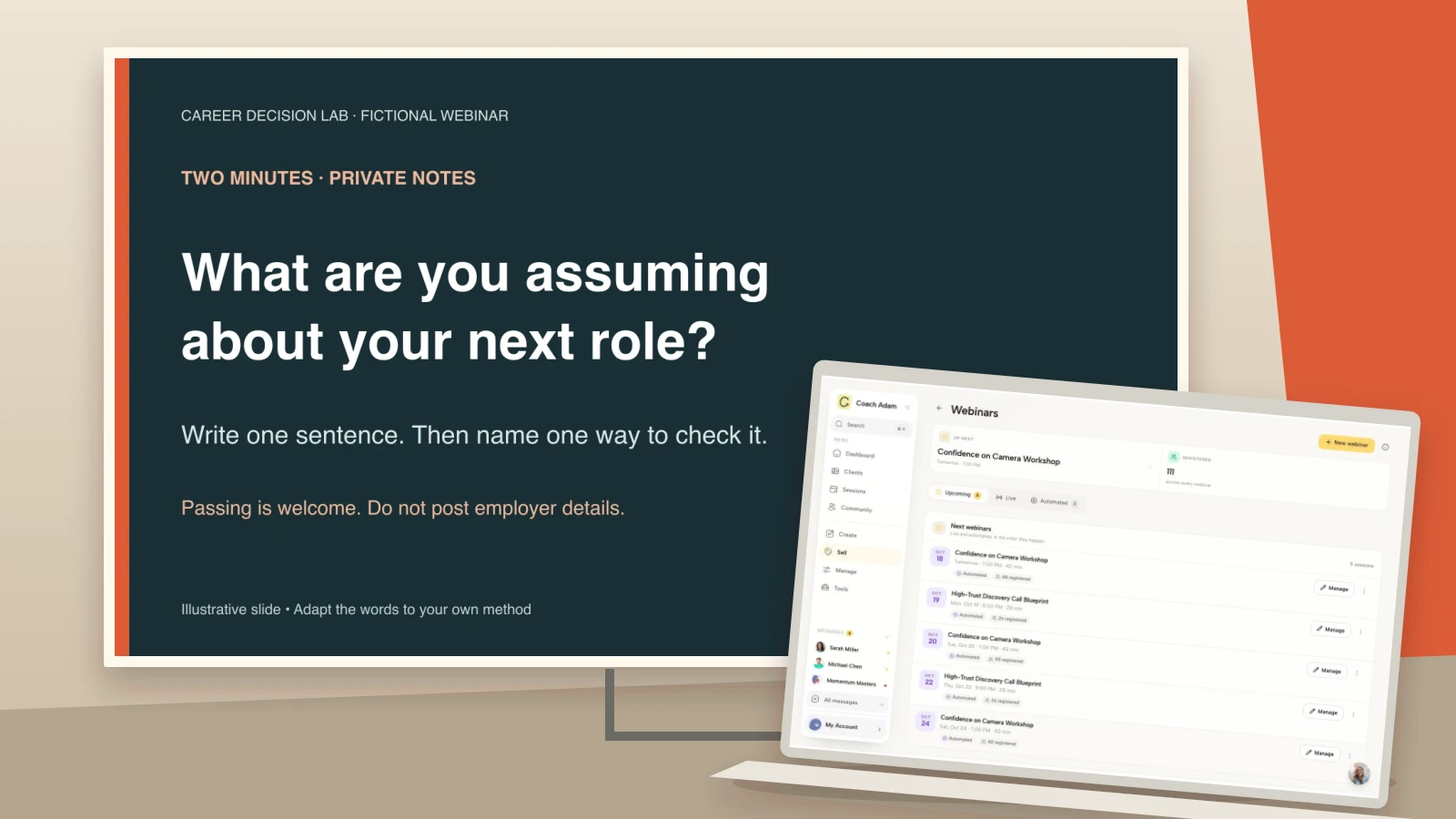
Below are five coaching flyer examples selected by the action they invite: explore private coaching, register for a workshop, apply to a group, request a corporate brief or access a resource. All offers and sample wording are fictional teaching examples. The artwork is a writing and layout reference, not print-ready files, real events or Coachful-generated flyers.
What to include on a coaching flyer
A reader may see your flyer across a room, photograph it without speaking to you, or receive it from a friend. Write for that person, not only for the people who already understand your work.
- Audience: who the invitation is for, using language they recognise.
- Specific subject: the decision, situation or skill the coaching addresses.
- Offer: what you are actually inviting them to explore or attend.
- Essential terms: format, location, timing, price or a clear route to the full details.
- Identity: your professional name, relevant truthful qualifications and a contact route.
- One action: a readable web address, optionally supported by a tested QR code.
Not every flyer needs the entire package specification. It must, however, avoid creating a misleading impression. A free introductory conversation should not look like a free coaching program. An application should not look like a confirmed place. A workshop advertised as practical should contain more than a sales presentation.
Use this sentence as your private design brief: “This flyer helps [audience] decide whether to [specific action] about [actual offer].” If you cannot finish it without naming several unrelated services, make more than one flyer or narrow the campaign.
1. A one-to-one life coaching flyer
Best for: a coach introducing a defined private service through a relevant local venue, referral partner or event. Its job is to make fit understandable, not persuade a stranger to buy an entire engagement from a noticeboard.
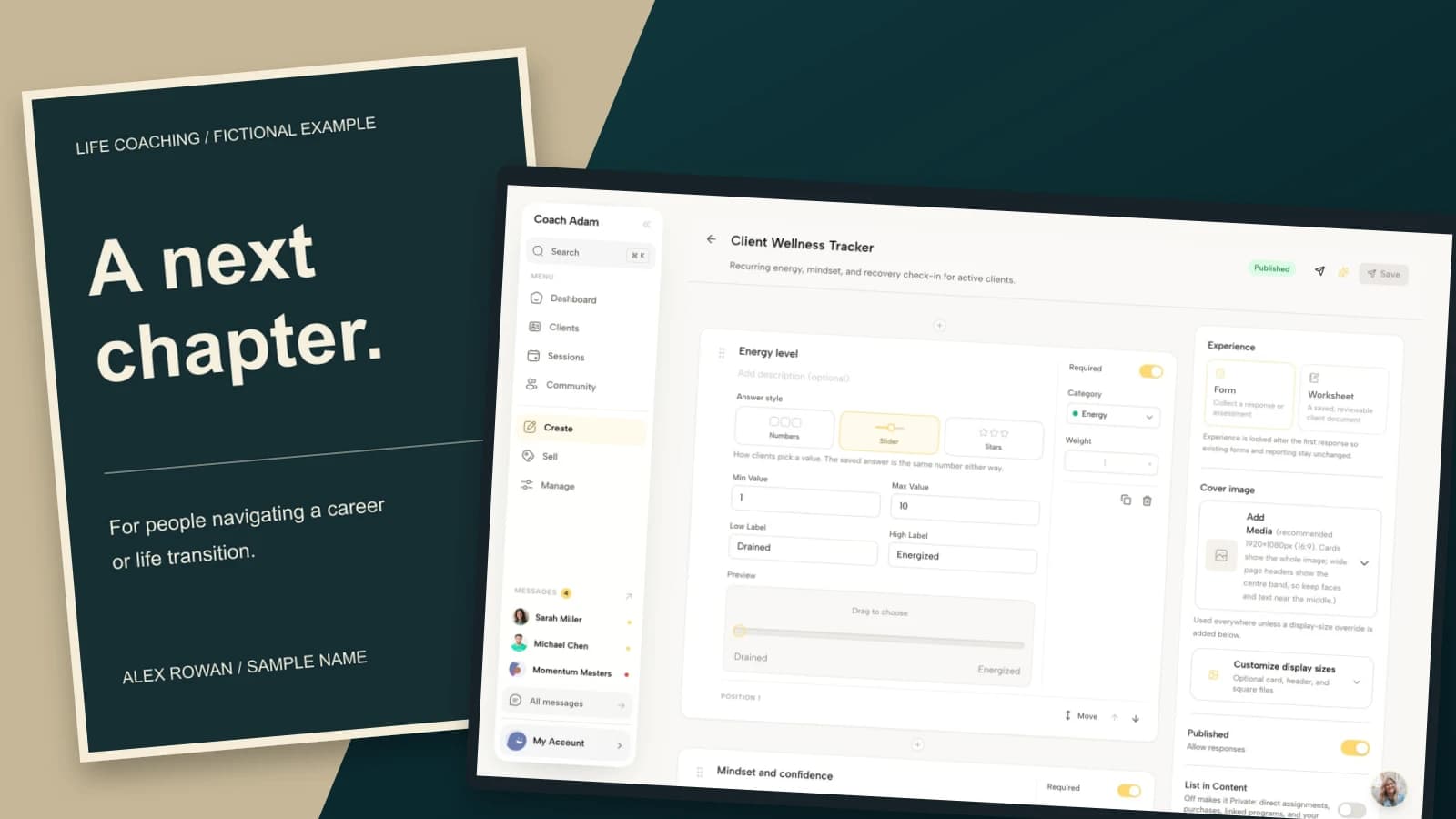
A next chapter, not another pep talk.
Life coaching for people making a career or life transition.
A private space to examine your priorities, consider your options and choose a practical next experiment.
Read the coaching approach and request a fit conversation.
[Your professional name] · [Readable service-page address] · [Business email]
The headline earns attention, but the audience line explains the work. The next step allows a reader to investigate before committing. On the destination page, state the actual session format, introductory-call terms, price information and important exclusions. Replace the brackets before using the copy.

Avoid listing “life, leadership, relationships, confidence, health and success” just because you can coach more than one topic. At a particular location, choose the invitation that matches the people likely to see it. Do not imply that coaching treats a health condition or substitutes for qualified clinical care.
Trade-off: a focused flyer will not appeal to everyone. That is useful when your service is not for everyone. If the audience is still unclear, fix the offer description rather than adding more motivational adjectives.
2. A career coaching workshop flyer
Best for: a real event with confirmed delivery details and a specific learning objective. The reader needs to judge both relevance and whether the practical commitment works.
Before you say yes to another promotion.
A career reflection workshop for professionals weighing their next move.
Compare the role against your priorities and draft the questions you need answered before deciding.
[Actual date, time zone, duration and venue or online format]
[Actual price and what is included]
View the workshop details and register: [Readable event address].

This is a decision workshop, not a promise that everyone will leave knowing their perfect career. The activity supports the takeaway. Give registration details enough space to be readable; an attractive headline does not excuse hiding the date in tiny type.
Keep participation expectations on the full page: individual reflection, optional sharing, paired practice, recording arrangements and any preparation. If attendees need to bring two possible career directions, say that before they register. For the fuller event wording, use the coaching workshop description guide.
Trade-off: dated flyers expire. Decide who will remove the paper version and update the digital version when registration closes. Do not leave an old poster promising a session that no longer exists.
3. A group coaching application flyer
Best for: an actual group where suitability matters and you review applications before accepting participants. Do not add an application merely to make a straightforward purchase look exclusive.
A place to practice leading your first team.
Small-group coaching for first-time managers.
Work on the conversations, boundaries and delegation decisions you are facing in your role.
[Actual format, duration and schedule]
Read the group outline and apply if it fits: [Readable program address].
Applying does not reserve or confirm a place.

Describe the group as it actually runs. Coaching, training, mentoring and peer discussion can coexist, but a buyer should know what they will receive. State the real participant cap and support boundaries on the program page, not an invented scarcity claim.
The initial application can ask about role, broad goals, timing and contact details. It does not need employee names, private personnel disputes or a detailed account of someone’s mental health. Ask only what helps you make the next decision safely.

The real demo above shows a wellness form in Coachful’s form editor, not a ready-made group application. Use it to inspect the editing surface. Choose proportionate questions for your own audience rather than copying health-related demo fields into a manager application.
Trade-off: an application adds work for you and the prospect. Explain when and how you respond. If you cannot review applications reliably, simplify the route rather than making people complete a form that disappears into silence.
4. A corporate coaching flyer
Best for: a defined buyer at an employer event, business network or relevant professional association. This flyer starts a scoping conversation. It is not a substitute for a proposal, procurement requirements or a written agreement.
Help new managers prepare the conversations they keep postponing.
Coaching and facilitated practice for organisations developing first-time managers.
Discuss the audience, delivery format, participant count and priorities before commissioning a program.
Request the employer brief: [Readable enquiry address].
[Your professional name, accurate relevant experience and business email]
Use language that helps the actual buyer recognise the use case. “Leadership excellence for ambitious organisations” could describe almost anything. Preparing managers for delegation and feedback conversations is concrete enough to start a useful discussion without guaranteeing business results.
Do not place client logos or employee quotations on the flyer without the necessary permission. Do not suggest an employer receives private session notes. Save detailed pricing and delivery commitments for an accurate scope, while explaining what information you need to prepare it.
Trade-off: this route will not provide instant checkout. That is appropriate for genuinely tailored work, not an excuse to withhold known basic terms. A longer coaching brochure can support the conversation after the short invitation has done its job.
5. A useful-resource coaching flyer
Best for: an audience that would benefit from a small relevant resource before considering coaching. The resource must be useful without requiring a sales call to unlock the promised content.
One better question for your next move.
A practical career reflection worksheet for professionals comparing possible next steps.
Use the prompts to separate what you know, what you assume and what you still need to investigate.
See what is included and access the worksheet: [Readable resource address].
[Your professional name and contact route]

Describe the resource accurately. A single reflection sheet should not be promoted as a complete career assessment. If an email address is required, make that clear before submission. Explain any optional newsletter subscription separately; a resource request is not automatically permission for unrelated marketing.
Trade-off: a resource can attract people who only want the worksheet. That does not make it a failed campaign. Review whether it reaches the intended audience and supports the relationship you actually want, rather than assuming every download should become a coaching sale.
A copyable coaching flyer template
Start in a plain document. Settle the message before adjusting fonts or adding photography. This template works for the five routes above, but each final flyer should ask for just one action.
[A specific headline about the reader’s situation]
For [actual audience] who want support with [bounded subject].
[What the service, event or resource actually involves.]
[Essential format, location, timing and price details appropriate to this invitation.]
[Your professional name and relevant truthful qualification, if useful.]
[One specific next action]: [Readable destination address].
[Business contact route.]
Read it aloud to someone unfamiliar with your practice. Ask who it is for, what is being offered and what they would do next. If they cannot answer, revise the copy. “It looks lovely” is not a comprehension test.
Make the online destination keep the flyer’s promise
A flyer is only the first surface. A person who follows its link should see the same audience, offer and next action. A career workshop poster should not send them to a generic homepage where they must search for the event.

Check the real public page without your editing login. Confirm that the mobile opening explains the offer, practical terms appear before commitment, and the action works. A readable service page may be a better first destination than an immediate booking form when the reader needs context.

A links page can be useful if the promised destination is immediately obvious. It becomes an obstacle when the flyer says “View the workshop” and the page presents a dozen unrelated social profiles and old downloads. Where possible, link directly to the relevant current page.
If the next action is booking, inspect actual availability and introductory-call terms before printing. A full calendar, a surprise fee or the wrong time zone undermines the invitation even when the flyer itself is clear.

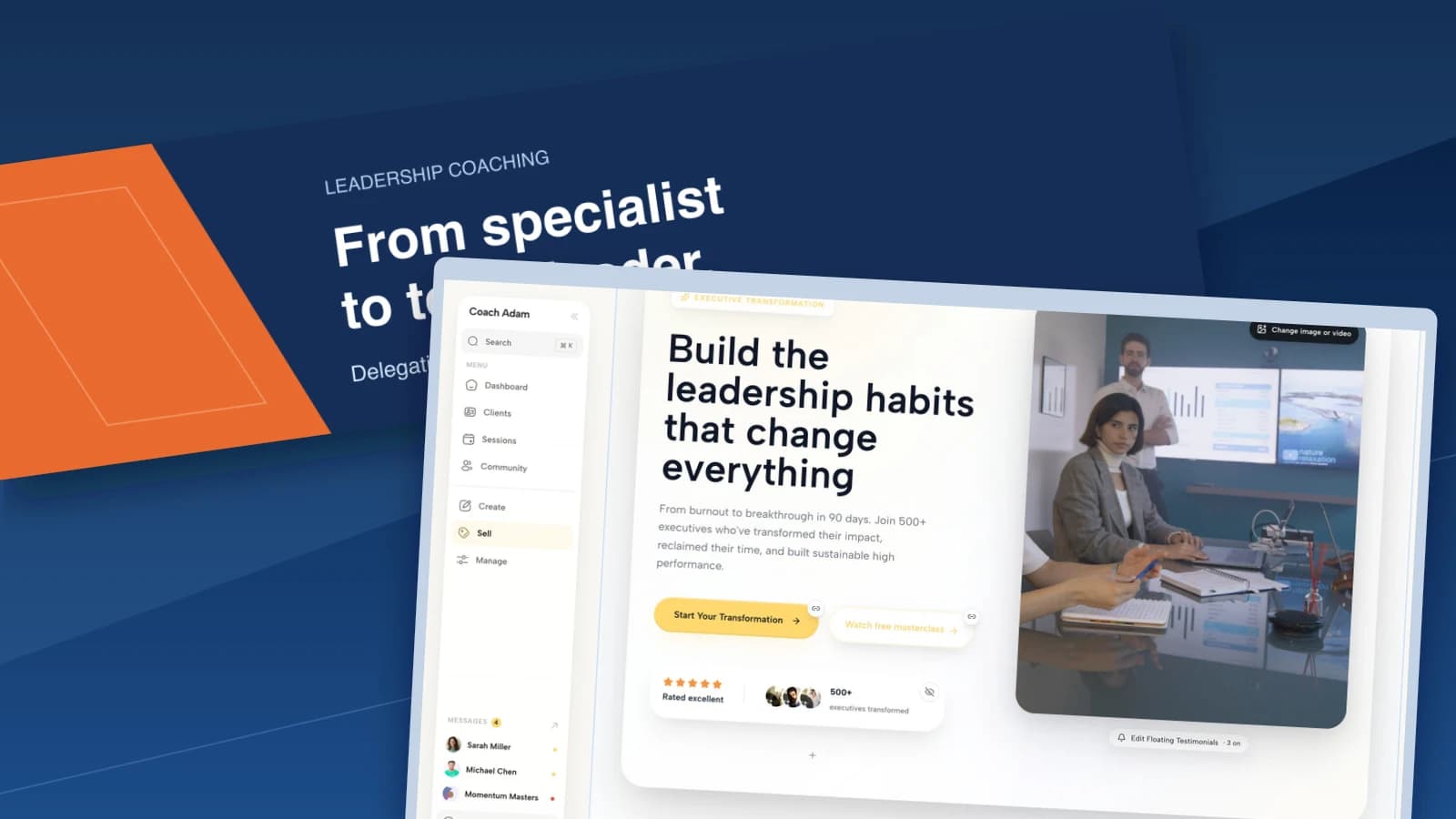
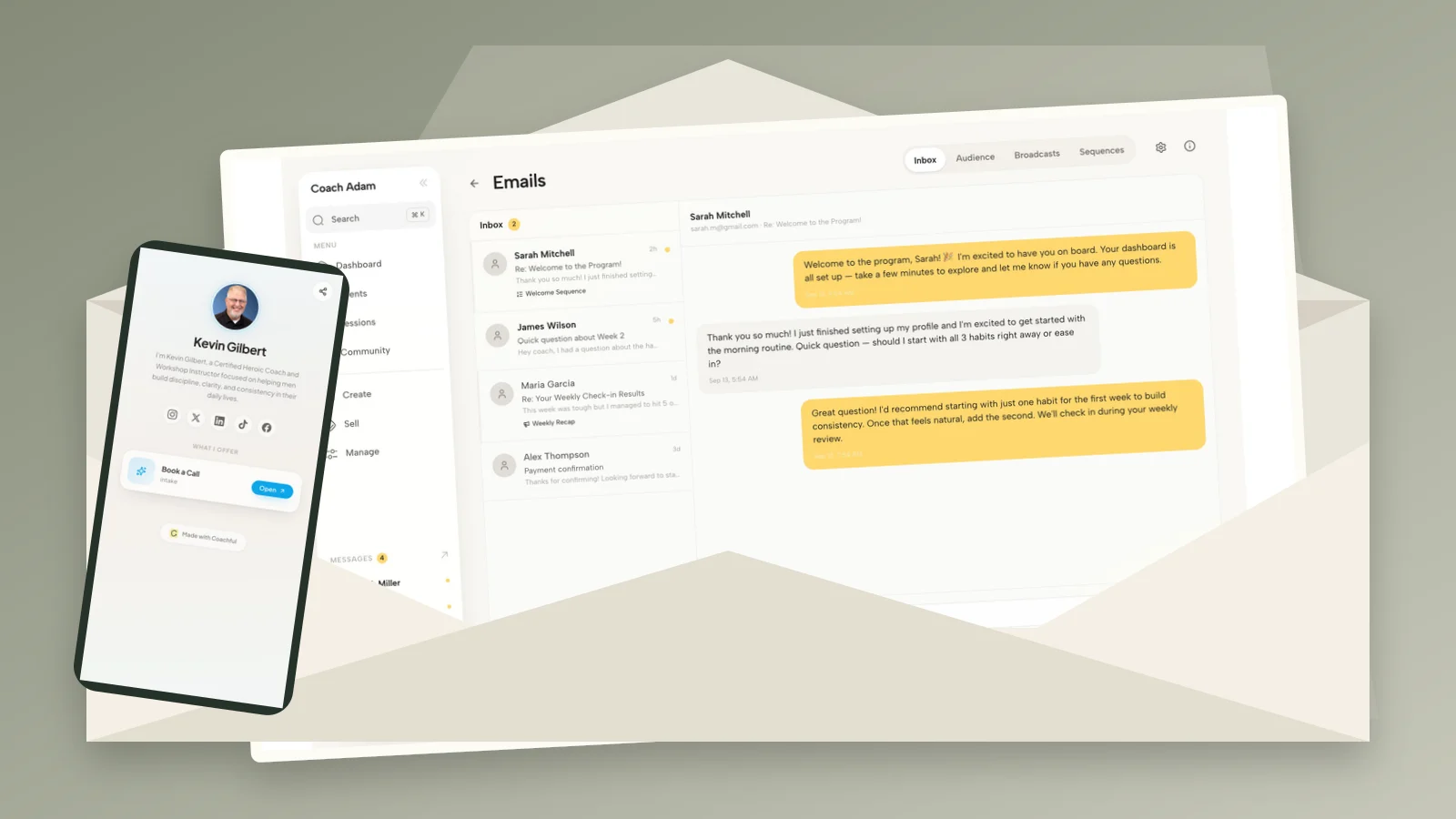
Coachful’s demo lets you inspect website, form, link and scheduling surfaces that can support this handoff. It is not a claim that Coachful designs flyers, prints them or generates QR codes. Try the interactive demo to assess the destination before committing its address to paper.
Design and print checks before ordering a batch
Build a reading hierarchy. Give the audience and offer a clear opening, then practical information, then the action. Do not make a quote, logo or decorative photograph larger than the information someone needs to decide relevance.
Keep the essentials out of the image. For a web version, publish the offer and action in selectable text alongside the artwork. A flyer image alone is a poor substitute for an accessible event page. In print, use a comfortable text size and strong contrast, then inspect an actual-size proof.
Use honest imagery. A real professional portrait can identify you. An authorised image of the relevant venue can explain where the event happens. Do not present an AI-generated person as the coach or a client, and do not invent testimonials to fill a template’s quotation space.
Follow the printer’s current specification. Confirm finished size, bleed, safe area, image resolution and export settings with the actual supplier. Screen previews do not show trimming errors. Print a proof, read every line and check that important content stays away from the cut.
Test any QR code on the final proof. Use the destination you control, leave adequate clear space around the code, and scan it using more than one phone in ordinary light. Keep a readable address as a fallback. Check whether any third-party QR redirect depends on a paid account; do not assume a code will keep working indefinitely.
Where to distribute coaching flyers, and what to track
Choose locations by audience, not simply foot traffic. A relevant career event, permitted coworking noticeboard or approved community workshop handout may be more suitable than leaving the same flyer everywhere. Ask the venue or organiser before distributing materials, and respect their rules and removal dates.
Start with a small batch appropriate to a real distribution plan. Record the version, destination, location and dates used. You can ask enquirers where they heard about you; do not claim every website visit came from a flyer. If using tagged links, keep the tracking proportionate and respect applicable privacy rules.
Review relevant enquiries, suitable conversations and the time and cost involved, not only scans. A scan shows that someone opened a link, not that they want coaching. If people open the page but do not understand the offer, improve the message and handoff before printing more copies.
Frequently asked questions
Should a life coaching flyer include prices?
Include an accurate price for a straightforward paid event or standard offer when it helps the decision and you can keep it current. For tailored work, explain the enquiry route. Do not make a paid offer look free or hide a material commitment behind an inviting headline.
Can I use one flyer for every coaching service?
You can introduce a practice broadly, but a campaign flyer is usually more useful with one audience and one invitation. If the offers require different decisions, give them separate flyers rather than shrinking several sales pages onto one sheet.
Do I need a QR code?
No. A short readable address and contact route can work. A QR code is useful when it saves typing, but it does not repair an unclear offer or a poor mobile destination. Always preserve a human-readable alternative.
Are flyers better than social media for coaches?
Neither is automatically better. Choose the channel that reaches the intended audience in an appropriate context and that you can evaluate honestly. Flyers are a distribution choice, not evidence that local clients are easier to acquire or that a particular response rate is likely.
Finish the invitation before ordering the paper. Choose the example that matches your actual offer, write the essential terms, test the destination and show one proof to someone who has not heard your pitch. Print only when they can explain what the flyer asks them to do.
Sources and limits: Paperbell’s life coach flyer guide provides a public reference for the common flyer format and distribution contexts. The five example offers, copy and visual specimens here are original fictional teaching materials. They do not claim conversion rates, guaranteed results, real events or native Coachful print-design capabilities.