Coaching Giveaway Ideas: 5 Prizes and a Practical Setup Plan

Coachful Editorial Team
Coachful Editorial
Should you give away coaching to attract clients, or will you just collect people who want something free? A coaching giveaway is worth testing only when the prize appeals to the people you can genuinely help, the delivery commitment is bounded, and entering does not quietly enroll someone in a sales sequence. Start with a relevant prize, not the biggest prize you can afford.
Give away a useful first experience of your work, not unlimited access to you. A tightly defined session, workshop seat or resource review can introduce your approach. A generic shopping voucher may attract plenty of entries without telling you anything about demand for coaching.
Below are five coaching giveaway ideas, followed by a practical setup plan and copyable campaign brief. They are options for a coach running a promotion, not a promise that a contest will produce paying clients. The examples are hypothetical. Promotional, privacy and consumer rules depend on location and campaign mechanics; have the relevant requirements checked before launching.
First, decide whether you mean a giveaway, a free resource or a scholarship
These three activities need different explanations. In this article, a giveaway is a promotion in which a limited number of eligible entrants receive a stated prize through a published selection process. Calling it a giveaway does not determine its legal classification. A random draw and a judged competition are different mechanisms.
A free resource available to everyone is a lead magnet, not a prize draw. If your real aim is to offer a worksheet to every subscriber, use the simpler route in our guide to creating a lead magnet for coaches. Do not add a contest merely to make the download feel more exciting.
A scholarship allocates funded access according to an access policy. It should not require someone to perform hardship publicly for your marketing. Our guide to offering coaching scholarships addresses that separate decision. Here, the job is a transparent promotional campaign with a limited prize and an honest next step.
Choose the prize using three tests
Ask whether the prize is relevant, deliverable and representative. Relevant means someone in your intended audience would want it for the same reason they might later want your paid work. Deliverable means you have time, competence and a clear way to provide it. Representative means the prize gives an accurate taste of your approach rather than a misleading miniature miracle.
Also ask whether a suitable person would still value the prize if they never bought anything else. If receiving the prize depends on enduring a sales pitch, it is not the straightforward gift your announcement suggests. A discovery call you already offer freely is usually a weak prize because winning creates no additional benefit.

1. One focused coaching session
Best for: coaches whose work can offer a useful, self-contained experience without pretending one appointment solves a complex problem. A career coach might offer a session to explore one career decision; a leadership coach might offer a session to prepare for one management conversation.
Describe the number and length of sessions, delivery format, booking period and preparation. State whether any follow-up is included. “A coaching session about one decision” is a service description. “Win your dream career” is an outcome you cannot award.
Keep the usual fit and scope boundaries. A prize does not make every entrant suitable for your service. Work out, before launch and with appropriate advice, how suitability requirements, inability to participate and any alternative prize will be handled. Do not choose someone and then invent extra conditions.
Trade-off: this is easy to explain but consumes individual delivery time. It may be a poor choice if your paid offer normally requires a longer relationship or if a one-off session would be inadequate for the audience's needs.
2. A seat in an existing workshop
Best for: coaches who already deliver a useful educational or coaching workshop with confirmed capacity. The prize could be one place at a defined session on preparing for promotion, planning a business decision or building a realistic weekly routine.
Publish the actual date, time zone, duration, location or online format, and what the participant receives. Explain any prerequisite and whether a recording or materials are included. Do not describe an unplanned future event as a confirmed prize.
Check the group experience as carefully as the entry process. The winner should not be introduced as the person who could not afford a ticket. They should receive the participation rights you promised, with the same boundaries and group confidentiality expectations as others.
Trade-off: an existing workshop can limit extra delivery work, but a fixed date narrows eligibility. A small audience that can actually attend is more useful than a large list of people who cannot use the prize.
3. A bounded review of one relevant document
Best for: coaches whose actual service includes an agreed advisory or review component. A career practitioner might review a CV, or a business coach might review a short offer description, if that activity is genuinely within their competence and advertised scope.
Specify the document length, what kind of feedback you provide, the format of the response, and the turnaround you can realistically meet. Distinguish coaching from consulting or editing. Do not call a detailed professional rewrite “a quick review” and discover the workload after the draw.
Collect the document only from the person receiving the review, after explaining how to share it appropriately. Ask them to remove unnecessary third-party and sensitive information. There is no reason to collect every entrant's employment history or private business plan to administer a promotion.
Trade-off: a document review is tangible, but it can attract people seeking a different service from your main coaching offer. Choose it only if that distinction is intentional, not because the prize sounds easier to sell.

4. A clearly defined digital resource bundle
Best for: coaches who already sell or deliver substantive resources that support their method. A prize could combine an existing planning workbook with access to a relevant recorded workshop. Name the actual items and access conditions rather than advertising “a bundle worth thousands.”
Use truthful values. If you state a monetary value, be able to substantiate it rather than inventing a crossed-out price for something never sold. Explain access duration, technical requirements and any support included. A download does not imply personal coaching.
If every item is already free, present the collection honestly as a free resource instead. You do not need to manufacture a winner to distribute useful material. An ungated sample may be the better first test when your audience has not yet seen your work.
Trade-off: a resource bundle protects appointment capacity, but consumption is uncertain. An entry is not evidence that someone used the resources, and receiving a bundle is not evidence of a coaching outcome.
5. A small, defined group experience
Best for: coaches with an established group format that can accommodate a small number of prize places. This might be a place in a short learning circle or a defined group session, rather than an open-ended membership.
Say how many people receive places, how sessions work, and what happens if a group does not run. Confirm capacity before announcing the prize. Do not invent scarcity to make a routine enrollment look exclusive.
Avoid publicly selecting people based on a personal disclosure they were encouraged to post. Group participants need to understand the purpose, participation expectations and confidentiality limits. Private application information does not become group discussion material because someone entered a giveaway.
Trade-off: a group experience can demonstrate your delivery style, but it brings coordination and privacy obligations. If you have never run the format, test it as a properly described pilot first rather than promising a polished prize experience.

Build the campaign before announcing it
Write the rules and select a legitimate mechanism
Choose the territory, eligible audience, opening and closing time with time zone, number of prizes, exact prize description, selection method, notification process and acceptance arrangements. Explain meaningful exclusions and what happens if someone cannot be reached or does not qualify. Get the relevant promotional requirements reviewed before accepting entries.
Do not assume “no purchase necessary” is a complete compliance plan. Payment requirements, chance, judging, age, location and platform rules can change the analysis. If you need a judged competition, define genuine criteria and a suitable judging process. If you advertise a random draw, use a defensible random selection process and keep an appropriate record. Do not quietly choose your favorite prospect instead.
For a social promotion, check the current platform rules directly. Do not copy a competitor's requirement to share, tag friends or publish personal information and assume it is allowed. The simplest campaign your audience can understand is often preferable to a chain of engagement tasks.
Create one page that explains the whole offer
Put the prize, eligibility, entry deadline and entry route together. Link the complete reviewed rules and relevant privacy information clearly. The headline can be appealing without concealing who can participate or what winning actually provides.
An illustrative introduction could read: “Enter for a chance to receive one online coaching session focused on a management conversation you want to prepare for. Read the eligibility, session scope and promotion rules before entering. No coaching outcome is guaranteed.” Replace this with the actual mechanics and reviewed wording for your campaign.

Keep the entry form short
Collect only what you need to administer entry, establish the published eligibility and contact a selected entrant. That might be a name, email and limited eligibility confirmations. Do not request a diagnosis, salary history or a moving personal essay unless a genuine, lawful requirement makes the information necessary.
Tell people who is running the promotion, how their information will be used, where to find the privacy information and how campaign questions can be raised. Set a proportionate retention approach. Avoid promising anonymous entry when contact details are essential to delivery.
Keep marketing permission distinct from accepting the promotion rules. Where consent is your basis for marketing, use an appropriate separate choice rather than a preselected box or vague “updates” language. What is lawful depends on your circumstances; separate, transparent choices are an operational starting point, not a substitute for privacy advice.

Write separate messages for administration and marketing
An entry confirmation should confirm what happened and point to the relevant dates and rules. It should not say “you're a winner” when someone has merely entered. A selected-entrant message should explain the next step and how to verify that the message genuinely comes from your practice.
Only send promotional follow-up where you have an appropriate basis to do so. Entering a draw does not automatically authorize a newsletter, sales calls or a partner's mailing list. Avoid sharing entrant details with a collaborator simply because they donated a prize.
If people separately request your newsletter, tell them what they can expect. A useful follow-up might teach something relevant to the prize and offer an optional route to learn about your paid service. Do not tell unsuccessful entrants they “almost won” a discount that everyone receives.

Deliver without turning the prize into a sales trap
Honor the published selection and notification process. Explain any necessary fit check exactly as the rules provided. Confirm the agreed service, dates, privacy boundaries and practical preparation before delivery. A coaching agreement can still be necessary even when no coaching fee is charged.
Do not require a testimonial, social post or referral as a surprise condition of receiving the prize. If you later request feedback or publication permission, keep the choice genuine and separate. Do not reveal a winner's identity, entry details or coaching situation without the appropriate permission and lawful basis.
For other entrants, retain only the information you need for the stated purpose. If someone requests a discovery call or another next step, record that actual request. A list of entrants is not a list of people who asked to be sold coaching.

A copyable coaching giveaway brief
Complete this before designing the announcement. Brackets mark decisions to make, not a ready-to-use legal template.
- Purpose: introduce [defined audience] to [specific aspect of your work].
- Prize: [exact service or resource], including [inclusions] and excluding [boundaries].
- Delivery: [format, dates or booking period, capacity, access requirements].
- Eligibility: [reviewed audience, age, location and other legitimate requirements].
- Mechanism: [reviewed random selection or judged criteria and process].
- Timeline: [opening, closing, selection, notification and acceptance arrangements, with time zones].
- Entry: [short route, necessary fields, rules and privacy links].
- Marketing: [separate permission route and what messages are proposed].
- Administration: [responsible person, records, queries and retention approach].
- Budget: [cash cost, delivery capacity, preparation and administration time].
- Review: [what you will measure and when you will decide whether to repeat].
Measure useful interest, not just entries
Keep eligible entries, separate marketing opt-ins, requested conversations and paid engagements as different counts. Do not divide every later sale by entries and call the result proof of causation. Note how the person heard about you and whether the campaign meaningfully influenced their decision.
Include delivery and administration time in the review, not just the cost of a prize. Ask whether the people who engaged matched your intended audience, whether the entry process created confusion, and whether participants received what was promised. A smaller, relevant campaign can be operationally preferable to a larger one that overwhelms your practice.

If the prize attracts people who would never want your normal service, change the prize or stop. If administering the promotion takes more work than a useful free workshop or resource, choose the simpler method next time. You are testing a route to a relationship, not proving that giveaways must work.
Rehearse the entry journey before you launch
Open the page on a phone, read it as a stranger, submit a test entry and inspect the resulting message. Check that the rules remain accessible, marketing permission is distinct, and the person knows what happens next. Then rehearse delivery: can you actually provide the promised session, resource or place?
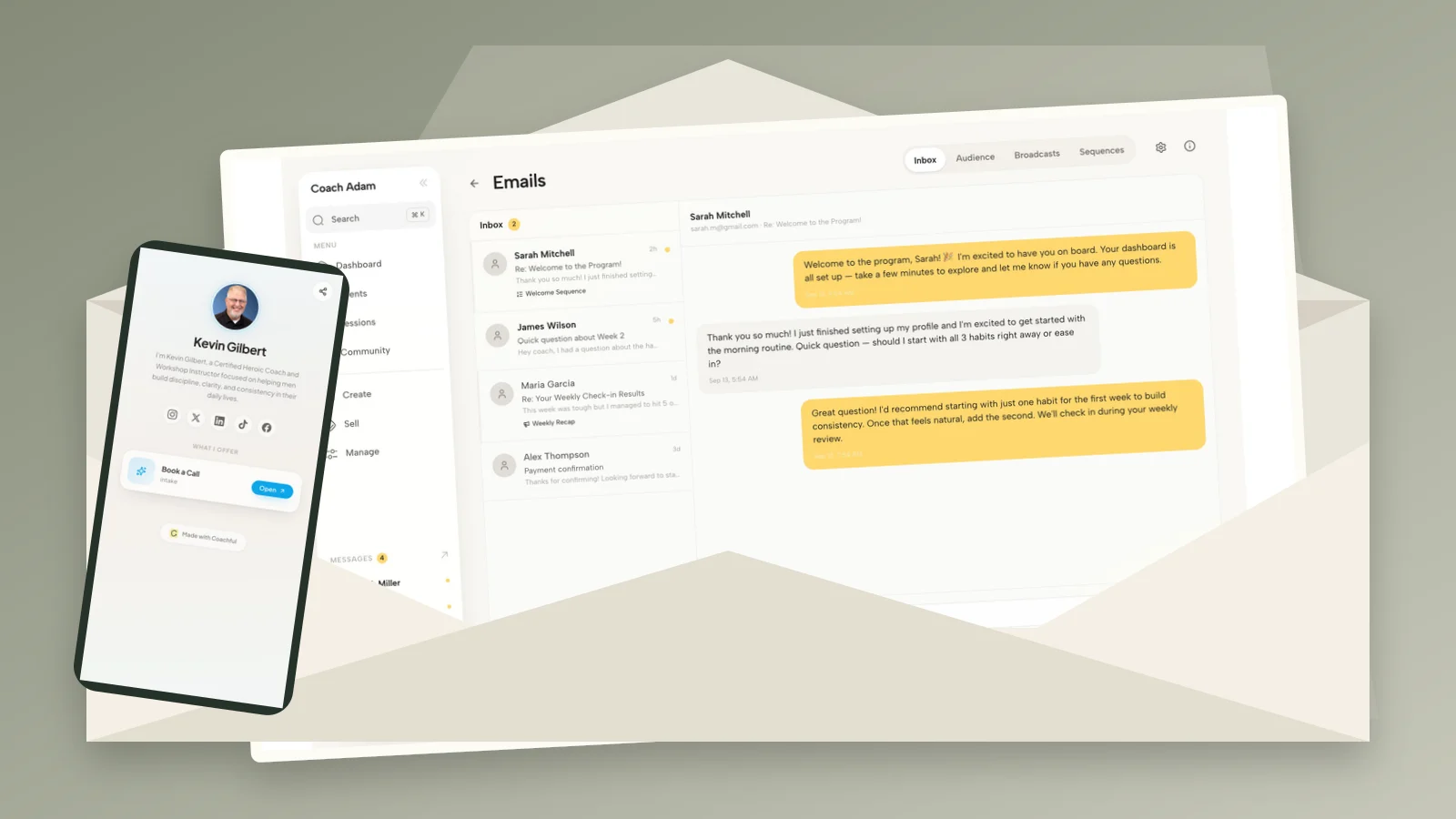
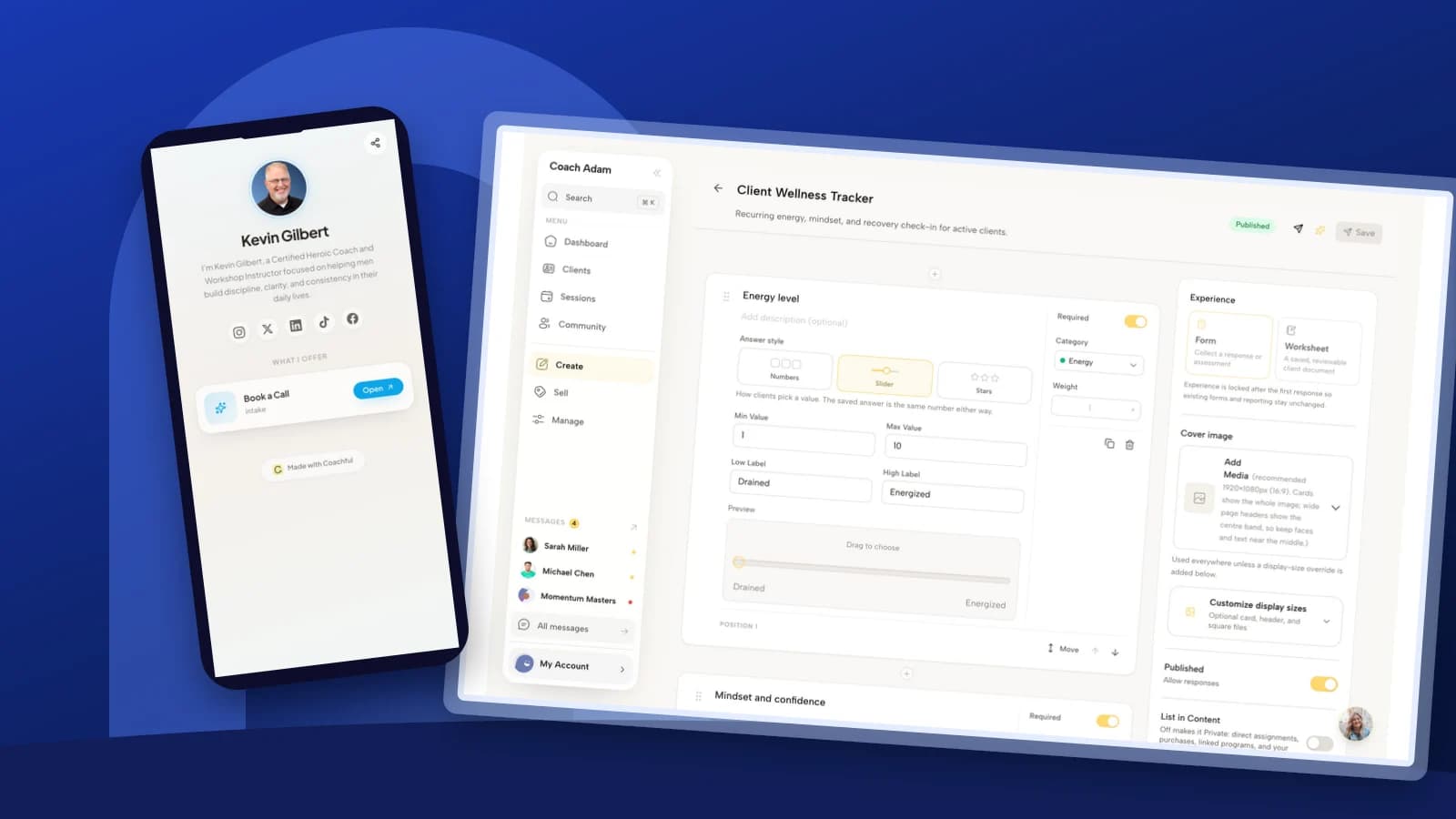
Coachful's real form, website, offer, email and lead-management surfaces can help you inspect the practical pieces shown here. They are not a substitute for reviewed promotion rules or a verified winner-selection process. Do not assume the screens in this article demonstrate a prebuilt giveaway integration.
Before announcing a promotion, try the interactive Coachful demo to explore the entry, communication and delivery surfaces you would need to test. A clear route from invitation to actual participation matters more than a bigger prize.
Frequently asked questions
What is the best coaching giveaway prize?
Choose a bounded experience closely related to your real paid work: a focused session, workshop seat, defined review, substantive resource bundle or established group experience. The best option is the one your intended audience values and you can deliver responsibly, not the one with the largest advertised price.
Should a coach give away an entire package?
Only if the delivery commitment, scope and promotional terms justify it. An entire package uses substantial capacity and can attract interest mainly because it is expensive. A smaller, useful experience is often a more manageable first test, without guaranteeing a better commercial result.
Can I add giveaway entrants to my email list?
Do not treat entry as blanket marketing permission. Separate promotion administration from marketing and establish an appropriate basis for the messages you propose to send. Check the privacy and electronic-marketing requirements relevant to your audience and location.
Is a coaching giveaway the same as a scholarship?
No. A scholarship addresses access to funded coaching under stated criteria. A promotional giveaway awards a defined prize through its published mechanism. Keep the purpose, selection process and communication distinct rather than turning financial need into an engagement contest.