Coaching Homework Template: 5 Assignment Briefs to Adapt

Nour
Founder, Coachful
How do you write coaching homework that a client can understand on Tuesday without needing you to explain it again? Write a short, jointly agreed brief: one learning question, one bounded action, the smallest useful evidence, a practical limit and a specific review point. The assignment should make the next coaching conversation better, not create a second job for either person.
A client can leave a session sincerely intending to “work on confidence” and still have no idea what to do when they open the note later. That is an instruction problem before it is an accountability problem. More reminders will not make a vague brief more usable.
Below are five filled coaching homework templates and a blank you can copy. They are original, hypothetical examples for coaches to adapt with clients, not real client records or evidence of outcomes. Use them to write the assignment itself. For a wider menu of activities, see our life coaching exercises library.
What belongs in a coaching homework brief?
A brief translates an agreed intention into instructions the client can use independently. It is different from a worksheet, which structures answers, and a check-in, which collects an update. An assignment may use either, but sending a form does not explain why the person should complete it.
- Purpose: the question the client wants to explore, in language they recognize.
- Action: exactly what they choose to do, with a clear stopping point.
- Timing: the opportunity or period they believe is workable.
- Evidence: the minimum they will bring back, not an exhaustive record.
- Boundary: what is excluded and when they can stop or adapt.
- Review: when you will discuss the learning and what you will ask.
Read the finished brief aloud and ask, “If you opened this without me here, what would you do first?” That is a useful comprehension check. It is not a test of the client. If their interpretation differs from yours, edit the instructions together.

Agree whether “homework” is even the right word. An experiment, practice or observation may fit the relationship better. Do not assume that a person who disliked school needs a school-shaped coaching experience.
An exploratory study by Passmore, Day and Wang interviewed eight early-career coaches and eight coaching clients. It found perceived effects were mixed and highlighted how positioning, terminology and task type could affect engagement. This small qualitative study does not establish a universal completion rate or prove one assignment format is best. The practical implication is to discuss the format rather than impose it.
Choose a brief by the learning question, not your favorite exercise
The five examples below serve different purposes: observing a pattern, testing a message, rehearsing a skill, comparing options and reviewing repeated practice. They are not a sequence every client should complete. Select one that addresses the present goal, or decide together that no between-session assignment is useful.

Before choosing, ask what the client already knows. Someone who cannot identify the problem may need observation, not an ambitious action plan. Someone who already understands the pattern may need a small trial, not another page of reflection. Someone practising a chosen skill may benefit from repetition, but not from endless data collection.
1. Observation brief: notice a pattern without trying to fix it
Use when: the client describes a recurring difficulty but you do not yet have specific examples to examine. The purpose is to gather a little context, not to diagnose them or monitor every moment of their week.
Learning question: What happens just before I agree to work I had not planned?
My chosen action: Notice up to three occasions before our next session when someone asks me to take on additional work. After each, write a short note about the request, my response and what I noticed.
Timing and size: Capture the note when practical afterward. Stop after three examples; do not recreate a whole week from memory.
What I will bring: A few private notes, with colleagues identified by role rather than name.
Boundary: I am not required to refuse requests, provoke a situation or record another person. I can leave out identifying or confidential work information.
Review: At our next session, we will ask what is similar and different across the examples before deciding whether to change anything.
The boundary matters because “notice overcommitting” can quietly become “prove you can say no.” Those are different tasks. Do not evaluate a noticing assignment by whether the client changed the behavior.

If you use a check-in to collect the notes, keep it short enough to match the brief. An optional voice note or private written note may be more appropriate than another form, subject to your agreed communication and information-handling arrangements. The client does not owe you a detailed account of everyone involved.
2. Experiment brief: test a message with a willing person
Use when: a career or business-coaching client has two possible introductions and wants information about clarity. This is not a task to obtain approval for their identity, nor a disguised requirement to start selling.

Learning question: Which of my two short introductions makes my intended work easier to understand?
My chosen action: Ask one willing peer to hear both versions. After each, ask, “What work would you expect me to do from that introduction?” Listen without correcting their first answer.
Timing and size: Arrange one short conversation before our next session. If the person is unavailable, bring the two drafts instead.
What I will bring: The two versions and a short note about what the peer understood or found unclear.
Boundary: No job application, sales pitch or public post is required. One person's response is not a verdict on my career or a representative market study.
Review: We will compare my intended meaning with what was heard and choose what, if anything, to revise.
Separate the action from the desired response. The client can invite feedback and listen carefully; they cannot guarantee that the peer likes either version. An unfavorable response may still answer the learning question.
If a larger career goal sits behind the experiment, keep it visible without pretending that a single conversation completes it. The experiment contributes information to a decision. It does not establish demand, predict hiring success or prove a niche is viable.

3. Rehearsal brief: practise one opening, not an entire confrontation
Use when: a client has chosen an appropriate conversation but wants to practise a particular communication skill first. Check that the situation is within your competence and scope. Do not prescribe a difficult conversation in an unsafe relationship or a situation requiring specialist advice.
Learning question: Can I state my request clearly without adding a long defense?
My chosen action: Write an opening of two or three sentences: the situation I want to discuss and the request I want to make. Read it aloud privately, then choose one revision.
Timing and size: Use one short practice period that I choose. The first draft is enough to bring if revision becomes unhelpful.
What I will bring: The wording I am comfortable sharing and a note about where I became unclear or added unnecessary explanation.
Boundary: This assignment does not require having the conversation, sharing a recording or scripting the other person's response. If the context changes or feels unsafe, I can pause it.
Review: We will explore whether the wording expresses my intention and whether a real conversation remains appropriate.
The deliverable is a rehearsal, not successful conflict resolution. Keep that distinction in the written note so the client does not read a practice task as an instruction to take a consequential action alone.
Coaching can support preparation and judgment, but it is not a substitute for legal, clinical, safeguarding or other specialist help. The appropriate next step may be a referral or a different form of support rather than a more forceful assignment.
4. Decision brief: compare two options using the client's criteria
Use when: the client has narrowed a decision but keeps reconsidering it without making the trade-offs explicit. This brief is designed to improve the next discussion, not pressure them to decide by your deadline.
Learning question: What trade-off am I making between these two options?
My chosen action: Name the two options and choose up to three criteria that matter to me. For each option, write what I know, what I am assuming and one important unanswered question.
Timing and size: Complete one short page before our next session. Leave unknowns marked as unknown rather than researching indefinitely.
What I will bring: The comparison and the criterion I found hardest to prioritize.
Boundary: No weighted score is required. I do not need to resign, purchase, sign anything or announce a decision. Specialist questions remain for an appropriate adviser.
Review: We will identify whether the next useful move is a decision, more specific information or a change to the options.
A neat scoring sheet can create false certainty when the underlying evidence is weak. Ask the client to distinguish knowledge from assumptions before comparing totals. If privacy matters, they can bring a sanitized summary rather than financial documents, employer records or another person's messages.
The ICF's guide to using coaching tools describes homework as an option for extending a session topic. That supports offering an appropriate exercise, not making every tool compulsory. A useful brief leaves room for the client to question whether this task serves the goal.
5. Practice brief: repeat one agreed behavior and review the conditions
Use when: the client has selected a behavior they want to practise and the learning depends on trying it more than once. The aim is to learn about the practice and its context, not produce a perfect streak for the coach.
Learning question: Does a brief planning pause help me choose my first work task more deliberately?
My chosen action: On three workdays I choose, pause before opening my task list and identify the first task I intend to start. At the end of that work period, note whether I started it and what affected the choice.
Timing and size: Three opportunities before our next session. No catching up by completing several entries afterward.
What I will bring: A simple record of tried, not tried or changed plan, with a brief explanation where useful.
Boundary: This is not a productivity grade. An urgent responsibility can legitimately change the plan. I can reduce or pause the practice if circumstances change.
Review: We will ask when the pause was useful, when it was not and whether to keep, change or stop it.

Choose a tracking surface only after agreeing what the entries mean. A skipped entry may mean the practice was not attempted, the record was not updated or the plan changed. Do not interpret silence as a reliable measure of effort.
A copyable blank coaching homework template

Use this as a short shared note, not a questionnaire the client must complete in addition to the assignment. Write it together, replace every bracket and let the client correct your wording.
My learning question: I want to find out [one question connected to my coaching goal].
My chosen action: I will try [observable action with a stopping point].
My opportunity: I expect to do this [time, situation or agreed period]. A smaller workable version is [optional alternative].
What I will bring back: [Minimum useful evidence or reflection]. I will keep it in [agreed place].
My boundary: This does not require [excluded action or information]. I can stop or adapt if [relevant changed circumstance].
Our review: On [date or session], we will discuss [learning question]. My coach's agreed support is [specific support or none between sessions].
Review the brief as a learning agreement, not a compliance score
Open the review by returning to the question: “What did this help you notice?” Then establish what actually happened. The client may have completed the action without learning much, learned something useful from a partial attempt or decided the task no longer fits.

If it was not attempted, ask whether the action was understood, wanted, workable and still relevant. Do not automatically send the identical task again. You might simplify it, practise the first step in session, replace it or agree to stop. For the wider follow-through process, use our coaching accountability guide.
Also keep the coach's workload explicit. A request to “bring one note next session” should not quietly become a promise to review daily messages. Put any between-session response arrangement in your existing support boundaries.
Make the agreed brief easy to find
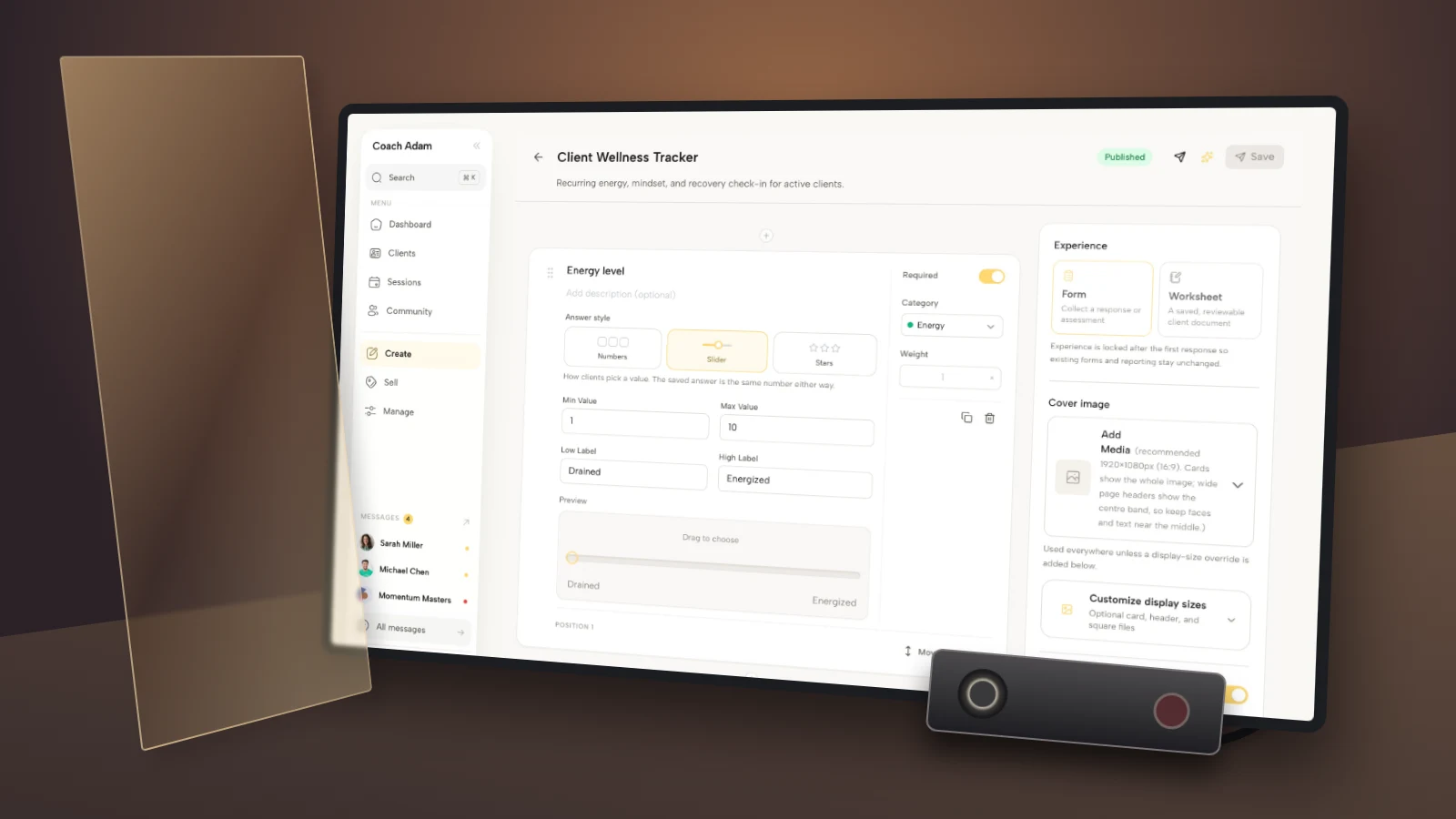
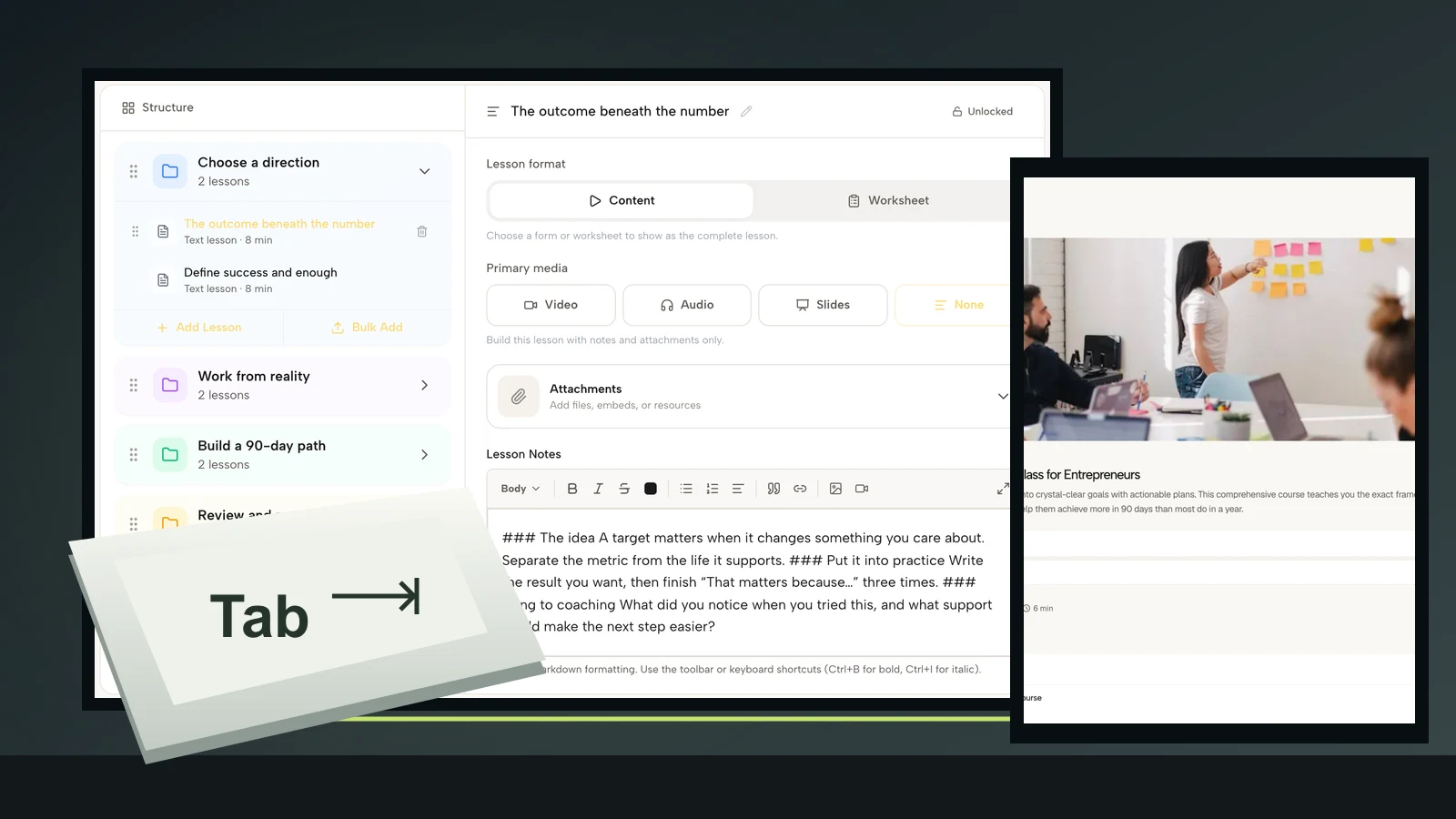
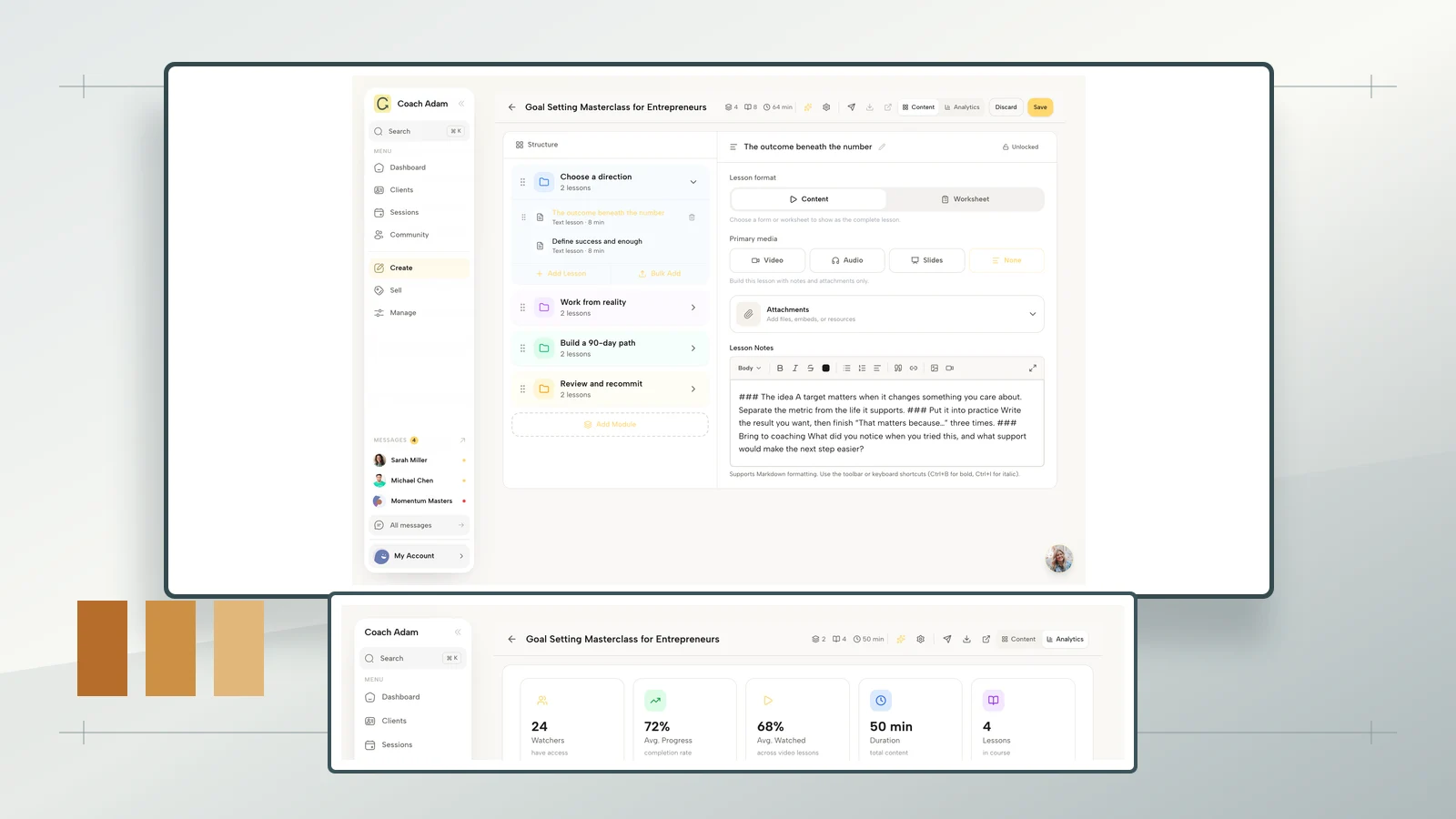
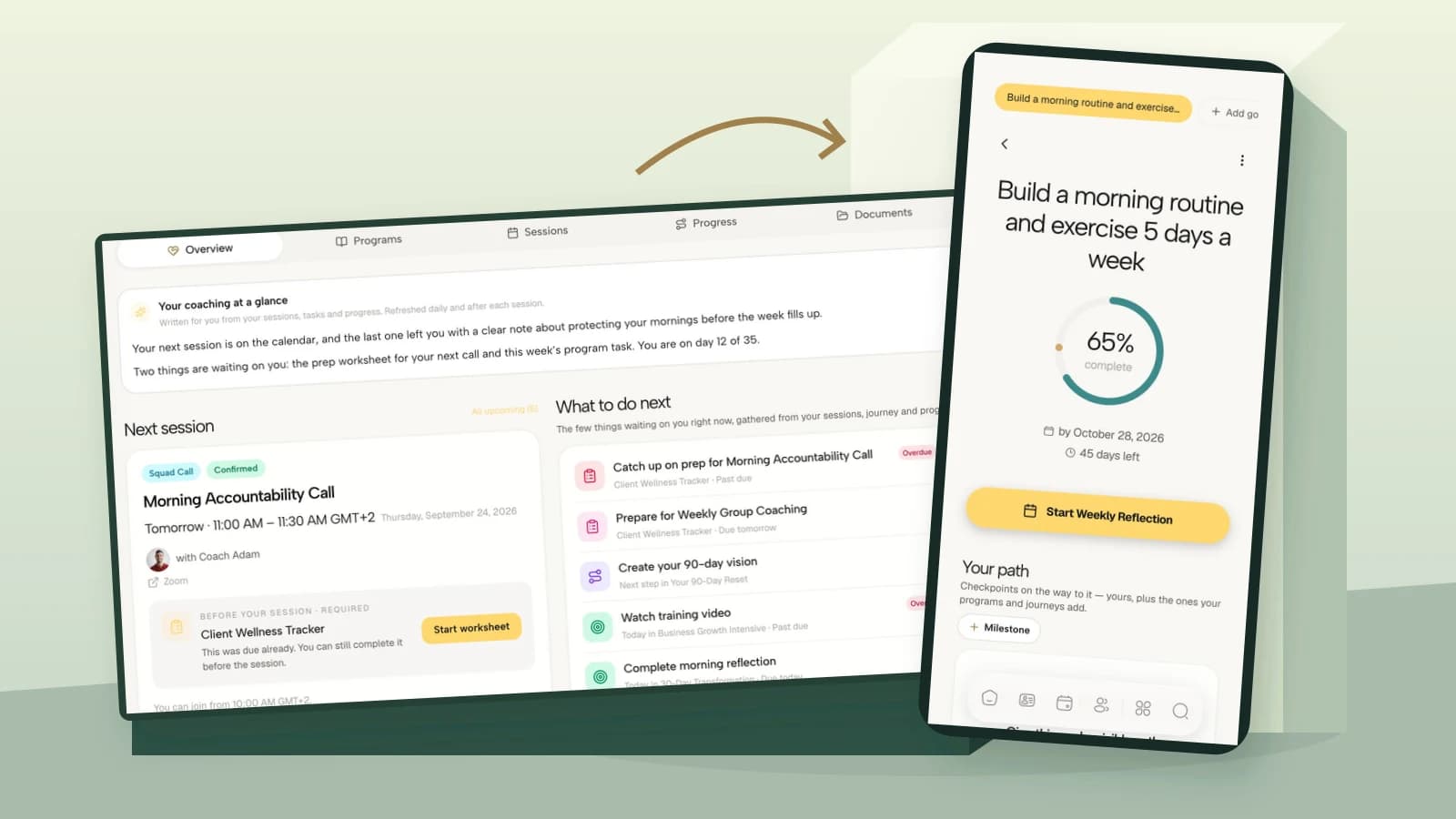
The screenshots above show authentic Coachful demo surfaces for client tasks, goals, habits, check-ins and sessions. They illustrate where the agreed work and its review can stay visible. They do not mean these five briefs are prebuilt templates or that software decides which assignment is appropriate.
Before moving real client information, test the client experience with a fictional brief: can you identify the action, the evidence and the next review without explaining them again? If that is the administrative gap in your practice, try the interactive Coachful demo and inspect those client-facing surfaces. Fix the instruction before adding another reminder.
Frequently asked questions
Should every coaching session end with homework?
No. Agree work only when it serves the client's goal and circumstances. A session may end with a decision, reflection or no additional assignment. Do not invent tasks to make the session look productive.
How long should coaching homework take?
There is no universal duration. Agree a size the client considers practical, with a clear stopping point. The short examples above illustrate bounded tasks, not an evidence-based time prescription for every person.
Can I use the same template with several clients?
Reuse the structure, not the assumptions. The purpose, action, evidence, boundary and review should be specific to the person. Remove sensitive details before using any example in another engagement.
What if a client does not like written assignments?
Discuss another format, such as a brief conversation, a private observation or an agreed practical trial. They should not need to become a keen journal writer to benefit from coaching. Keep the review question clear whichever format they choose.