
Dog Lovers Community: A Coach's Guide to Building One

Coachful
You're probably seeing the same pattern in your coaching work already. A client comes to talk about confidence, routine, stress, relationships, or life transitions, and somewhere in the session, the dog enters the conversation. Not as a side note. As a central part of daily life.
That's the opening most coaches miss.
A dog lovers community isn't just a pleasant add-on for people who like pets. It can become a real container for belonging, accountability, support, and paid offers, if you build it around what dog owners need. If you don't, it becomes another quiet group full of welcome posts, scattered selfies, and no reason to return.
The market is large enough to support focused community businesses. In the U.S., 45.5% of households own a dog, equal to 59.8 million households and 89.7 million dogs, according to the AVMA pet ownership statistics. That scale matters because it means you're not trying to invent demand. You're shaping it.
More Than a Hobby It's a Coaching Opportunity
A coach hears it in the middle of an ordinary session.
A client is trying to rebuild structure after a hard year, and the only habit they have kept is the morning walk with their dog. Another is stuck on a housing decision because so many rentals shut out large breeds. Someone else feels embarrassed that life with their dog is harder than they expected. These are coaching conversations with a dog-shaped entry point, and they often lead to the most honest work.
That matters because dog ownership is rarely a side interest. It affects schedule, spending, relationships, mobility, stress, and identity. As noted earlier, the audience size is already there. The better question for a coach is whether you can turn that existing identity into a community people rely on.
The coach's real opportunity
Dog owners do not just need a place to post photos. They need help handling real constraints. Vet bills. Training setbacks. Apartment rules. Travel logistics. Guilt about not doing enough. A strong dog lovers community gives members a place to work through those issues with people who understand the context.
This is why the opportunity is bigger than hobby content. A coach can build around the point where personal growth and dog ownership meet. If you coach routine, burnout recovery, confidence, life transitions, or relationships, you already have a practical path in.
For example, a coach working with women after burnout could build a community around calmer dog-owning routines. The value is concrete. Weekly planning for walks and feeding. Support for handling overstimulation. Small accountability check-ins. Space to talk about the guilt that shows up when caring for a dog feels heavier than expected. You do not need to become a trainer to lead that room well. You need a clear problem, useful structure, and enough trust to keep members returning.
Useful dog-owner content also helps set the tone. Resources like Corgi training tips work because they solve a specific owner problem. That is a better model than generic posting for engagement.
Why this works better than a general audience
General self-improvement communities often struggle because the promise is too broad. Members join with different needs, little shared language, and no obvious reason to talk to each other. Dog-centered communities start with a lived reality people already organize their day around.
That shared context lowers friction fast.
People rarely join because they want community in the abstract. They join because they want relief, better answers, steady encouragement, or proof that they are not the only one dealing with a specific problem. Dog owners have those needs in plain sight, which gives a coach a stronger starting point than a vague audience built around “support” or “growth.”
There is a business advantage here too. A well-run dog lovers community can become more than a warm marketing channel. It can support paid group programs, workshops, local events, referral partnerships, and narrower offers built around the problems members bring up repeatedly. If your niche is still taking shape, start by finding your tribe as a coach and then define the dog-related problem you want to help members handle.
What a Thriving Dog Community Really Is
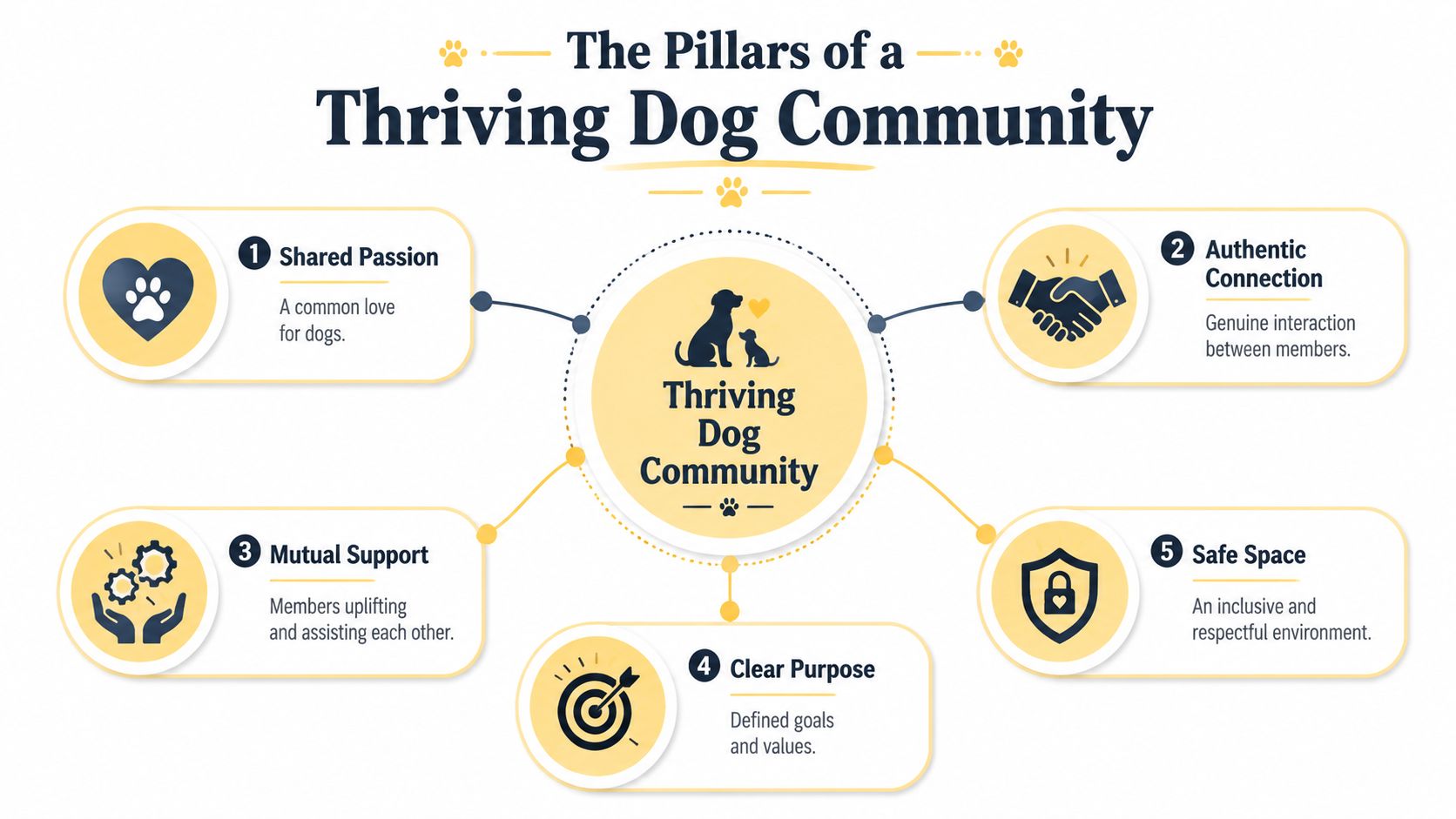
A thriving dog lovers community doesn't run on content volume. It runs on repeated, meaningful contact.
Cute photos can help break the ice, but they don't create depth on their own. A real community forms when members start to recognize each other, return to shared rituals, and trust that showing up will be worth it.
Connection beats activity
Many new hosts confuse motion with health. They post every day, run polls, celebrate every national pet holiday, and still end up with a room that feels empty. The problem isn't effort. The problem is that the activity doesn't deepen relationships.
Behavioral research points to a stronger pattern. A recent study found that dog ownership supports community through anchored personal relationships, not only by increasing the number of neighborhood friends, and those anchored ties were associated with a stronger sense of community in the published study on dog ownership and community.
That matters for builders. It means your job isn't to maximize chatter. Your job is to create conditions where members repeatedly meet in context.
What anchored relationships look like in practice
A dog lovers community gets stronger when people can recognize one another through a specific shared thread. That thread might be:
- A common challenge like reactive dogs, rescue transitions, or apartment living
- A recurring format such as weekly walks, monthly office hours, or small support circles
- A local layer where members can meet by city, neighborhood, or park
- A developmental stage like first-time adopters, puppy owners, or senior-dog caregivers
Here's the difference.
A weak post says, “Share a picture of your dog today.”
A stronger prompt says, “What's one situation where your dog does great at home but struggles outside, and what have you already tried?”
The second prompt gives members something to respond to with context. Context is where trust starts.
Broad social feeds create visibility. Structured interaction creates belonging.
If you've worked with cohort-based education or peer learning, the dynamic is familiar. People stay when they feel seen by a small set of peers, not when they're exposed to a large amount of general content. That's the same logic behind community-based learning for coaches.
The five signs your community is becoming real
A thriving group usually shows these shifts before it shows obvious growth:
- Members answer each other before you do.
- Introductions reference previous conversations, not just bios.
- Recurring events get nicknames or rituals.
- People ask for support on messy, practical issues.
- Subgroups form without fracturing the whole community.
That's when your dog lovers community stops behaving like an audience and starts behaving like a place.
Exploring Different Dog Community Models
The model you choose will shape your workload, your business options, and the kind of member behavior you get.
Some coaches start with the channel they already know. That's understandable, but it's usually backward. Start with the experience you want members to have, then pick the format that supports it.
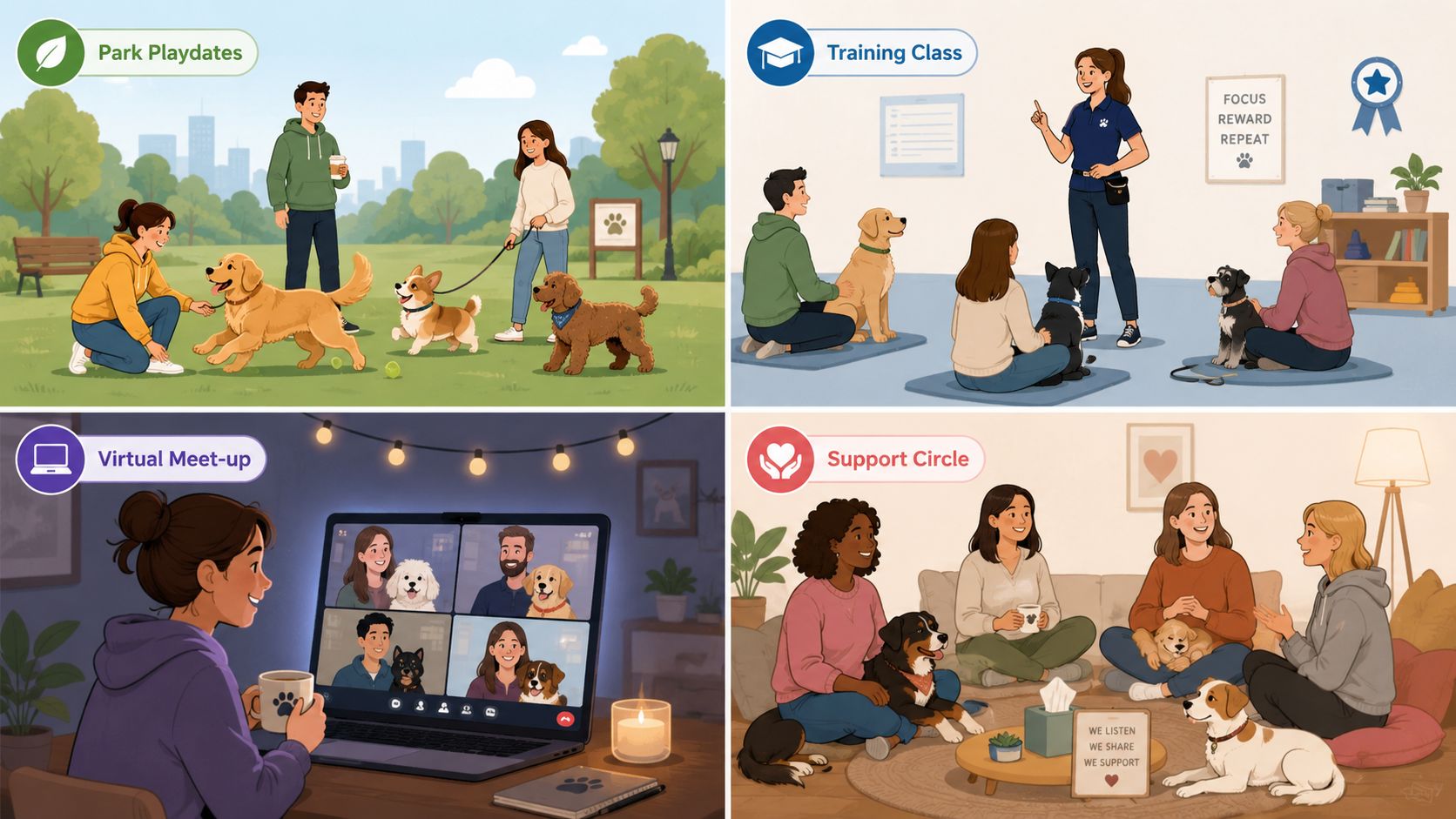
Local meetup groups
Local groups create fast trust because members share geography, parks, weather, and neighborhood norms. If your coaching style depends on observation, accountability, or in-person rituals, this model is powerful.
It also comes with hard limits. Scheduling gets messy. Attendance swings. Group chemistry can change quickly if one dominant personality takes over. And if you're trying to grow beyond one location, the format won't scale cleanly.
A coach might use this model well for:
- Urban confidence walks for nervous owners and dogs
- Sunday reset meetups built around routine and connection
- Adoption support circles hosted in a local pet-friendly venue
Online forums and social groups
These are easy to launch and easy to join. That's their strength and their weakness.
A Facebook group, Discord server, or Reddit-style forum can gather people quickly around a broad interest. But unless you design specific interaction paths, the space becomes spectator-heavy. Members scroll, like, and disappear. You end up feeding the machine with prompts that don't build retention.
This model works best when:
- You have a clear content engine
- You can moderate consistently
- You're using the group as an entry point, not the whole product
Breed-specific clubs
Breed communities often arrive with built-in enthusiasm. Owners already have stories, jokes, concerns, and a shared language. That can make onboarding easier than with a general dog owners group.
The downside is focus drift. Breed-specific energy can become narrow, repetitive, or exclusionary if every conversation assumes the same household, budget, or owner experience. A coach also needs to ask whether the breed is the center of value, or just the hook.
For example, a breed group may be useful if your actual niche is “high-drive dogs and overwhelmed owners.” In that case, the breed is a starting point, not the business model.
Modern platform-based communities
This is usually the strongest option for coaches who want more control over the member journey.
A platform-based community lets you connect profiles, events, messages, small groups, and paid pathways in one place. That creates a cleaner experience than stitching together forms, email tools, calendars, and social posts.
It does require more intentional design. You can't rely on a platform's default social momentum. You need a rhythm, a reason to return, and a clear map of what members do after joining. If you're comparing setup options, community manager software for structured groups is the category to evaluate, not just “best community app.”
A simple decision filter
Use this when you're stuck between models:
| Model | Best for | Main risk |
|---|---|---|
| Local meetup | Deep trust and local identity | Limited scale |
| Online forum | Reach and low-friction entry | Shallow engagement |
| Breed club | Strong niche passion | Exclusion or repetition |
| Platform-based community | Structured journeys and paid programs | Requires clear strategy |
Choose the model that matches the transformation you want to host, not the one that feels easiest to start.
The Untapped Potential for Your Coaching Business
A dog lovers community can become a business asset if you stop treating it like a side project.
Most coaches hesitate here for a fair reason. Community takes work. If it only creates more posting, more moderation, and more emotional labor, it's not an asset. It's a burden. The return appears when the community helps people move from interest to trust to paid commitment in a natural way.
Community works when the path is clean
The strongest community businesses don't scatter the experience across disconnected tools. They guide members through one coherent path.
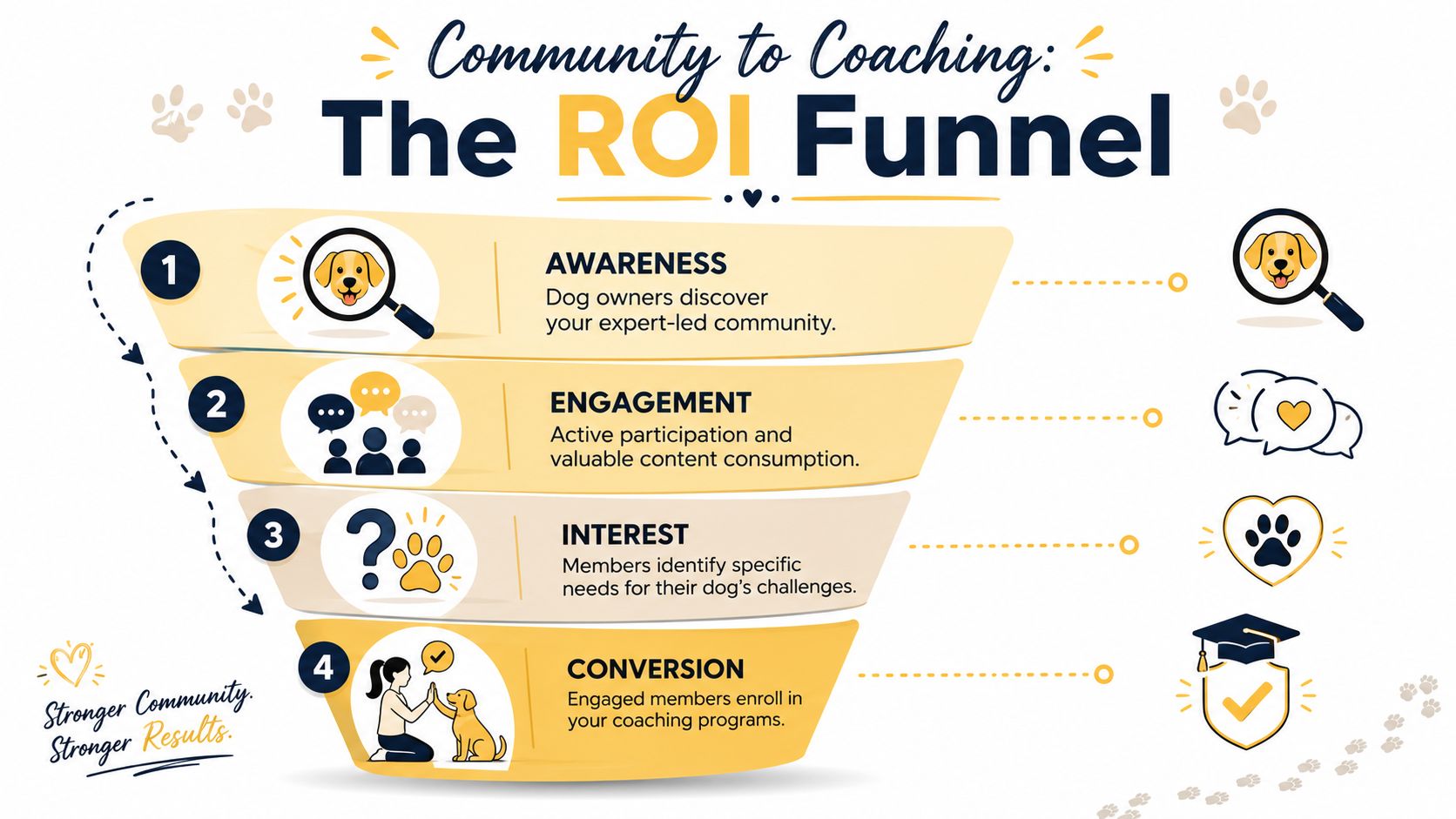
The operational principle is simple. The most effective communities are built around a single end-to-end member journey that moves from discover, to join, to engage, to upgrade. When profiles, events, messaging, and renewals are split across separate tools, friction increases and drop-off risk rises, as described in this guide to building a dog lovers community.
That matters because members don't experience your backend. They experience confusion or momentum.
A practical journey might look like this:
- Discovery through a workshop, referral, podcast, or local event
- Entry into a free or low-friction community space
- Participation in a challenge, office hour, or themed discussion
- Progression into a paid group, membership tier, or coaching offer
Where the business value actually shows up
A good community helps a coach in three ways at once.
- Lead generation: Members get to know your style before they buy.
- Retention: Existing clients stay connected between sessions.
- Offer development: Real conversations reveal what people will pay for help solving.
That third point is underrated. Coaches often guess at product ideas in isolation. A well-run community shows you the language members use, the obstacles they repeat, and the support they seek when they're stuck.
For example, if your members keep asking about routines before work, public behavior, and guilt around “not doing enough,” that's a strong signal for a small group program around structure and confidence for everyday dog ownership. If they keep talking about service businesses, side hustles, or pet care operations, even adjacent resources like dog grooming business models and licensing can help you understand how specialized this market can become.
Here's the visual many coaches need when deciding whether community fits their business.
What doesn't work
A few models usually disappoint:
- Free group with no focus: People join, lurk, and forget it exists.
- Community that only promotes offers: Members feel managed, not supported.
- High-touch host dependence: If every meaningful interaction requires you, burnout follows.
If the only path from community to coaching is “DM me if interested,” you don't have a system. You have hope.
A dog lovers community becomes commercially useful when members can feel the difference between casual participation and structured support, then choose the next level without being pushed.
How to Build a Community That Truly Matters
The fastest way to create a ghost town is to build around enthusiasm alone.
Love of dogs is strong. It's not specific enough. Members stay when a community helps them solve the parts of dog ownership that feel confusing, expensive, lonely, or embarrassing to deal with in public.
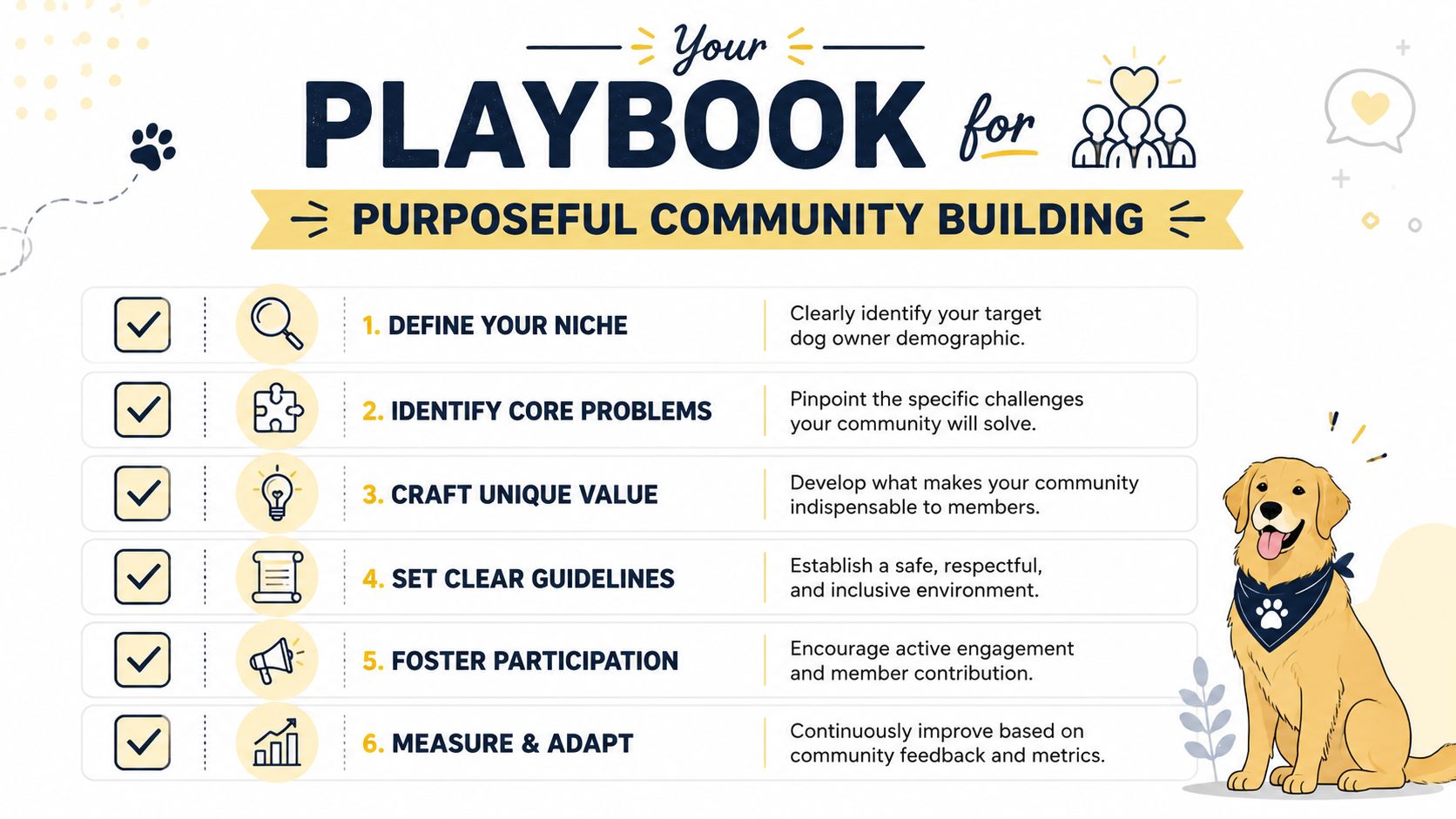
Start with a narrow problem, not a broad audience
“Dog lovers” is a category. It's not yet a useful niche.
A stronger starting point sounds like this:
- First-time adopters who feel overwhelmed after the honeymoon period
- Apartment dog owners juggling space, noise, and neighbor pressure
- Owners of reactive dogs who feel isolated on walks
- Senior-dog caregivers managing grief, routines, and changing needs
- Renters with dogs trying to manage housing rules and instability
These groups carry emotion and urgency. They also create clearer programming. When you know who the room is for, members can tell whether they belong.
Build around practical support
Many community guides stay at the level of icebreakers, hashtags, and monthly themes. That's not enough for long-term value.
Real dog ownership includes money pressure, housing limitations, behavior struggles, and the stress of making care decisions. Surveys found that cost is the biggest barrier to veterinary care, and more than half of respondents said they lacked adequate funds for needed pet care, according to the Arizona Animal Welfare League community survey.
That one fact should change your programming.
If members are worried about affording care, a smart community host doesn't just post “How was your weekend with your pup?” They build practical support around the question members may be too embarrassed to ask publicly.
What useful programming looks like
A meaningful dog lovers community can include:
- Resource threads for low-cost care options, emergency planning, and trusted local services
- Housing support discussions where members share pet-friendly rental strategies and documentation tips
- Behavior office hours focused on common real-world problems rather than perfection
- Stage-based circles for new adopters, busy professionals, or senior-dog households
- Community standards that keep advice supportive and non-shaming
A coach doesn't need to become a veterinarian, trainer, or housing lawyer. You need to curate well, facilitate responsibly, and know where peer support ends and professional referral begins.
Field note: The most valuable conversations often begin where people feel least polished. “My dog barks at everyone in the hallway and I'm embarrassed” is a better community starting point than “Show us your favorite toy.”
Design the first month carefully
Most communities lose momentum because the first month is vague. Members need structure early.
Try this sequence:
- Week one: Welcome thread with one focused question about the member's current challenge
- Week two: Live or async discussion on a common pain point
- Week three: Small-group prompt by neighborhood, dog age, or challenge type
- Week four: Reflection thread that asks what changed, what's still hard, and what support is needed next
That creates a pattern of return. It also gives you early data about what the community should become.
Weekly Engagement Strategy Template
| Day | Theme | Example Activity |
|---|---|---|
| Monday | Real-life challenge check-in | Ask members what situation with their dog feels hardest this week |
| Tuesday | Resource share | Post a vetted checklist, local tip, or planning worksheet |
| Wednesday | Peer support thread | Invite members to respond to one another's current obstacles |
| Thursday | Coach-led teaching | Host a short Q&A or mini lesson on a focused topic |
| Friday | Wins and lessons | Celebrate small progress and useful experiments |
| Weekend | Ritual or meetup | Run a walk, reflection prompt, or neighborhood thread |
Set boundaries early
A warm culture needs guardrails.
Write guidelines that cover:
- what kind of advice is appropriate
- when members should seek professional help
- how disagreements are handled
- how fundraising, promotions, or self-promotion are limited
- what respectful participation looks like
Without clear boundaries, strong personalities fill the vacuum. Then quieter members disappear.
The right dog lovers community feels emotionally generous and operationally clear. Members know why they're there, what they can expect, and how to contribute without guessing.
Keeping Your Community Active and Thriving
After launch, your role changes. You stop acting like a host trying to fill silence and start acting like a facilitator who helps members find one another.
That means introducing people with shared contexts, naming recurring themes, and noticing who consistently contributes with care. A healthy group doesn't depend on you answering every post. It depends on you strengthening the conditions that make member-to-member support more likely.
Use rhythm, not constant novelty
Communities go stale when every week feels random. They also go stale when every week feels like a copy-paste content calendar. The middle ground is ritual.
A simple rhythm might include:
- A predictable weekly prompt tied to real owner challenges
- A recurring live session such as office hours or themed support calls
- A monthly spotlight on a member story or practical lesson
- A service activity that gives the group shared purpose
That last point matters more than many coaches realize. In 2025, U.S. shelters and rescues took in 2.8 million dogs, according to the ASPCA shelter statistics. Organizing a supply drive or local fundraiser gives members a reason to act together, not just talk together.
Develop ambassadors before you need moderators
Every active community has a handful of members who welcome others, answer thoughtfully, and model the culture. Don't wait for them to volunteer formally. Invite them into light leadership.
Ask them to:
- greet new members
- host a local thread
- lead a recurring check-in
- collect common questions from the group
This reduces dependence on you and gives the community a stronger social fabric.
Communities stay alive when members feel responsible for the space, not just entertained by it.
Watch the right signals
Member count can flatter you while the room goes cold.
Pay attention to signs like:
- whether members respond to one another
- whether events lead to follow-up conversation
- whether newcomers return after their first interaction
- whether discussions produce action, not just reactions
If your group is quiet, don't panic and post more. Narrow the focus. Ask better questions. Create smaller rooms. Bring the conversation closer to lived problems.
A dog lovers community stays active when it gives people something more valuable than scrolling. It gives them a place where life with their dog gets easier, clearer, and less lonely.
If you're building a coaching business around community, delivery matters as much as idea quality. Coachful gives coaches one place to manage programs, onboarding, sessions, client communication, payments, and group experiences without patching together a stack of separate tools. If you want your community to support real coaching outcomes instead of creating admin sprawl, it's worth a look.