How to Take a Vacation as a Coach: 7 Client-Coverage Steps

Nour
Founder, Coachful
Can you take a proper vacation when clients have paid for access to you? Yes, but protect the break by agreeing what happens to delivery before you close your calendar. An out-of-office message cannot cancel a session, change a payment agreement or turn independent exercises into equivalent coaching.
The practical sequence is to audit your commitments, choose a delivery arrangement for each client, block new bookings, prepare appropriate materials, authorize any cover, test every communication channel and leave room for the return. You do not need to stay vaguely available to make the arrangement professional.
This guide is for a coach planning a temporary absence from an active practice. It is not a client-requested membership pause, a clinical continuity plan or advice to keep charging for a service you will not provide. The examples are hypothetical planning examples, not Coachful customer results.

1. Audit what each client has actually bought
Start with the agreement and the active roster, not your flight dates. For each current client, identify the sessions, reviews, response windows, programme access and other work that fall inside the absence. A monthly payment tells you when money moves; it does not, by itself, tell you which obligations can pause.
A client who bought six sessions has a different arrangement from a client paying for weekly written feedback. The first may be able to move an appointment within the agreed package period. The second may lose a promised service if you stop replying for a week. Treat those as different decisions.

Create a private leave register with these fields:
- Client or engagement: use your existing secure records, not a publicly shared holiday spreadsheet.
- Delivery due during leave: the actual appointment, review or other commitment.
- Proposed arrangement: reschedule, agreed break, appropriate independent work, authorized cover or another agreed remedy.
- Money and dates: any relevant charge, credit, session expiry or programme-end adjustment.
- Confirmation: what the client agreed and where that agreement is recorded.
- Restart: the next real service date and who owns it.
Resolve exceptions individually. If an employer pays for executive coaching, the sponsor's commercial terms may also need checking, without sharing private session content. If a group has a published break already built into its schedule, confirm that the actual invitations and programme dates match it.

Keep the financial review separate from the announcement. A planned break included in a clearly defined annual service is not the same as removing a week of contracted support after a client has paid. Where delivery changes, agree an appropriate adjustment under your terms and applicable law; seek qualified advice for uncertainty.
Budget for your own leave as well. A purely hypothetical cover arrangement of three agreed administrative hours at $60 an hour costs $180 before any other expenses. That is a planning input, not a market rate or a recommendation to give an assistant access to coaching records. Build your actual costs into your cash plan rather than discovering them on departure day.
2. Choose a genuine break, independent work or cover
Do not treat “I will check my phone occasionally” as the default service model. Choose one of three arrangements for each engagement, and make it specific enough that both of you know what is happening.
A planned break
Live coaching and the stated support pause, with the agreed timing and financial treatment documented. This is often the simplest arrangement where the work can safely wait and the agreement allows it. The client knows when the next session or review happens.
Agreed independent work
The client continues an appropriate exercise, reflection or existing programme activity without expecting review during the absence. This can fit work already understood and within the client's circumstances. It is not a reason to assign a difficult new exercise that needs active guidance.
Authorized cover
A suitable person handles a defined responsibility during stated hours. Administrative cover might mean access or scheduling questions. Coaching cover is a different professional arrangement requiring discussion of suitability, client choice, confidentiality, fees, records and responsibilities.
A hybrid can work, but only when the boundaries remain readable. For example, a hypothetical career-coaching client might continue a previously agreed job-search reflection while all coaching feedback waits until the return appointment. An administrator could help with an account-access problem without reading that reflection.
Material remaining available is not the same as a coach remaining available. Make that distinction explicit. It protects the client's expectations and stops your holiday turning into a series of unofficial exceptions.
3. Protect the calendar at every booking entry point
Block the absence before announcing that clients can find a new time. Include travel days and a realistic return buffer where needed. If your public calendar invites someone to book while your message says you are away, the calendar is the more persuasive promise.

Check existing bookings separately from new availability. A block on future appointments does not necessarily cancel a session already in the diary. Review recurring appointments, group calls, discovery calls, paid sessions and any booking pages with different availability rules.
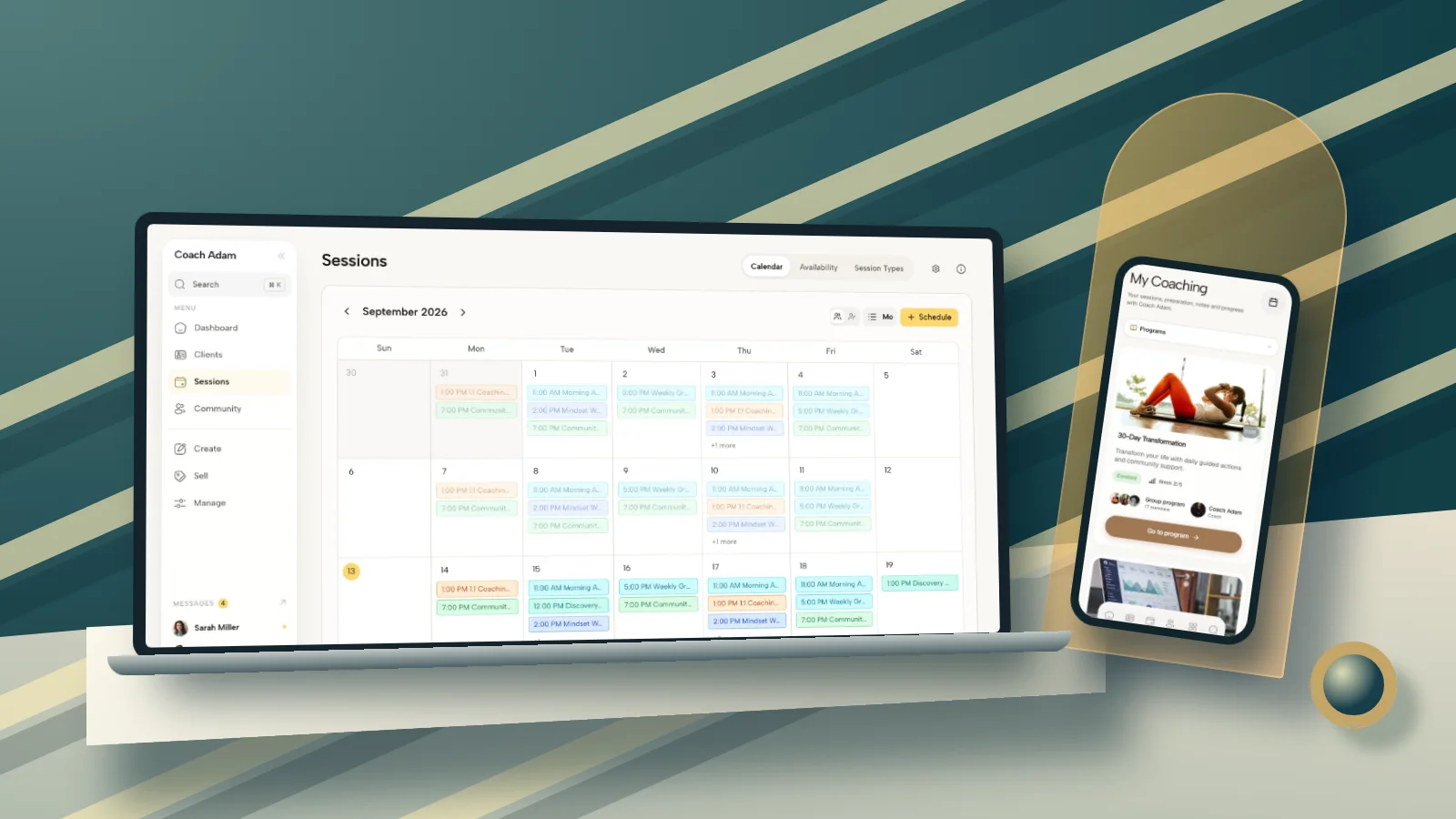
Coachful's vacation-blocking help guide describes date overrides and the use of busy events from connected calendars. Use the current controls available in your account, then test the result rather than assuming the setting reached every booking route.
Run this short booking test from the perspective of someone outside your coach account:
- Open each public booking link you actually share, including old website and profile links.
- Check that the absence is unavailable in the visitor's displayed time zone.
- Confirm that the intended return slots are available and not overloaded.
- Review already booked appointments and their invitations for agreed changes.
- Check that any appointment reminders refer to the correct session.
Do not alter real client bookings just to test the system. A read-only check of the available dates, followed by your normal controlled test process if needed, is preferable to creating a fake appointment that confuses a client or triggers payment.
4. Prepare only the work clients can use without you
Build continuity around familiar work, not a last-minute library dump. Ask what the client can reasonably do, what they should stop or defer if circumstances change, and when you will next review it. “There are plenty of resources in the portal” does not answer any of those questions.

A useful independent-work note has four parts: the specific resource, the modest task, the boundary and the review date. For a hypothetical leadership-coaching engagement, that could be: “Use the delegation reflection we discussed to record one routine decision you handled this week. We will review it at our next session. Do not include names or confidential staff information.”
For health, fitness or other risk-sensitive work, stay within your qualifications and the client's agreed plan. Do not prescribe new responses to injuries, medication changes or clinical symptoms through a holiday worksheet. Appropriate professional or emergency support is separate from coaching availability.
Inspect scheduled content and prompts too. A message asking “How did today go? Send me an update” can imply someone is listening. If no review will take place, change the wording or timing through the proper process so that the expectation matches the service.
Check access from the client side before leaving. The right document in the wrong folder, a lesson scheduled to unlock after your return, or a task with an obsolete deadline can defeat a thoughtful plan. Keep essential instructions in readable text, not only inside a video or image.
Resist adding unnecessary homework to justify being away. The task is continuity of the agreed work, not keeping the client busy enough to overlook your absence.
5. Make cover narrow, authorized and workable
If someone is covering, write a small handover that states the tasks they can handle, the dates and hours they are available, the approved contact route, the access they need and what they must not do. Ask them to confirm the arrangement before giving clients their details.

An administrative colleague may be able to resend an appropriate access link or help reschedule a session. That does not make them the person to interpret a distressed message, review a client's coaching reflection or decide whether the coaching goal should change.
Use a simple responsibility split:
- Scheduling: who can view the relevant appointments and make agreed changes?
- Account access: who can follow the approved support process without sharing passwords?
- Payments: who can answer factual questions or refer a request, and who may authorize any adjustment?
- Coaching content: who, if anyone, is explicitly authorized and suitable to respond?
- Out-of-scope messages: what factual boundary and appropriate next route should the covering person provide?
Do not forward the entire inbox or share your coach login as a shortcut. Give only authorized access necessary for the role and use the platform's appropriate permissions where available. Private notes are not background reading for an assistant handling the calendar.
If another coach will deliver sessions, discuss that with the client beforehand rather than presenting the substitution as a completed decision. A trusted colleague can still be the wrong fit. If appropriate cover is unavailable, an agreed pause or different arrangement may be more honest than a nominal backup.
6. Tell clients the plan, then test the messages
Give affected clients notice early enough to resolve the changes your agreement requires. There is no single notice period that fits a short planned break, an extended absence and an unexpected family situation. The useful test is whether the client has a real opportunity to understand and agree the arrangements.
The notice should name your last working day, the absence dates, the actual reply window after return, what continues, what stops, the next session or review and any genuinely covered contact route. Keep your holiday destination and personal explanation optional. Clients need service clarity, not your itinerary.

For adaptable wording, use our out-of-office messages for coaches. That companion guide covers the message itself; this checklist is about making the underlying delivery arrangement true.
Do not assume an email auto-reply reaches portal chat, a website form, a business number or a group channel. List the routes clients are entitled to use and place an appropriate availability notice in each relevant destination. Avoid exposing one client's circumstances to a group while doing so.
Test the mailbox reply from an outside address. Test the covered contact route with the person handling it. Read every linked destination on a phone. Check that the wording does not promise an urgent response from a channel nobody will monitor.
A coaching inbox is not an emergency service. Where appropriate, explain that immediate safety needs should go to suitable local emergency or urgent services. That statement is a boundary, not a substitute for addressing a foreseeable continuity problem within your competence before leave.
If you have deliberately chosen limited working hours while traveling, describe them honestly. A defined review window is different from being fully off duty. Do not call the break uninterrupted leave while quietly training clients to expect replies whenever they send a message.
7. Plan the return before you leave
Reserve time to review messages and outstanding commitments before filling the first day back with sessions. The client-facing return date and the date by which every reply will be complete do not have to be identical. They do have to be realistic and clearly stated.

On return, first check access problems, appointment changes and other time-sensitive administrative issues. Then review the agreed independent work and prepare for the next sessions. Do not reward the longest message thread with automatic priority; prioritize against the commitments and practical deadlines you actually owe.
Confirm the restart in the relevant channel. A short, specific update can identify the next session, the review you are completing and the point at which normal response windows resume. Remove temporary notices and check that the calendar, group schedule and client materials now agree.
Keep a private note of what failed: a forgotten booking link, an unclear review date, a colleague given too little information or a return day with no breathing room. Correct the process for the next absence. You do not need to redesign the entire practice because one link was stale.
A final leave-readiness check
Before closing work, ask whether every active engagement has an agreed arrangement, every affected appointment has been handled, every ongoing charge has been considered against delivery, and every relevant message route tells the truth. If any answer is “probably,” resolve that item first.
The Personal Trainer Development Center's time-off guide offers practitioner examples of advance communication, systems and substitute coaches. Those examples support the importance of planning; they are not evidence that a particular cover model or revenue outcome will fit your practice.
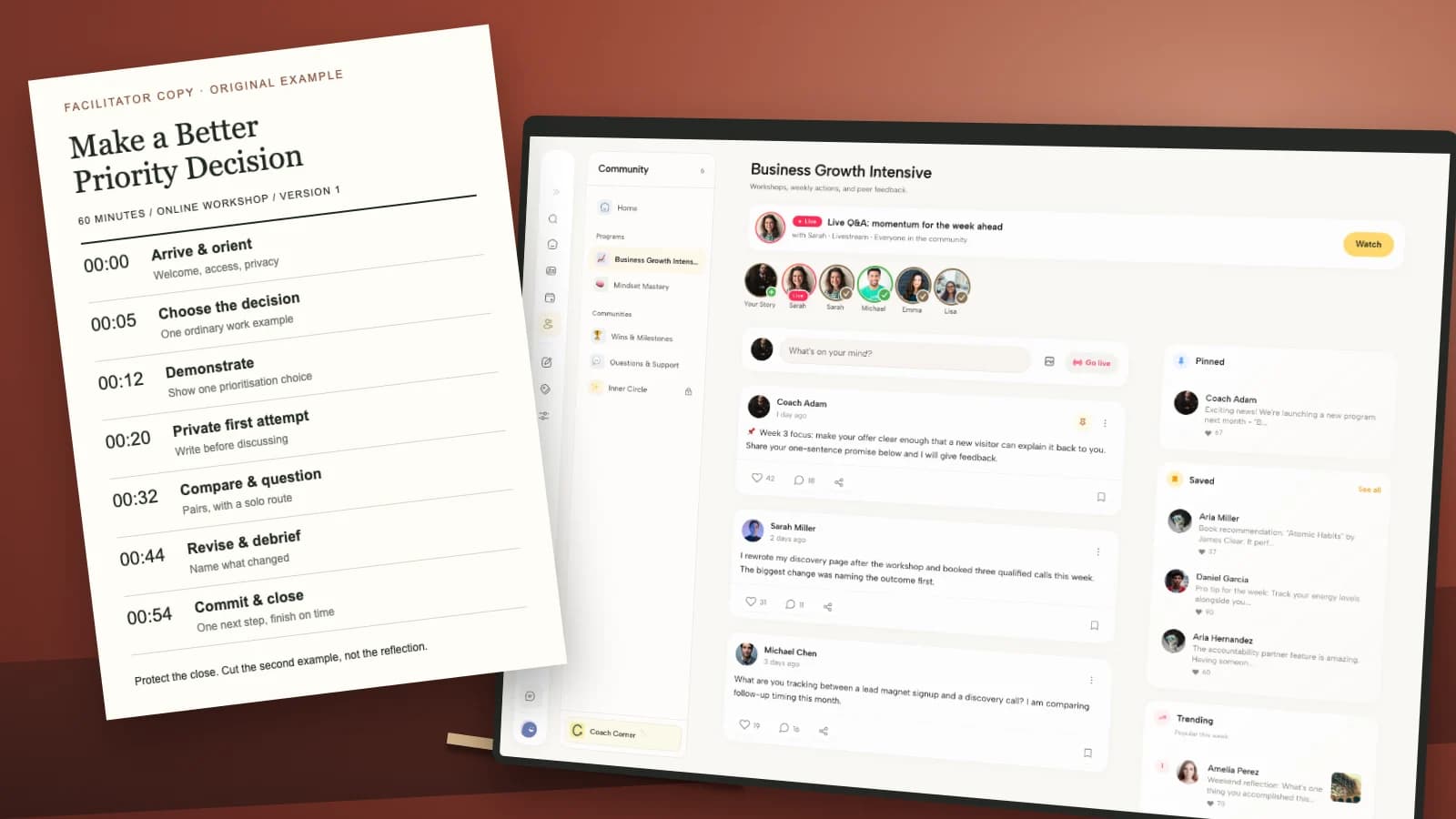
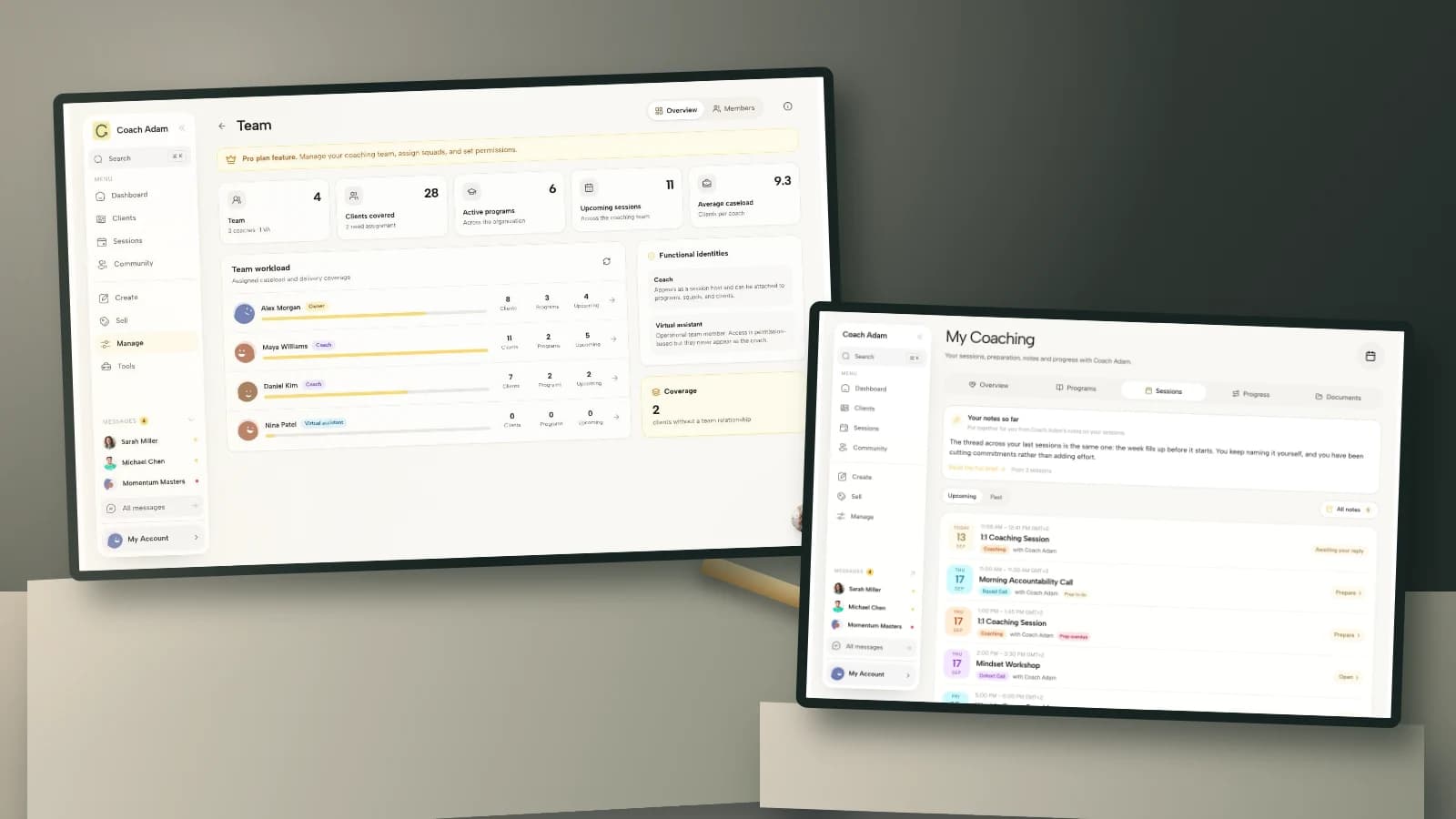
If your audit means checking scheduling, client materials and communication across disconnected records, inspect those responsibilities in a real coaching workspace before your next break. Try the interactive demo to explore the Coachful surfaces shown here. The point is to verify the client experience, not to assume software can agree an absence on your behalf.
Questions coaches ask about taking time off
Can I keep charging while I am on vacation?
It depends on what the client bought, your agreement and applicable requirements. A planned break within an agreed service structure differs from removing promised sessions or reviews. Check delivery first and agree any necessary adjustment. An announcement or a calendar block does not, by itself, authorize a payment change.
Do I need to hire a substitute coach?
Not always. A suitable agreed break may be enough for some engagements. Others need a more careful continuity discussion. Administrative cover is not coaching cover, and a substitute should not receive confidential information or take over sessions without the appropriate professional and client arrangements.
Should clients keep submitting check-ins while I am away?
Only if the purpose and review timing are clear and appropriate. An independent reflection can wait for an agreed review date. A check-in that normally signals active monitoring should not quietly continue unchanged when nobody is reviewing it. Tell clients what will happen to submissions.
What if I need unexpected leave?
Prioritize factual communication and the most immediate commitments. Use an authorized person to help if suitable, while limiting information to what they need. Give a realistic next update rather than inventing a return date. Resolve individual delivery, access and financial questions through the appropriate process as soon as practicable.