Maternity Leave for Coaches: 7 Steps to Plan Your Practice

Nour
Founder, Coachful
Can I take maternity leave from my coaching business without leaving clients in limbo or promising to work through it? Yes. Plan the service changes, the cash gap and the return separately. Decide which engagements will finish, pause or continue with agreed cover; fund the period when you will not deliver; and treat your return date as a review point rather than a guaranteed full diary.
The uncomfortable part is not announcing the baby. It is looking at a package you have already sold and realising that its final sessions, message support and payment dates extend into your leave. Resolve those commitments before writing a reassuring email. An out-of-office reply cannot deliver the coaching you promised.
This guide is for a self-employed coach preparing their own maternity leave, not for coaching a client through parenthood. The same planning structure can support adoption or other parental leave, with different personal, legal and benefit arrangements. It is business-planning guidance, not medical, tax, benefits or legal advice. There is no universal right length of leave or recovery timetable.
The seven decisions to make first
- Define the work you will stop and build an earlier-start contingency.
- Map every client's remaining entitlement and agree a delivery route.
- Calculate the cash runway using confirmed net inflows.
- Choose no cover, administrative cover or coaching cover deliberately.
- Check the actual client experience while you are away.
- Communicate the arrangement without oversharing or making vague promises.
- Reopen according to real capacity, not the backlog's demands.
You do not need a new course, a replacement coach or a constantly running launch to earn permission to stop. A smaller, explicitly paused practice is a legitimate operating model. The right question is which arrangement you can fund and honour, not which one looks most impressive online.
1. Define the leave boundary before choosing a date
Write down the work that will stop: live sessions, individual feedback, voice messages, discovery calls, community moderation, sales conversations and administration. These are separate services. Saying “no calls” while continuing daily message coaching is not a complete break from delivery.
Then distinguish your last planned delivery day, the start of your fully unavailable period and a provisional return-review date. A due date is not a business deadline you control. Your plan needs an earlier-stop option that does not depend on you finishing three days of frantic handovers first.
Choose a trigger for that contingency. For example: if you need to stop before the planned date, a named person sends the prepared availability notice, affected appointments are reviewed and each client receives the already-agreed alternative. That person needs legitimate access and instructions, not your password in a text message.

Inspect the calendar rather than relying on the regular availability pattern. Existing appointments, recurring sessions and discovery bookings may need separate decisions. Block dates in your actual scheduling system and test the public booking route. Do not assume changing availability automatically cancels appointments already booked.
Also decide whether you will do any work during leave. If the answer is no, write a plan that works without you. If you choose a limited task, define the task, frequency and maximum time, then check any effect on benefits or other entitlements locally. “I will keep an eye on things” is an unbounded job description.
2. Give every active client a delivery route
Create a short commitments register. You need operational facts, not a duplicate archive of private session notes. For each engagement, record the remaining sessions, promised between-session support, outstanding resources, payment arrangements, programme end date and next decision owner.
Check what the client actually bought. A fixed number of sessions is different from access to a time-limited group, and both are different from an ongoing monthly service. Your absence does not automatically freeze billing, extend access or remove a feedback commitment.

Choose among three routes with the client, within the agreement and applicable requirements:
- Complete before leave: appropriate when the remaining work fits at a useful pace. Do not squeeze a meaningful programme into a rushed fortnight simply to clear your diary.
- Agree a pause: confirm the sessions or services remaining, payment treatment, access, expiry dates and how the restart decision will happen. A pause without a review owner becomes an unattended promise.
- Arrange a transition: offer suitable cover or an appropriate ending where available. The client should understand the choice, commercial terms and information-sharing boundary before another coach appears.
Record the agreed change in the appropriate written form. Where a contract, refund or consumer-rights question is unclear, obtain qualified advice rather than borrowing someone else's clause. A friendly announcement is not necessarily a valid variation of the service agreement.
For employer-funded work, reconcile the client, sponsor and purchasing contact's roles. A sponsor may need revised delivery dates or invoice details without needing personal coaching information. Do not let an administrative leave update become a confidential progress report.
3. Calculate the leave runway, not just expected sales
Your financial plan should answer: what money must be available while you are not delivering, and where will it actually come from? Begin with essential household draw, unavoidable business costs, agreed cover costs and a separate uncertainty buffer. Use your own currency and planning period.
Next list confirmed net inflows: cash already ring-fenced, payments legitimately due for services you will still provide, verified benefit payments and any other dependable income you can actually use. Account for delivery costs, payment fees, refunds where relevant and tax obligations with your adviser. Do not count an unlaunched course or a hopeful new client as confirmed income.

Illustrative calculation: suppose the chosen leave period requires 9,000 units of household and business spending. Confirmed net inflows during that period are 3,000 units. The funding gap is 6,000 units before adding your separate buffer. These are fictional planning numbers, not a suggested budget or income forecast.

Separate cash in the bank from money you are free to spend. Prepaid fees may correspond to undelivered commitments, and tax reserves are not a holiday fund. Ask your accountant how your particular receipts, liabilities and business structure should be treated.
Benefit eligibility and permitted work vary by location and circumstances. For example, the UK government's Maternity Allowance eligibility guidance includes rules relevant to self-employed applicants. That does not establish your eligibility, payment amount or the treatment of a particular work activity. Check the responsible authority's current rules before relying on a payment or deciding to keep working.
Stress-test a longer gap and a slower return. Can the business tolerate an earlier stop, a delayed restart or fewer sessions on return? If not, adjust the plan now through a longer saving period, lower fixed commitments or a different agreed delivery model. Do not make your recovery the balancing item in a fragile spreadsheet.
4. Decide whether you need cover, and what kind
Cover is optional, not evidence that your practice is more professional. A properly agreed pause may be safer and simpler than hurriedly hiring someone. Choose cover only for a real need that you can define, fund and supervise through an appropriate arrangement.
No cover means you do not offer ongoing replies during the break. Resolve current obligations, state the lack of monitoring and identify any appropriate outside support within your professional scope. An unattended coaching inbox must not be described as an emergency service.
Administrative cover might handle a specific access or scheduling question. Name the tasks, response window, authority and escalation route. It should not quietly include reading confidential coaching messages, giving coaching advice or making financial decisions the person is not authorised to make.

Coaching cover requires more than available diary space. Check competence, suitability, professional arrangements, fees, confidentiality, record handling and the client's actual choice. Decide who owns messages, what happens if the fit is poor and how the temporary relationship ends.
Use the separate coaching client handover template if another coach will accept live work. It goes deeper into the client-reviewed brief, minimum necessary information and responsibility transfer. Your maternity-leave plan should identify which clients need that process, not duplicate every field inside a general absence checklist.
Do not give a covering colleague unrestricted access because it is convenient. Establish the necessary permissions and secure sharing arrangements for the particular task. A team roster shows who is present; it does not prove that a client has agreed to a coach change or that access is correctly configured.
5. Rehearse what clients will experience during leave
Walk through the service as a client would. Can they still find their next appointment? What happens to scheduled prompts? Does a lesson promise feedback next week? Is an advertised community actually moderated? Can someone buy an offer whose next step requires you to respond?
Distinguish resource access from human availability. Existing worksheets or a structured programme may remain useful, but they do not replace live sessions or individual feedback already included in the offer. If a component changes, agree and describe that change rather than quietly relabelling the service as self-paced.

Audit marketing too. Pause or revise any promotion that promises immediate access to you, and inspect the confirmation and follow-up messages behind it. A public booking calendar can be closed while an old sales email still invites someone to “start this week.” The handoff is only as accurate as its least-updated promise.
If sales remain open for a genuinely self-directed product, verify what a buyer receives, who handles access problems and whether the service can operate without your input. Do not launch a new product solely because someone told you maternity leave should produce passive income.

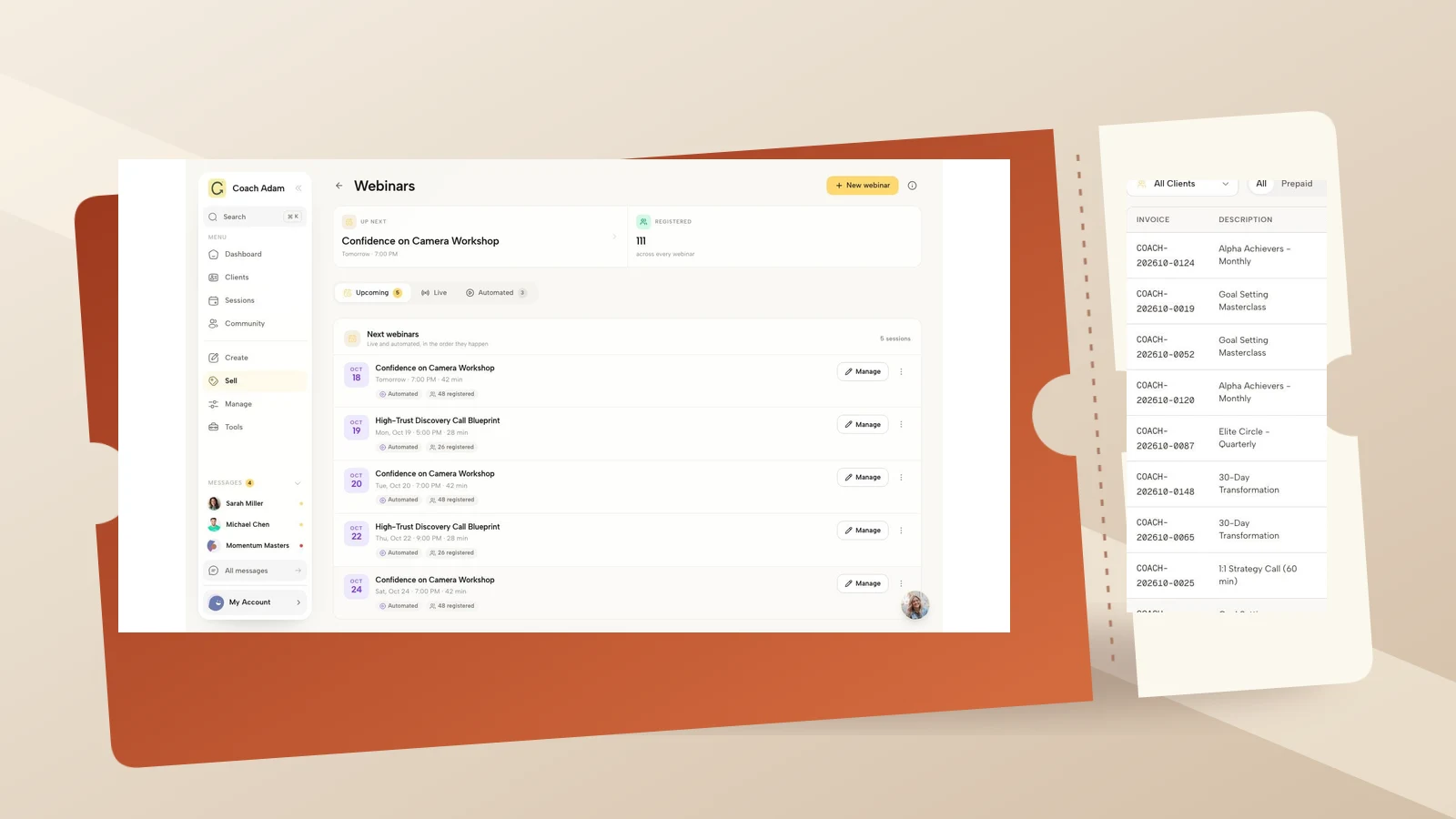
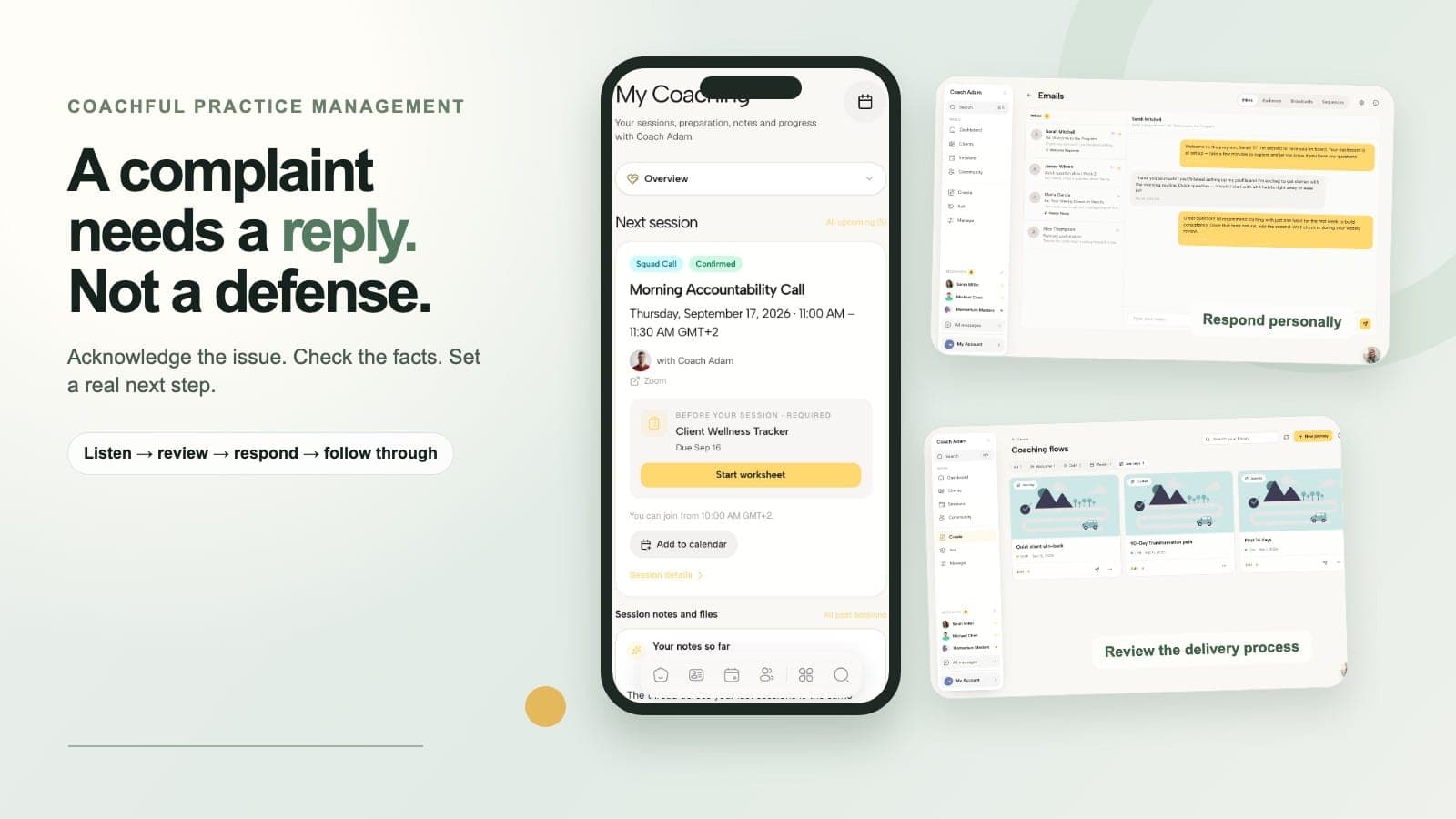
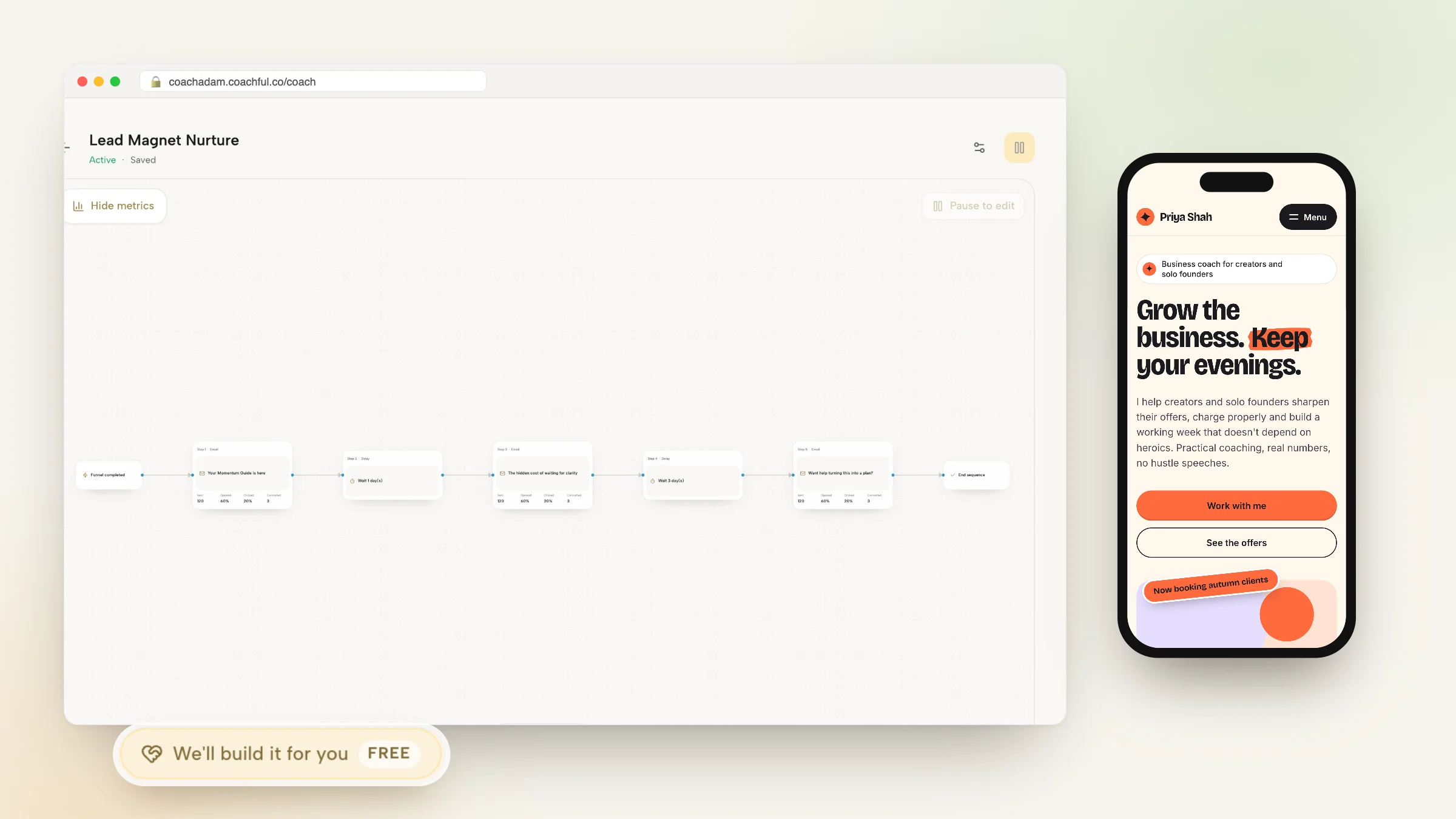
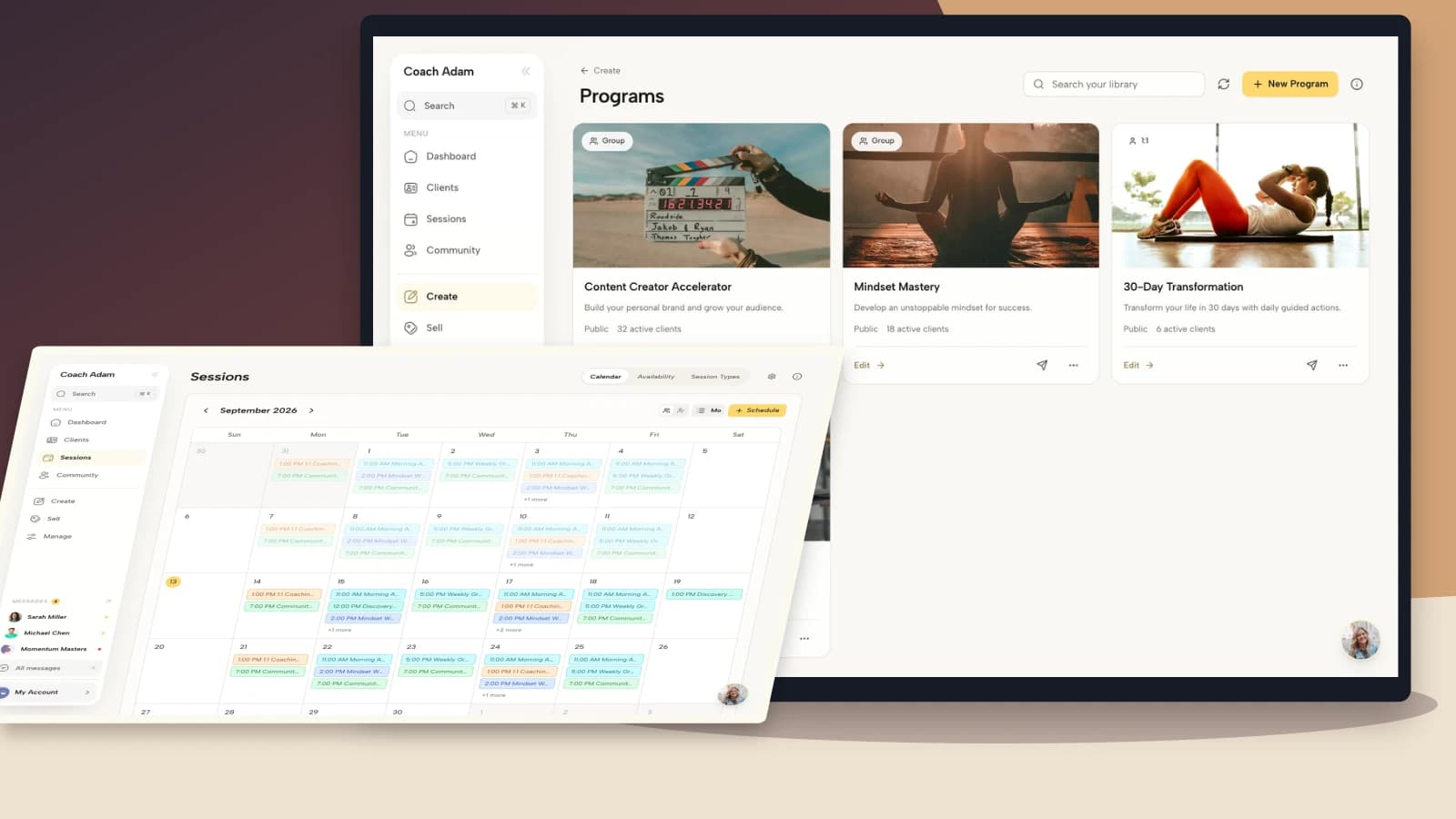
Coachful's real demo screens above show scheduling, client records, invoicing, programmes, a team view and a client portal. They illustrate places to inspect your commitments and the client experience. They do not establish a native maternity-leave mode, automatic reassignment, automatic billing changes or uninterrupted support. Verify the actual arrangements in your account and with the people involved.
6. Tell clients the plan, not your private life story
Clients need enough notice to make a meaningful choice and resolve changes. There is no universal number of weeks that fits every agreement or length of leave. Tell affected clients individually before relying on a general availability notice. You can keep medical information and family details private.
Keep the message practical: last availability, agreed delivery arrangement, payment or access changes if relevant, contact boundaries and the next update. If a return date is provisional, say so. Promise a review or update that someone can arrange, not an outcome you cannot predict.
Adaptable planning message:
“I am planning maternity leave from [date]. For our engagement, we have agreed [completion, pause or named cover arrangement]. [State the remaining sessions, support, access and payment decisions that apply.] I will not monitor coaching messages during leave. For [specific covered administrative issue], contact [approved route and response window]. We will review the restart arrangements by [date], with [person] responsible for that update. Please tell me by [date] if this differs from your understanding.”
Replace every placeholder and delete any claim that is not true. This is an operational message, not contract language. If the plan is not agreed, use the message to propose a conversation rather than presenting a unilateral decision as mutual.
For mailbox wording, use the existing out-of-office message templates for coaches. That guide addresses the auto-reply itself. Here the important task is resolving the months-long service, funding and return plan before the auto-reply goes live.
7. Make the return a capacity decision
A reopening date is not proof that you can immediately resume your former caseload. Review your actual available hours, personal readiness, practical support and any relevant professional advice. This is your business decision; there is no model-parent timetable to match.
Count the whole delivery load. A coaching hour can involve preparation, notes, follow-up, travel or administration. Add those commitments before opening new appointment slots. A diary with enough call-shaped gaps may still contain more work than you can deliver.

Start with only the work you can genuinely provide and set a short review interval that suits your situation. Confirm which paused clients want to restart rather than assuming everyone will return at once. Do not stack all missed sessions into the first week or sell your former response time before testing it.
If circumstances change, communicate the revised arrangement through the agreed route. Existing clients need a practical option, not a motivational explanation. Keep marketing claims aligned with the service now available, even if that means a smaller offer or a longer wait before accepting new work.
A copyable maternity-leave planning sheet
Keep this operational record short and secure. Reference the authoritative agreement or client file rather than copying sensitive coaching narratives into a shared spreadsheet.
- Work boundary: [tasks stopping, any limited tasks continuing, who monitors which channel].
- Dates and contingency: [last planned delivery day, unavailable period, earlier-stop trigger, update owner].
- Client register: [minimum identifier, remaining entitlement, agreed route, written confirmation, next responsible person].
- Cash runway: [essential costs, confirmed net inflows, funding gap, separate buffer, adviser checks].
- Cover: [none, admin or coaching; accepted scope, dates, fees, authority, permissions and client choice].
- Client-facing checks: [bookings, programme promises, support, billing decisions, access, sales messages and contact routes].
- Return gate: [review date, owner, actual delivery capacity, restart conversations and next update].
Frequently asked questions
How long should a self-employed coach take maternity leave?
There is no universal business answer. Your health, preferences, family arrangements, finances, benefits rules and commitments all matter. Build a plan that can accommodate an earlier stop and a later or smaller return, rather than treating a best-case timeline as a requirement.
Can I keep charging clients while I am on leave?
That depends on the service still being provided, the agreement, any agreed changes and applicable law. Do not assume recurring billing should continue merely because it is already configured. Equally, do not make unreviewed refunds or billing changes without resolving what is owed and authorised.
Do I need to hire another coach?
No. Completing work, agreeing a pause or arranging an appropriate ending may be better than cover. If another coach will deliver, confirm the client's choice, professional suitability, commercial terms and information-sharing arrangements before the handover.
Should I build a course to replace my coaching income?
Not as a default leave strategy. A new course still needs demand, production, delivery and support. Treat potential sales as uncertain until there is evidence and a deliverable service. Existing self-directed products may help, but they cannot silently replace contracted personal coaching.
Plan one client journey before changing the whole practice
Start with one active engagement that overlaps the leave. Check the remaining promises, agree the route, follow the client-facing screens and resolve the money question. Then repeat the process across the practice. That is more useful than drafting a perfect announcement while the delivery decisions remain open.
If you are considering software to support that review, Try the interactive demo and inspect the scheduling, client and programme views shown here. Use it to evaluate how you would organise the operational checks, not as a substitute for agreements, benefits advice or an actual cover arrangement.
A useful maternity-leave plan does not require your business to pretend you are still there. It makes the service honest while you are not.