Podcast Guest Questionnaire: 12 Questions for Coach Hosts

Coachful
Editorial Team
What should you ask a podcast guest before recording, without turning a friendly interview into another unpaid homework assignment? Ask only what changes your preparation: how to introduce them, the question they can help your listeners answer, the boundaries of the conversation, the recording arrangements and the public link they want to share.
For a coach hosting an interview podcast, a short guest questionnaire should prevent the avoidable scramble: the wrong job title in your introduction, a sensitive client story you cannot publish, or a guest who thought the conversation would be audio-only. It should not collect someone's entire professional history.
Prepare the conversation, not the guest's performance. The twelve questions below are an original working template for confirmed guests. They are not a guest application, a coaching intake assessment or a legally complete recording release. Adapt them to your show and use separately reviewed terms where needed.
What belongs in a podcast guest questionnaire?
Use five short sections: introduction, episode direction, boundaries, logistics and publication details. Put a sentence above the form explaining why you need the answers, when you need them and which fields are optional. A guest should understand the task before opening the first field.
Send it after you have agreed the basic audience and episode angle. Otherwise you risk asking someone to complete a production brief before they know whether they want the invitation. If you are still selecting guests, use a separate, lighter expression-of-interest process.
This article covers the host's preparation before recording. Our guide to getting booked on podcasts addresses pitching yourself as a guest. The podcast show notes template covers what to publish after the interview.

Copy these 12 podcast guest questions
Start with this introduction: “Thanks for joining [show]. These questions help me introduce you accurately and prepare a useful conversation for [audience]. Brief answers are welcome. Please reply by [date], leave optional questions blank if you prefer, and do not include confidential client or employer information.”
1. What name should I use, and how do you pronounce it?
Ask for the public name rather than a legal name you do not need. A phonetic spelling or brief pronunciation note can be enough. If the guest offers pronouns, confirm how they want them used; do not make disclosure a condition of participation.
Check pronunciation aloud before recording. A text field is useful preparation, but it does not remove the need to ask when you are unsure. Confirm spelling for the episode title separately from the spoken introduction.
2. How would you like me to introduce you in two sentences?
Request a short, relevant introduction, not a biography assembled from every award and previous role. Ask which current role, experience or credential matters to this topic. Verify any claim you plan to publish rather than copying an impressive description unexamined.
A fictional example: “Maya Chen is a leadership coach working with first-time managers. Today we are discussing how a manager can prepare for a feedback conversation with a former peer.” This establishes relevance without claiming guaranteed results or endorsement by an employer.
3. What one question should this episode help our listeners answer?
Include your audience in the prompt. “What would you like to talk about?” can produce an entire book outline. “What should first-time managers understand before giving feedback to a former peer?” creates a workable editorial focus.
You are inviting an angle, not outsourcing the show's purpose. If the answer is too broad, narrow it together before recording. Agree whether the episode is practical instruction, a personal account, a debate or an explanation of a professional approach.

4. What example or experience could make that answer concrete?
Ask for a brief outline, not a rehearsed anecdote. A coach can explain a fictional situation, their own appropriate experience or material they are genuinely authorized to share. State explicitly that client names, session notes, messages and identifying workplace details should not be submitted.
Removing a name does not necessarily protect a client. A role, event and small organization can identify someone together. If a real story is essential, resolve permission and professional obligations before the interview, not while editing around a disclosure afterwards.
5. Which two or three points would you most like us to explore?
This is a direction check, not a request for the guest to write your questions. Look for a usable distinction, a common misunderstanding and a practical next step. If all three points are product promotions, discuss the editorial expectations now.
Do your own research after reading the answer. A guest's preferred talking points can help you prepare follow-ups, but they are not independent evidence for their claims. Ask for a source when a central research or performance claim needs checking.
6. Are there topics, names or details we should keep out of the conversation?
Make this question optional and invite a private discussion instead of requiring sensitive details in the form. “Please avoid discussing my previous employer” is enough to flag a boundary. The guest does not owe you the underlying story.
Also state your own boundaries. A public interview about coaching does not become individual medical, legal, financial or therapeutic advice because a listener submits a question. Agree how you will redirect requests that fall outside the guest's competence or your show's scope.
7. What time zone will you be in on the recording date?
Ask about the actual recording location, not simply the city in the guest's biography. People travel. Confirm the invitation shows the correct local date, local time and total time reserved, including setup and any debrief.
A proposed 30-minute episode is not necessarily a 30-minute calendar appointment. Decide the appointment length for your production needs and state it plainly. Avoid ambiguous abbreviations when a named time zone and calendar invitation make the arrangement clearer.

8. Can you use the recording setup described below, or do you need an alternative?
Describe the actual platform, whether you record audio, video or both, and your preferred microphone, headphones and room setup. Ask about a short technical check. Do not require expensive equipment simply because another podcast does.
Give the guest a useful way to say “I am not sure.” A practical test can reveal an echo, a browser permission issue or a connection problem before the main appointment. Explain any local recording, download or upload steps your chosen tool requires.

9. Is there an access need or practical adjustment that would help you participate?
Offer examples such as receiving the topic outline in advance, taking a break or using a different communication method. Ask about the adjustment, not a diagnosis. Provide a direct contact route if the guest does not want to enter the information into a form.
Be honest about what you can provide. If your recording tool or format cannot support a request, discuss alternatives early rather than treating the submitted answer as an accommodation you have already delivered.
10. Which one public link should we include with the episode?
Ask for the exact destination and a short description of what a listener finds there. Confirm whether it requires an email address, account or payment. A useful resource can be a better fit than the guest's general homepage, but the guest should not be obliged to create a free gift.
Open the link yourself on a phone and in a signed-out browser. Check that it belongs to the intended guest and reaches the promised resource. If there is an affiliate, sponsorship or other relevant commercial relationship, discuss the necessary disclosure.

11. What public image and profile details may we use for the episode?
Request the headshot or approved image link, the name credit where applicable, and only the social profiles you intend to tag. Explain the planned use, such as the episode page or announcement. A publicly visible image is not automatically yours to reuse.
If the image belongs to a photographer or organization, ask the guest to confirm the appropriate usage arrangement. Do not gather a home address, personal identification or an exhaustive list of accounts when none is needed for production.
12. Is there anything in the recording or publication plan we still need to agree?
Summarize your plan before asking this: recording format, expected editing, distribution destinations, clip use, approximate release process and the contact route for corrections. Invite questions instead of presenting silence as agreement.
This question is a final gap check, not a substitute for a release. If you need permission to record, edit, publish or reuse clips, address that explicitly in appropriately reviewed terms. Do not promise a final approval right, removal right or publication date unless you actually intend and are able to honor it.

Keep preparation, recording permission and marketing separate
A completed questionnaire tells you what the guest submitted. It does not automatically establish permission for every use of the recording, every image, an advertising campaign or a newsletter subscription. Separate the decisions so the guest can understand each one.
A preparation form might link to your recording terms and explain the next agreement step. An optional marketing choice should be clearly optional and handled according to the rules that apply to your practice and audience. Do not make your newsletter a hidden condition of appearing on the show.
Keep a record of the terms actually agreed and the version used. Where the subject or commercial arrangement carries meaningful risk, get suitable legal or professional advice. This editorial template does not establish that any particular wording is legally sufficient in your jurisdiction.
A short email for sending the questionnaire
The following is original sample copy. Replace every bracketed instruction, including the real form destination, before sending. It is not an invitation to subscribe the guest to a sequence.
Subject: A few details before our [show] recording
Hi [name],
I'm looking forward to our conversation about [specific question] for [audience]. We have [date, time and named time zone] reserved for [total appointment length], including setup.
Please complete [guest questionnaire link] by [date]. Brief answers are welcome, and the form marks optional fields. Please leave out confidential client or employer details.
We plan to record [audio/video/both] using [platform]. Our recording and publication arrangements are [clear summary or separately reviewed terms link]; let me know if anything needs discussing before we begin.
If a form or the proposed setup is difficult to use, email me and we can arrange another way. Thanks, [host name].

Send one useful reminder if needed, following the deadline you agreed. Do not build an elaborate escalation sequence around a voluntary guest appearance. If you already know the answer to a question, prefill your working brief or confirm it in the email instead of making the guest repeat it.
Turn the answers into a host brief
Do not open the raw submission for the first time as the guest joins. Read it, check the link and introduction, and turn the answers into a short production document. Keep unresolved items at the top so you cannot mistake “submitted” for “ready.”
For the fictional leadership episode, the brief might identify Maya's checked introduction, the former-peer feedback question, one fictional scenario, a boundary around confidential HR cases and one preparation resource. The host still needs their own opening question and follow-ups.

Use the brief as a map, not a teleprompter. Repeating every questionnaire question on air wastes the preparation. Instead, ask the guest to explain the useful idea, challenge an unclear assumption and work through the example at a pace your listeners can follow.
Before recording, confirm the essentials aloud: name pronunciation, scope, the recording format, and the permission arrangements required for your situation. If a new boundary emerges, address it before continuing. A form should support that conversation, not make you stop listening.
Build a repeatable guest-preparation process
Use one home for the current questionnaire and one accountable person for checking the answers. Decide who verifies the introduction, resolves permission questions, confirms the appointment and tests the public link. A small show can do this with a document and email.
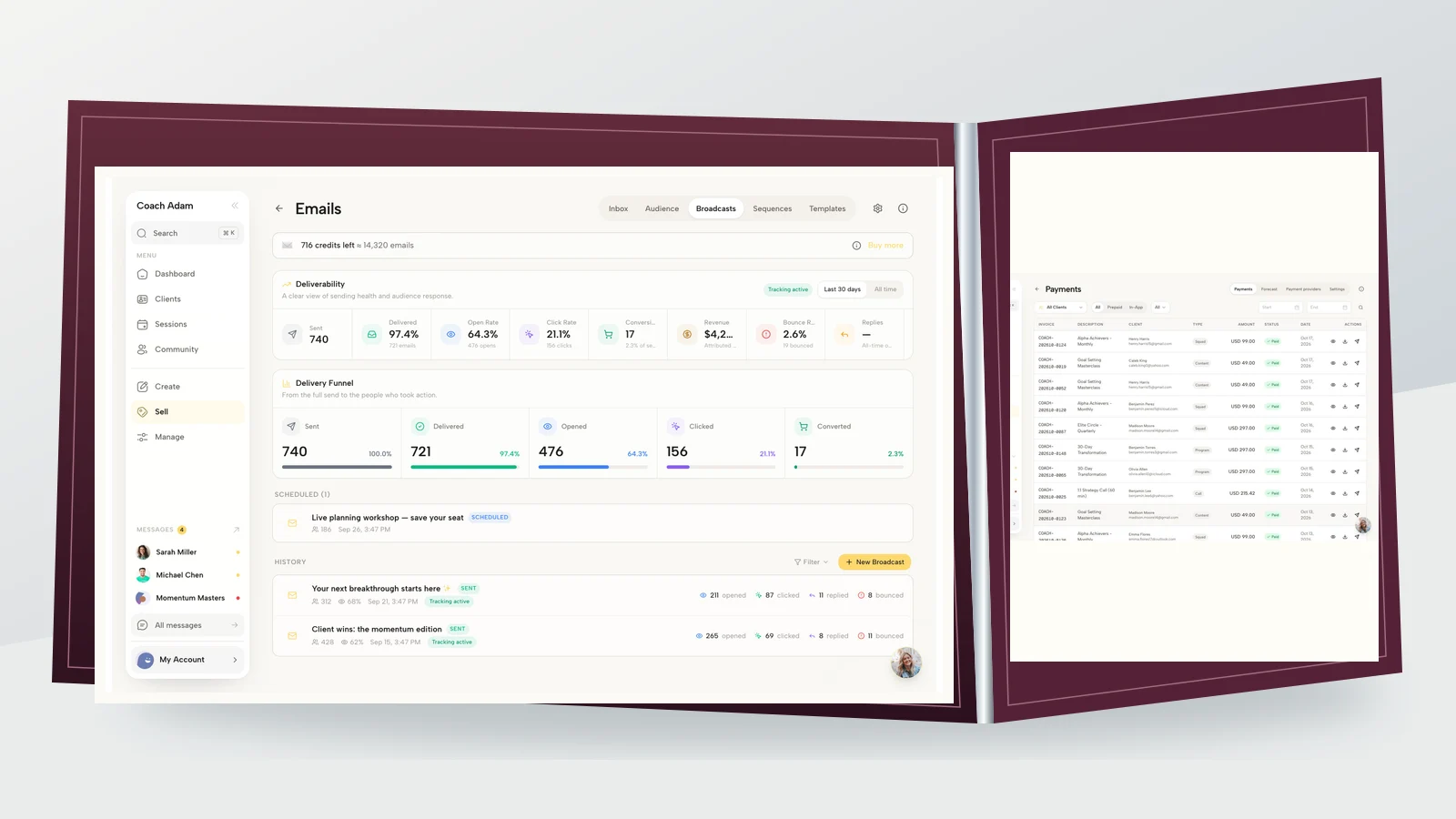
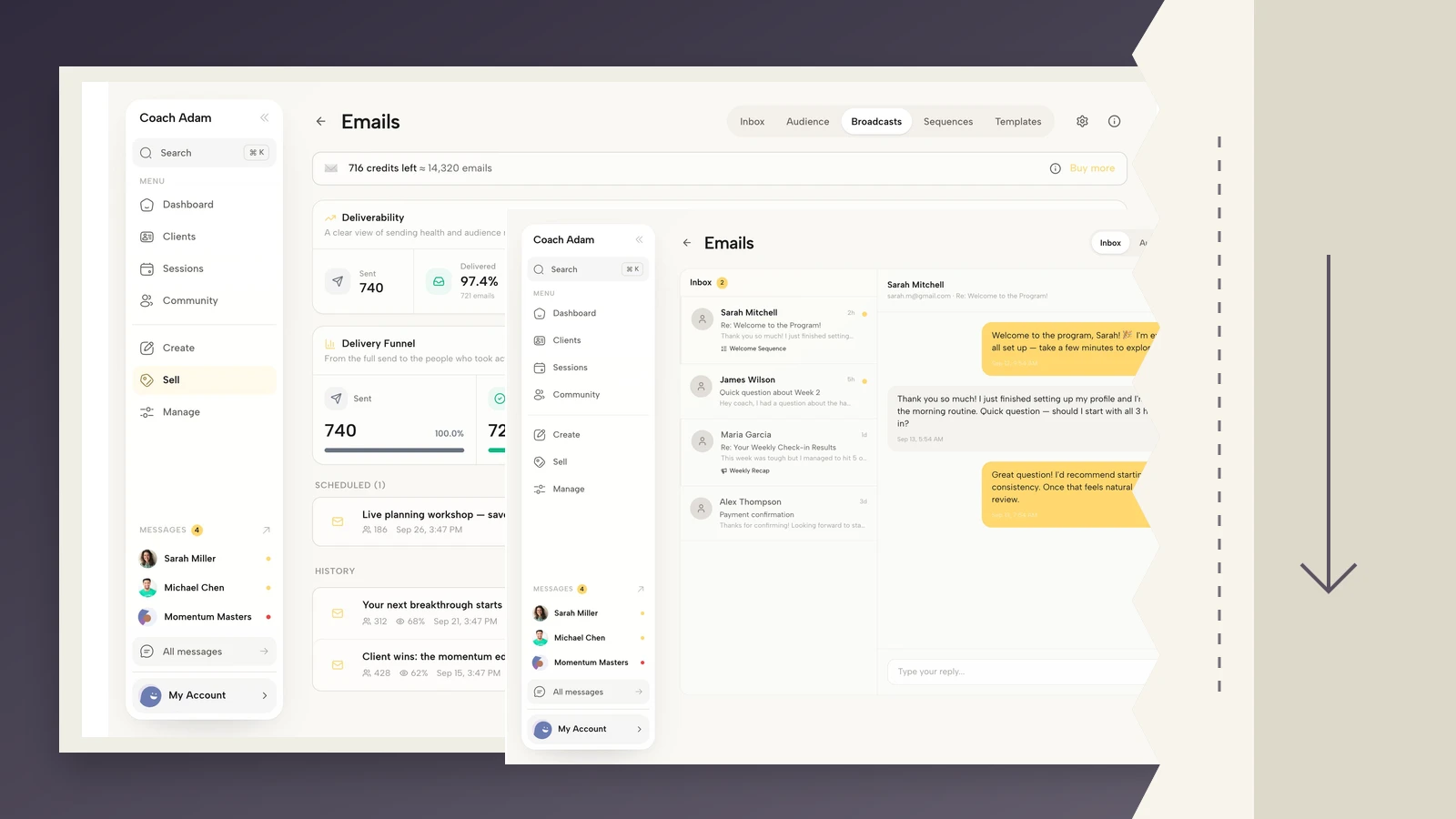
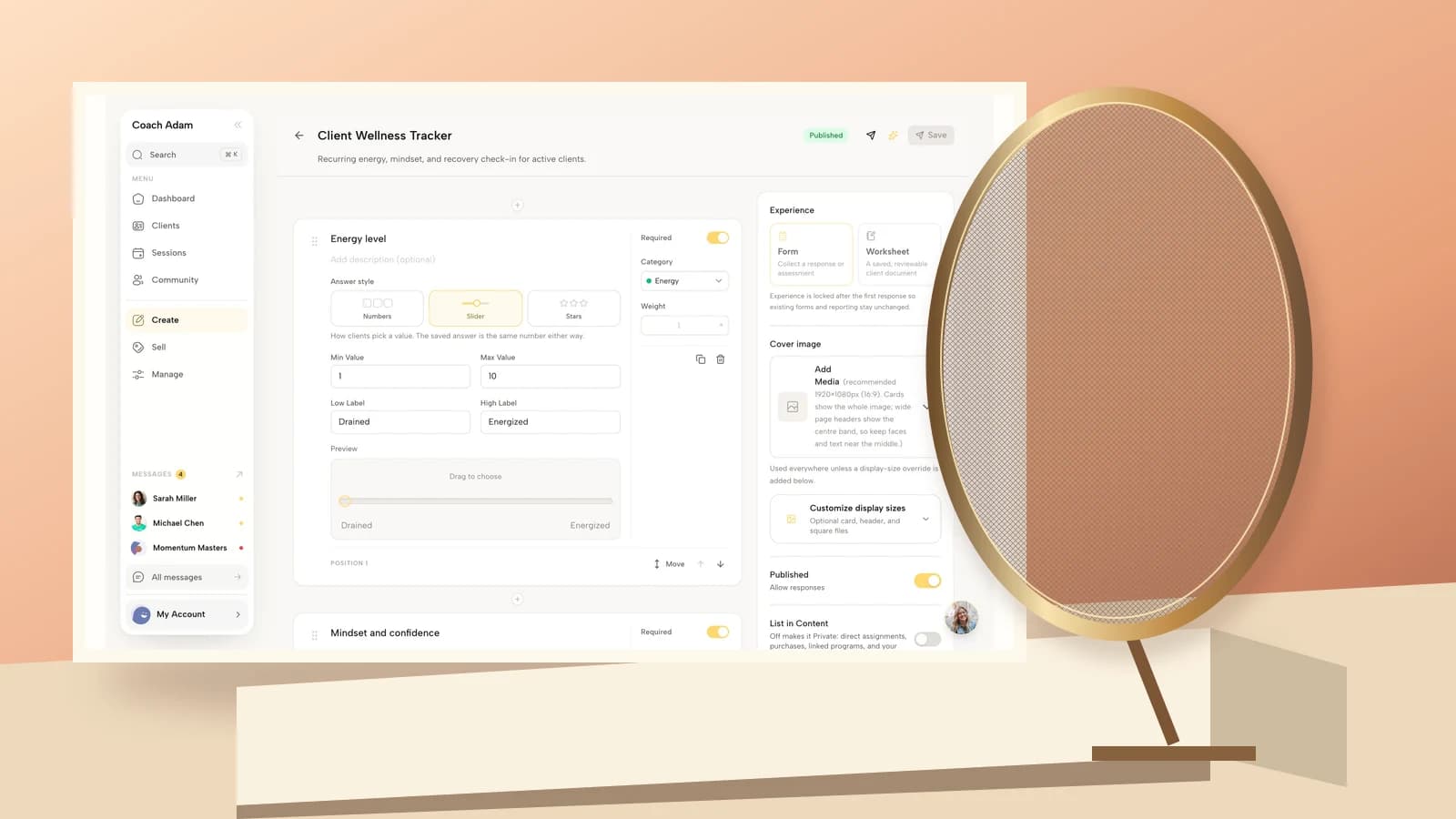
The Coachful demo surfaces in this guide show form editing, a session calendar, connection controls, email and public links. They illustrate administrative parts of a coaching practice. They do not show a built-in podcast guest template, podcast recording, RSS hosting or a legally validated release-signing workflow.
If you want to evaluate whether those administrative surfaces fit your guest-preparation process, try the interactive Coachful demo. Start with the form editor and ask whether you can keep required questions short, then inspect how you would handle the agreed appointment and correspondence. Choose the process before adding automation.
Questions coach-hosts ask
How many questions should a podcast guest questionnaire have?
There is no universal optimum. Twelve is the working structure here, not a performance benchmark. Remove questions you have already answered and keep optional items optional. A returning guest may need only a brief confirmation and an update on the topic or publication arrangements.
Should I send every interview question in advance?
Send the topic, purpose, format and any preparation that would materially help. You can also share sample questions when appropriate. Do not imply the final conversation will follow an exact script unless that is your agreed format; leave room for clarification and genuinely useful follow-ups.
Is a guest questionnaire the same as a guest application?
No. An application helps decide whether to invite someone. A confirmed guest questionnaire prepares an agreed appearance. Combining both can make a guest wonder whether the booking is real and can lead you to collect more information than production requires.
Can I use a coaching intake form for podcast guests?
Use an editable form tool if it suits the task, but replace the coaching intake questions. A podcast guest is not necessarily a coaching client. They should not have to submit personal goals, health history or payment information to participate in an interview.
For an external example of this format, see Fluent Forms' podcast guest questionnaire. Its sections demonstrate the practical distinction between guest details, promotional information and permission. The questions and examples above are original coach-host guidance, not a promise of audience growth or legal compliance.