
Sobriety Coaching: What It Is and How It Fits With Treatment
Sobriety coaching is non-clinical support for people who have stopped drinking or using drugs, or want to, and need help building a life where that holds: daily structure, a plan for high-risk moments, a social life that does not revolve around alcohol, repairing relationships and getting work back on track. A sobriety coach works alongside treatment and mutual-help groups, not instead of them. They do not detox anyone, diagnose or manage medication. For someone who has been drinking heavily, stopping suddenly can be medically dangerous, so a doctor comes first.
The first weeks of sobriety are often about getting through the day. The months after are about the harder question: what fills the space alcohol used to take up. That is the part treatment programs often cannot stay for, and the part a coach is built for. This guide explains what sobriety coaching is, how it compares with recovery coaching, counseling and groups, when you need medical care first, what sessions involve, what the research shows, what it costs and how to choose a coach who respects your path.
Sobriety coach, recovery coach, counselor or group?
The titles overlap, and the differences matter when you are deciding who to trust with something this important.
| Who | What they do | Licensed? |
|---|---|---|
| Sobriety coach or private recovery coach | Goals, routines, accountability and life rebuilding, usually one to one and paid by the client | No. The title is unregulated |
| Peer recovery specialist | Peer support inside treatment programs, hospitals and recovery organizations | Usually state certified, with supervision |
| Addiction or alcohol counselor | Behavioral treatment for substance use disorder | NIAAA notes most states require some form of certification |
| Doctor, nurse practitioner or psychiatrist | Assessment, safe withdrawal, medications, other health problems | Yes |
| Mutual-help groups | Peer support from people in recovery, such as AA and SMART Recovery | No; free to attend |
The counselor and doctor rows come from NIAAA's guide to finding and getting help for alcohol problems, which recommends talking to a primary care provider as an important first step. Many people use three or four of these at once. A common pattern is treatment and a group early on, with a coach added for the long stretch of rebuilding.
Get medical help first, and see a licensed professional when...
- You have been drinking heavily for a long time and plan to stop. NIAAA warns that stopping suddenly can trigger a painful or potentially life-threatening withdrawal, with symptoms that can include nausea, a rapid heart rate and seizures. A doctor can make it safer.
- You have had withdrawal symptoms before: shakiness, sweating, trouble sleeping, nausea, a racing heart, or seeing or feeling things that were not there.
- You want to know about medication. Three medications are approved in the US to help people stop or reduce drinking (naltrexone, acamprosate and disulfiram), and a primary care provider can tell you whether one fits.
- You use opioids or other drugs, or mix substances. Treatment and medications for opioid use disorder are a clinical decision.
- Depression, anxiety, trauma or thoughts of suicide are part of the picture. In the US, call or text 988 to reach the 988 Suicide and Crisis Lifeline. In an emergency, call 911.
Who sobriety coaching helps
Alcohol problems are common and rarely treated. In the 2024 National Survey on Drug Use and Health, 27.9 million people aged 12 and older in the US had alcohol use disorder in the past year (NIAAA), and only 7.6 percent of them received alcohol treatment (NIAAA). Coaching is one of several doors people use. It tends to suit:
- People leaving a treatment program who want structure and someone to check in with during the first months home.
- People a year or more into sobriety who are steady and now want help with work, money, health or relationships.
- People who have stopped on their own, with medical advice, and want accountability without, or as well as, a group.
- Family members who want help supporting someone without losing themselves. Some coaches work specifically with families.
It is the wrong first step for someone in active crisis, someone who needs a medically supervised withdrawal, or someone whose drinking is tangled up with untreated depression or trauma. Those come first.
What happens in sobriety coaching sessions
A first session usually covers your history with alcohol or drugs, your current supports (treatment, groups, sponsor, family, doctor), what your days look like now, the situations that feel risky, and what you want your life to look like in six months. A good coach will ask early how you define recovery for yourself, and whether you use medication, a group or neither.
After that, sessions are usually weekly at first. A typical session reviews the week, looks at a moment that was hard, plans for the next predictable risk (a wedding, a work trip, a bad anniversary) and agrees one or two actions. Some coaches send a short form before each call so you arrive with the week already written down.

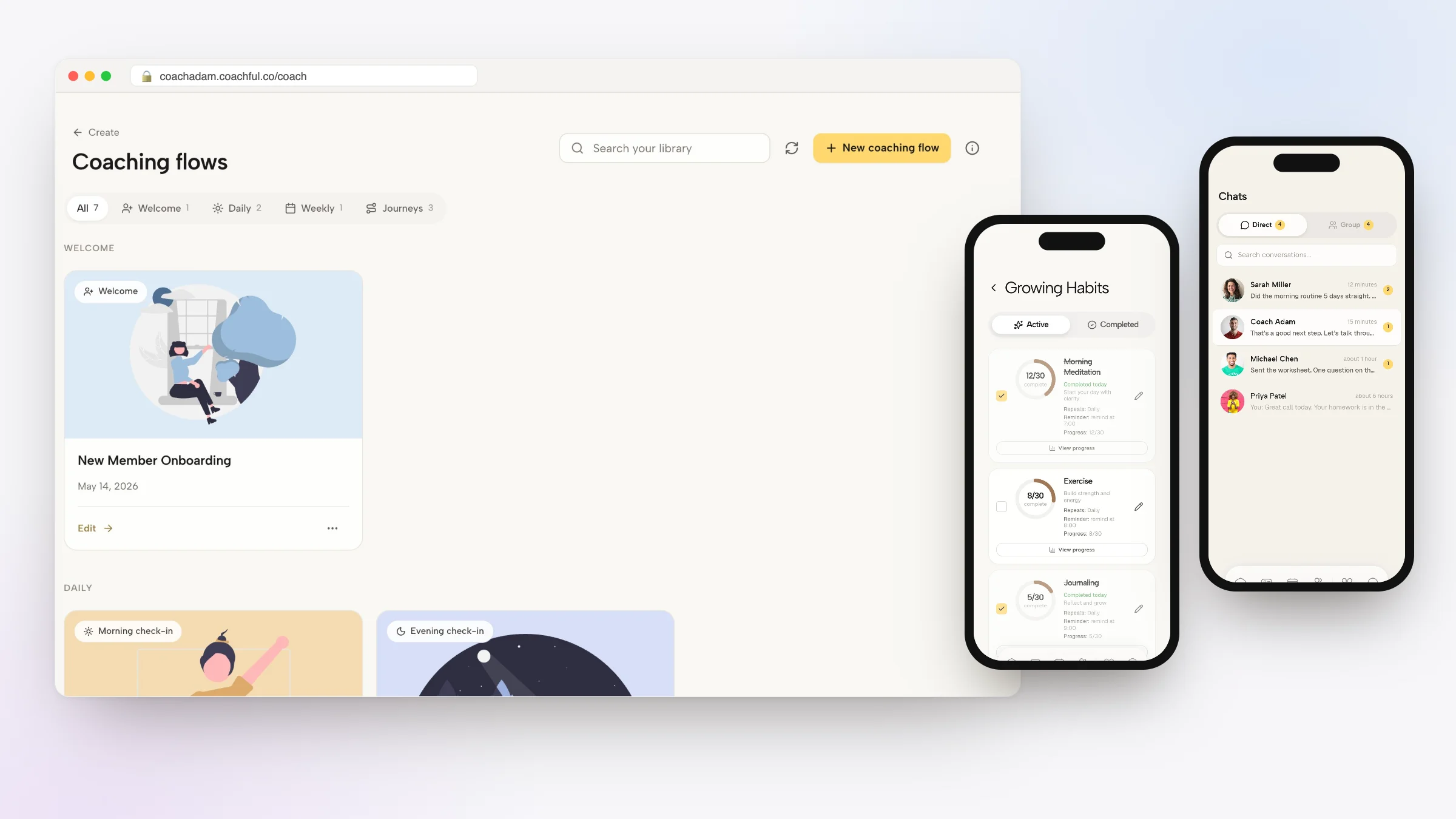
Between sessions, many coaches use brief morning and evening check-ins: what matters today, how it went, how you are feeling. It takes a minute and builds a picture of patterns over weeks. NIAAA describes setbacks as common and part of an ongoing process, and a running record makes it easier to spot the build-up before one.

Routines that replace the old ones, such as an evening walk at the hour you used to open a bottle, become habits you can track.

Messaging is the part to agree carefully. A coach is not an emergency line. Agree what messages are for and how fast the coach replies, and keep crisis numbers and your sponsor's number somewhere you can find them.

Some coaches run small groups or a private community, which adds peers who understand without the coach having to be available every hour.

What the research says
- Recovery is the common outcome. NIAAA says evidence-based treatment is available and that most people with alcohol use disorder recover or markedly improve, while noting that it is rare for someone to go to treatment once and never drink again.
- Mutual-help groups have strong evidence. A 2020 Cochrane review found that manualized AA and twelve-step facilitation improved rates of continuous abstinence at 12 months compared with other clinical interventions such as CBT, with high-certainty evidence from two studies of 1,936 people (Kelly and colleagues, 2020).
- Peer recovery support is promising but less proven. A 2019 systematic review of peer recovery support services and recovery coaching found tentative positive results, including reduced substance use and relapse, better relationships with providers and social supports, and higher treatment retention, alongside many null findings and weak study designs (Eddie and colleagues, 2019).
Most of that peer research comes from people working inside treatment systems rather than private coaches. A fair conclusion: a sobriety coach is a reasonable addition to treatment and groups, and the best ones connect you to those supports rather than replace them.
What sobriety coaching costs
There is no reliable published rate for sobriety coaching. Coachful's 2026 Coaching Business Report, which compiles published research and practitioner reports for the second quarter of 2026, has no recovery-specific figure, so the closest benchmark is life coaching:
| What you buy | Typical price | Source |
|---|---|---|
| One session | $75 to $200 | PayScale and practitioner reports |
| Four-week starter | $400 to $600 | Practitioner reports |
| Three months, eight sessions | $1,200 to $2,500 | Practitioner reports and verified published rates |
| Six months, 12 to 16 sessions with chat | $2,500 to $5,000 | Practitioner reports |
| Group coaching | $100 to $300 a month | Practitioner reports |
US dollars, Q2 2026, from coachingrates.com. Practitioner figures are estimates.
Some support costs nothing. NIAAA describes the "free and flexible assistance" of mutual-help groups as able to help people make and sustain changes, and many treatment programs and recovery community organizations offer peer support at no charge. Private coaching is usually paid out of pocket, so check before you assume insurance will help.
How to choose a sobriety coach
Training and background
- Peer recovery certification. Many recovery coaches hold their state's peer certification or the IC&RC Peer Recovery credential. Our guide on how to become a recovery coach explains what those involve.
- Coach training. ICF credentials show general coaching skills and supervised hours (ICF credentialing).
- Motivational interviewing. A widely taught, client-centered way of talking about change. Ask whether the coach is trained in it; our guide to motivational interviewing for coaches explains it.
- Lived experience. Many sobriety coaches are in recovery themselves. It brings understanding. Ask how long, and how they keep their own story from steering yours.
Respect for your path
People recover in different ways: abstinence or moderation goals, twelve-step groups or other groups or none, with or without medication. SAMHSA's National Model Standards for Peer Support Certification acknowledge multiple pathways of recovery and recommend leaving pathway-specific requirements, including abstinence-based ones, out of peer certification. A coach who tells you medication "isn't real recovery" is putting their view above your doctor's.
Questions to ask
- How do you define recovery, and how do you work with people whose path differs from yours?
- What do you do if I drink or use again?
- When would you tell me I need treatment or a doctor, and do you work with my care team?
- How quickly do you reply between sessions, and what happens at night or on weekends?
- What is in our written agreement about confidentiality, cancellations and refunds?
Red flags
- Offering to manage withdrawal at home without a doctor.
- Discouraging medication, therapy or groups you already find helpful.
- Promising a cure or a fixed number of sessions to "beat" addiction.
- Blurred boundaries: socializing, money arrangements beyond the fee, or anything romantic.
- No plan for a crisis and no crisis numbers shared.
- Pressure to prepay a long package in the first weeks of sobriety.
Find a sobriety coach on Coachful
Coachful's Find a Coach directory is public, so you can browse privately without an account. Search "sobriety", "sober", "recovery" or "alcohol" to find coaches whose headline or bio mentions them, or browse the Health and Fitness, Mindset and Spirituality categories. The Find My Coach quiz asks what you want to improve, where you are now, your preferred style (including a gentle, supportive option and a high-accountability one) and your monthly budget, then suggests coaches.

Profiles show the coach's background, credentials and method where they have added them, any programs and prices, and a calendar to book a discovery call or a form to send a message. Use the questions above before you commit.

Are you a sobriety or recovery coach?
Our guide on how to become a recovery coach covers certification, scope and crisis plans. Coachful's page for life coaches shows the check-ins, habits, messaging and private client records this work runs on, and the team will build your website or program for you at no extra cost through the free white-glove service.
Frequently asked questions
What does a sobriety coach do?
A sobriety coach helps you build a life that supports staying sober: daily routines, plans for risky situations, a social life without alcohol, relationships and work. They check in between sessions and connect you with treatment and groups. They do not provide detox, diagnosis or medication.
Is a sobriety coach the same as a recovery coach?
Mostly, yes. Both terms describe non-clinical support for people in or seeking recovery. "Recovery coach" is also used for peer recovery specialists who work inside treatment programs and are often state certified, while private sobriety coaches usually work directly with clients.
Can a sobriety coach replace rehab or AA?
No. A coach works alongside treatment and mutual-help groups. A Cochrane review found AA and twelve-step facilitation improved continuous abstinence at 12 months, and NIAAA recommends speaking with a primary care provider about treatment options and medications.
How much does a sobriety coach cost?
There is no reliable recovery-specific figure. Life coaching, the nearest benchmark, typically runs $75 to $200 a session and $1,200 to $2,500 for three months, according to Coachful's 2026 Coaching Business Report. Mutual-help groups are free to attend.
Is it safe to stop drinking with just a coach?
Not if you have been drinking heavily. NIAAA warns that sudden withdrawal can be life-threatening, with symptoms that can include seizures. See a doctor first to plan a safe way to stop; a coach can support you after that.
What if I relapse while working with a coach?
NIAAA describes setbacks as common and part of an ongoing process. A good coach will help you look at what happened without shame, adjust the plan and connect you with your treatment provider. Ask any coach how they handle it before you start.
Can I do sobriety coaching online?
Yes. Most sobriety coaching runs by video or phone with messaging between sessions, which also lets you choose a coach who fits your path rather than whoever is nearby. See are online coaches worth it for the trade-offs.












