Best Time to Post YouTube Shorts: A Coach's Guide 2026

Coachful
Are you asking the wrong question about YouTube Shorts?
Every coach wants the best time to post YouTube Shorts because a fixed slot feels controllable. You're busy, your clients are busy, and a neat answer like “post at lunch” sounds more useful than “it depends.” But if you've posted at the so-called right time and still attracted the wrong viewers, you've already seen the flaw in that thinking.
Your ideal client doesn't become a client because YouTube was busy. They convert because your Short met them in the right mental state. A founder sees your leadership clip right before a team meeting. A burned-out parent watches your boundary advice after the house finally gets quiet. A mid-career professional finds your career transition Short late at night, when they're honest enough to admit they need change.
That's why a generic timing chart only gets you so far. The better question is when your people are psychologically receptive. If you want a more tactical baseline, this guide on when to post YouTube Shorts can help. This article goes further. You'll get eight timing models built around client behavior, coaching context, and business goals so you can stop chasing activity and start posting for intent.
1. The Peak Engagement Window Strategy
Most coaches start with platform logic. Smart coaches move to audience logic.
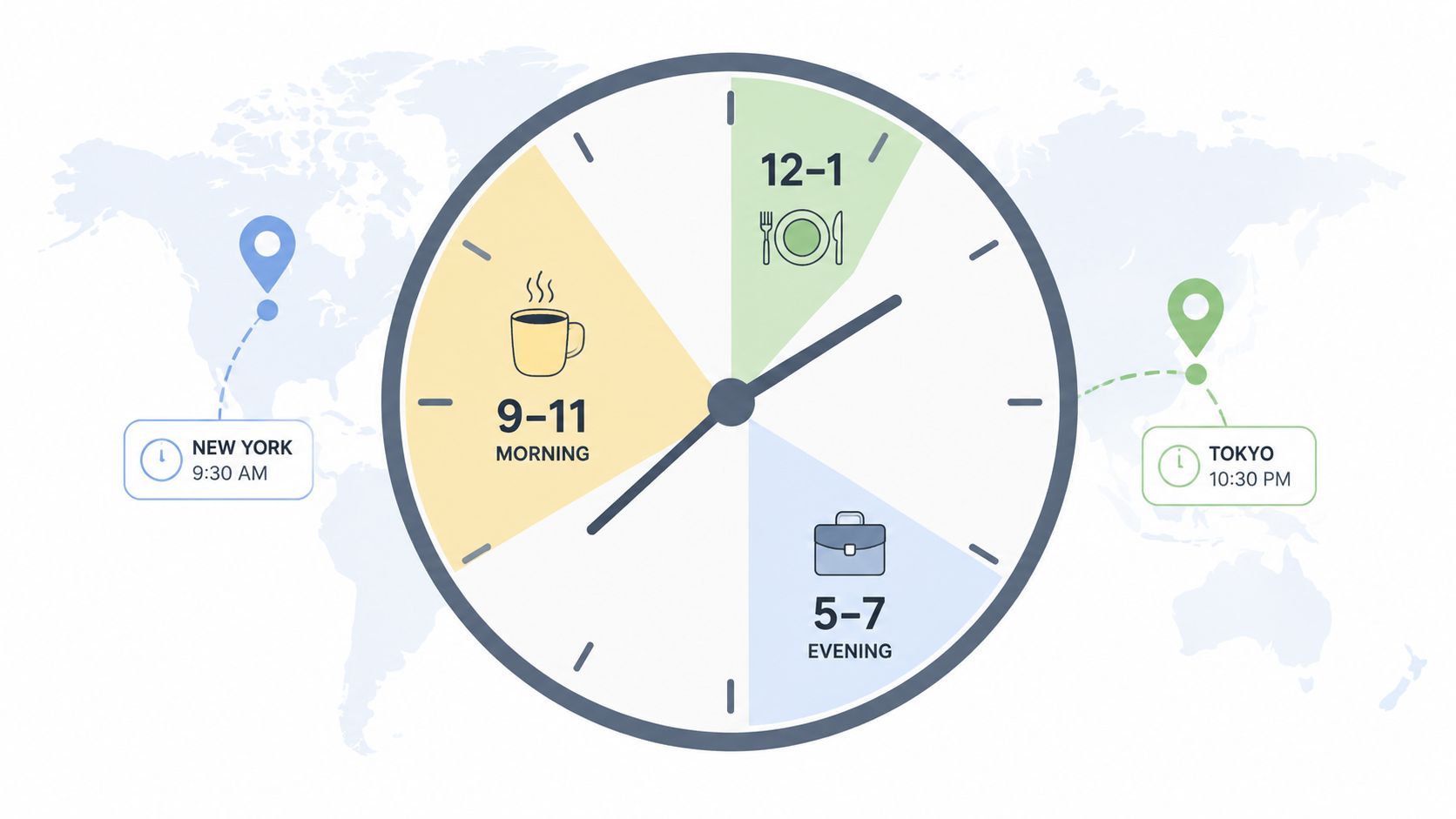
The best time to post YouTube Shorts usually sits inside transition moments. People rarely discover coaching content in deep work mode. They find it when they're shifting gears. That often means mid-morning, lunch, or early evening. Not because those hours are universally magical, but because they create mental openings.
A business coach serving executives might test an early morning leadership prompt and a lunch-hour decision-making Short. A life coach for parents may find late evening works better because that's when the emotional noise drops. A wellness coach working with HR leaders may notice weekday office rhythm matters more than broad consumer patterns.
Read your audience, not the internet
Start in YouTube Studio and look at when your viewers are on the platform. Then compare that with when your clients are mentally available to hear coaching advice. Those aren't always the same thing. An executive might be active on YouTube in the morning, but only receptive to a deeper mindset message after a difficult meeting.
Use your own operating reality too. If you're live in sessions all afternoon, you may be posting at the exact time you can't monitor comments or reply to leads. That matters. Early engagement often improves when you can participate.
If your channel setup is messy, timing won't save weak discovery. Clean up your basics first with this guide to YouTube channel set up for coaches.
Practical rule: Test one time zone deeply before you expand. Coaches often dilute signal by trying to serve everyone at once.
A useful example. If you coach women entrepreneurs in one primary region, post around the same local windows for a few weeks and log what happens. Don't just note views. Track comments, profile visits, inquiry messages, and whether the comments sound like peers, lurkers, or actual buyers.
2. The Friday Momentum Build Strategy
Friday works differently because people think differently.
By the end of the week, many viewers move into evaluation mode. They're reviewing what they finished, what they avoided, and what they want next week to feel like. That makes Friday especially strong for coaching content that asks for reflection, planning, or commitment. If your Short helps people process the week, it can attract fewer casual viewers and more serious ones.
A business coach might post a “Friday CEO reset” Short for founders who are mentally stepping out of operations. An executive coach can share a short lesson on what to stop carrying into next week. A wellness coach can frame Friday as recovery, not collapse.
Use Friday for decision energy
This isn't the day for broad inspiration alone. It's a strong day for identity-based prompts.
Try examples like these:
- Reflection prompt: “What created tension in your week that you're still pretending is sustainable?”
- Boundary reframe: “If next week already feels heavy, the problem probably isn't your calendar. It's what you haven't declined.”
- Planning cue: “Before Sunday planning, decide what you're no longer available for.”
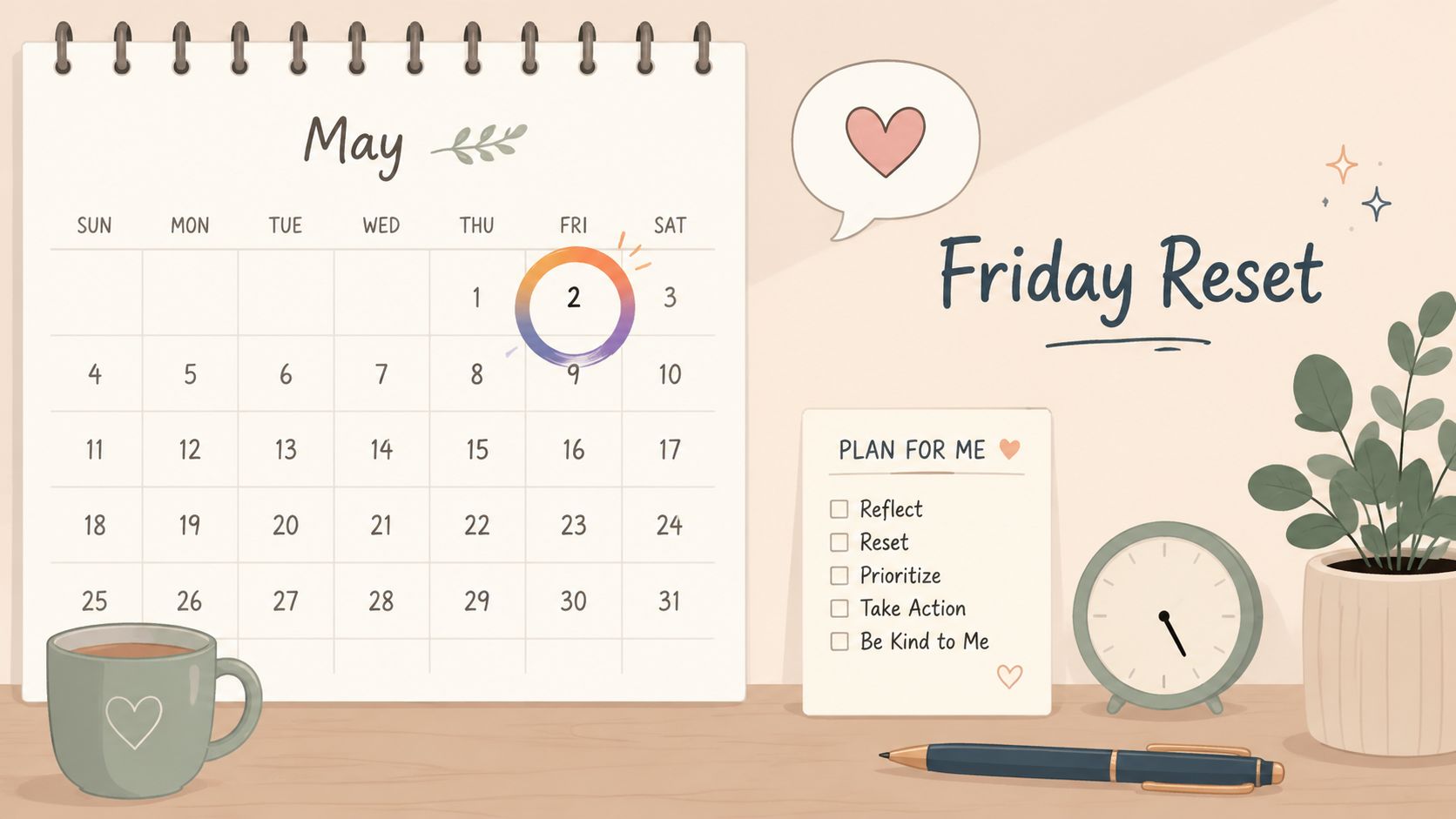
The inner dialogue you're answering on Friday sounds different from Monday. It's less “how do I get motivated?” and more “I can't do another week like this.” That's a high-intent psychological state. If you coach transformation, not entertainment, you should care about that distinction.
Friday Shorts often act like pre-sales calls in public. They don't need to attract everyone. They need to resonate with the people who are finally ready to admit something has to change.
One caution. Don't post a heavy Friday reflection if your offer requires immediate weekday follow-up and you disappear for the weekend. If your content stirs urgency, make sure the next step is visible and easy, even if that's a simple form or waitlist.
3. The Client Context Mirror Strategy
If you coach a niche, your timing should mirror that niche's decision moments.
Generic posting advice falls apart at this point. A relationship coach, a financial coach, and a leadership coach are not competing for the same mental slot. Your Short performs best when it appears right before, during, or after the actual context that activates your client's problem.
A career coach for mid-career professionals may do well later in the evening, when people finally have space to think about work without pretending they love it. A health coach can post before dinner, when food choices and self-control are active, not theoretical. A business coach serving managers may post ahead of common team-meeting windows.
Match the moment to the pain point
Ask your current and former clients questions like:
- Problem timing: When do you most notice this issue in your real day?
- Action timing: When do you search for help, advice, or clarity?
- Emotion timing: When does the frustration peak?
- Decision timing: When are you most likely to book, buy, reply, or save something for later?

That information is gold because it turns timing into positioning. If a financial coach knows her audience tends to think about money on Sunday evening, she doesn't just post then. She writes for that state. “Before you open your Monday calendar, look at these three money leaks.” That's not just timely. It's emotionally synchronized.
I've seen coaches miss this by posting polished advice at times that are convenient for them but irrelevant to the viewer's life rhythm. The content may be good. The context is wrong.
A strong example
Say you coach burned-out leaders. A morning Short saying “lead with calm” may get passive likes. A late-afternoon Short saying “before your last meeting, stop performing certainty and ask one clean question” meets a very different state. One is admirable. The other is usable.
4. The Trend Hijacking Real-Time Strategy
Fixed schedules help. Fast reactions can outperform them.
Some of the best time to post YouTube Shorts decisions aren't about a clock at all. They're about relevance. When your coaching niche gets hit by a news story, a workplace shift, a seasonal stressor, or a cultural conversation, speed matters. People are already thinking about the topic. If you show up while that attention is live, your Short doesn't need to manufacture urgency.
A career coach can respond when job insecurity becomes a hot conversation. A business coach can address leadership mistakes during a public company crisis. A relationship coach can use a public breakup or viral debate to explain a real pattern clients deal with in private.
Respond fast without sounding opportunistic
The move isn't “jump on trends.” The move is “translate trends into coaching value.”
Your best responses usually do one of three things:
- Clarify confusion: Explain what the event means in practical terms.
- Normalize emotion: Name what your audience may be feeling and why.
- Offer action: Give one immediate step people can take today.
For example, if layoffs dominate your audience's conversations, don't post vague encouragement. Post something like, “If your company feels unstable, update these three stories before you touch your resume.” That meets fear with usefulness.
Relevance compresses trust. When people feel the topic is current and personal, they decide faster whether you understand them.
Preparation makes this easier. Keep a simple response framework in Notes, Notion, or Google Docs. Hook, context, one insight, one action, one invitation. Then when the moment hits, you're not inventing from scratch. You're filling a proven structure quickly.
The trade-off is obvious. Reactive content can pull you away from your broader strategy if you chase every topic. Stay selective. Comment only when the trend intersects directly with the problem you solve and the clients you want.
5. The Batch Recording Strategic Distribution Strategy
One “perfect” posting time is often too narrow for a coaching business.
If your audience spans different regions, routines, or psychographic groups, a multi-slot strategy can work better than obsessing over a single winner. Batch recording gives you range without forcing daily production stress. You create once, distribute strategically, and let different Shorts speak to different moments in the day.
That matters for coaches because attention states change. Morning viewers often want direction. Midday viewers want a quick win. Evening viewers are more open to reflection, regret, or identity work. You don't need one Short to do all three jobs.
Here's a useful walkthrough on embedding and repurposing videos in blogs for coaches.
A lot of creators make scheduling harder than it needs to be. If you're using workflows, prompts, or automation support, this piece on optimizing schedules for AI video production can help tighten the operational side.
Match content tone to time of day
Try a distribution rhythm like this:
- Morning Short: A directive clip. “Start your day with one decision that removes friction.”
- Midday Short: A practical correction. “If you're overwhelmed, stop prioritizing by urgency alone.”
- Evening Short: A reflective prompt. “What did you tolerate today that trained people to expect too little from you?”
Batching also protects your energy. Instead of filming under pressure every day, you can record several Shorts in one focused session and schedule them across the week. That's often the difference between a strategy you admire and one you can maintain.
What doesn't work here
Volume without differentiation.
If you post multiple times a day but every Short sounds identical, you'll train your audience to ignore repetition. The better approach is to vary role and angle. A leadership coach might post one Short on communication, one on self-regulation, one on delegation, each matched to a different viewing state.
6. The Weekly Anchor Content Strategy
Predictability builds trust faster than randomness.
A weekly anchor works because people remember rituals more easily than isolated uploads. If you post the same series at the same time every week, your audience starts to associate that moment with a specific kind of value. For coaches, that's powerful because your work is already about repeated reflection, not one-time entertainment.
A business coach might own Monday morning with a recurring strategy prompt. A life coach might make Friday evening about freedom and boundaries. A career coach can establish a midweek reality-check series that people start to expect.
Build a habit, not just a schedule
Your anchor series needs three things. A clear title, a repeatable format, and a psychologically coherent time.
Examples:
- Monday Morning Strategy Blueprint: For founders and operators setting direction.
- Wednesday Wisdom: For professionals who need a midweek reset.
- Friday Freedom Framework: For people reviewing the week and reclaiming control.
When coaches get this right, the audience starts doing part of the distribution work for them. People look for the post. They save it, send it, reference it in comments, and start hearing your voice before they even press play.
“If your audience can predict the emotional job a series will do for them, they're more likely to come back.”
That's the piece many miss. Consistency alone isn't enough. The series has to solve the same category of need each time. If your “Monday leadership series” is motivation one week, hiring the next, then personal branding after that, the habit won't stick.
Use templates. Keep the hook structure stable. Let the topic vary inside the format. That gives you efficiency and gives your audience familiarity.
7. The Seasonality and Event-Driven Pivot Strategy
Your clients don't want the same coaching message all year.
Timing changes when their priorities change. That sounds obvious, but many coaches use one posting rhythm across every season and then blame the algorithm when performance softens. In reality, audience behavior shifts around industry cycles, holidays, deadlines, school calendars, travel periods, and emotional seasons.
A fitness coach often speaks into a different mindset at the start of the year than during summer. A financial coach meets different concerns around planning periods, tax stress, or year-end review. A career coach may find stronger traction during periods when professionals naturally reassess role, compensation, or direction.
Build around demand waves
Map your year around when your audience becomes most problem-aware.
Examples:
- New year period: Identity change, fresh starts, goal setting
- Back-to-school season: Routine rebuilding, household pressure, schedule design
- Year-end stretch: Fatigue, reflection, planning, regret, recommitment
- Industry-specific peaks: Budget cycles, hiring windows, launch seasons, performance reviews
Regarding this, many coaches have an internal objection. “But shouldn't I stay consistent?” Yes. Stay consistent in publishing. Pivot in angle, cadence, and timing.
A leadership coach might post more often during promotion and review cycles. A wellness coach may lean into evening recovery content during high-stress work periods. A financial coach can shift from educational clips to planning prompts when people are already making decisions.
The practical advantage is simple. You're no longer forcing attention during low-relevance periods. You're stepping into moments when your audience already feels the cost of inaction.
A grounded example
If you coach parents, late summer and early fall often carry planning pressure. Your Shorts can shift from general mindset advice to routines, boundaries, and family systems at the exact moment those questions become urgent.
8. The Micro-Community Hyper-Local Timing Strategy
Broad audience advice is often too broad to make money.
If most of your paying clients come from one city, one professional ecosystem, or one tightly defined community, optimize for that group first. A coach serving hospital leaders, startup founders in one region, or parents in a local metro area should care more about local rhythm than global best practices.
That's especially true if referrals, partnerships, and real-world reputation matter in your business. Hyper-local timing can improve not just reach, but resonance. Your content feels like it belongs to the same world as your buyer.
Speak to one community like you actually know it
A coach serving tech founders in San Francisco may align with startup work rhythms. A relationship coach focused on parents in Austin may post around school drop-off, lunch lull, or evening decompression. A leadership coach for clinical teams may build around shift changes rather than standard office assumptions.
This strategy gets stronger when you pair timing with language and context. Mention local realities. Reference community patterns. Use examples your audience recognizes without needing translation.
If you're building conversation around a defined audience, strong social media community management for coaches makes the timing strategy more effective.
Where coaches get this wrong
They optimize for visibility instead of client concentration.
If your audience is mostly in one professional pocket, don't let broad social advice pull you into posting for people who will never buy. Reach is seductive. Relevance pays.
Your best audience is not the largest group that could watch. It's the smallest group that immediately feels, “This coach gets my exact world.”
A strong example is a leadership coach serving hospital staff. Posting in line with shift transitions can outperform generic office-hour assumptions because the audience's stress, fatigue, and availability don't match a typical corporate calendar. The same principle applies to teachers, real estate teams, founders, consultants, and HR leaders.
YouTube Shorts: 8 Timing Strategies Compared
| Strategy | 🔄 Implementation complexity | ⚡ Resource requirements | 📊 Expected outcomes | 💡 Ideal use cases | ⭐ Key advantages |
|---|---|---|---|---|---|
| The Peak Engagement Window Strategy: Posting When Your Specific Audience Is Most Active | 🔄 Moderate, requires tracking timezones and habits | ⚡ Low–Medium, analytics + scheduling tool | 📊 Higher view counts and CTR when audience is present | 💡 Small coaching practices targeting known timezones | ⭐ Better visibility with relatively simple setup |
| The Friday Momentum Build Strategy: Leveraging End-of-Week Psychological Readiness for Change | 🔄 Low–Moderate, timing + theme planning | ⚡ Low, themed content and availability for calls | 📊 Fewer views but higher-quality leads and conversions | 💡 Coaches focused on conversions and commitment-driven offers | ⭐ Attracts audiences primed for change; deeper engagement |
| The Client Context Mirror Strategy: Posting When Your Specific Coaching Niche Takes Action | 🔄 High, requires deep niche research and client interviews | ⚡ Medium, client research, persona mapping | 📊 Exceptional engagement quality and lower cost-per-lead | 💡 Niche coaches (health, finance, relationships) seeking precision | ⭐ Highly targeted timing that meets clients when they think about problems |
| The Trend Hijacking Real-Time Strategy: Posting When Relevant Topics Are Trending in Your Coaching Space | 🔄 High, constant monitoring and rapid response | ⚡ Medium–High, alerts, fast editing, availability | 📊 Potential viral reach and spikes in authority/comments | 💡 Coaches able to react fast to news and cultural moments | ⭐ Strong algorithmic boosts and topical relevance |
| The Batch Recording Strategic Distribution Strategy: Posting Consistently Multiple Times Daily for Maximum Coverage | 🔄 High, complex scheduling and quality control | ⚡ High, significant production and scheduling tools | 📊 Broader reach across timezones; more touchpoints per day | 💡 Creators targeting global audiences and varied daily contexts | ⭐ Maximizes coverage and reduces reliance on a single "best" time |
| The Weekly Anchor Content Strategy: Creating Must-Watch Signature Content at Fixed Times | 🔄 Low, repeatable process but needs discipline | ⚡ Low–Medium, weekly production cadence | 📊 Predictable early engagement, community habit formation | 💡 Coaches building brand rituals and consistent audiences | ⭐ Sustainable production with reliable engagement momentum |
| The Seasonality and Event-Driven Pivot Strategy: Adjusting Cadence Based on Industry Cycles | 🔄 Medium–High, calendar mapping and seasonal planning | ⚡ Medium, pre-production for peak windows | 📊 Higher conversions in peak seasons; thematic relevance | 💡 Niches with clear seasonal demand (fitness, finance) | ⭐ Aligns content with times clients are naturally most ready |
| The Micro-Community Hyper-Local Timing Strategy: Posting at Peak Times for Your Specific Community | 🔄 Medium, localized research and community listening | ⚡ Low–Medium, community engagement and local references | 📊 Strong local relevance and higher conversion within community | 💡 Local or professional-community focused coaches | ⭐ Builds deep community identity and referral opportunities |
From Timing to Transformation Your Next Action Step
Finding the best time to post YouTube Shorts matters, but only if you understand what “best” really means. It doesn't mean the busiest hour on the platform. It means the moment when your ideal client is most open to hearing the exact message you're offering. That's a very different standard, and it changes how you plan everything.
If you've been waiting for one universal answer, that's probably why your timing strategy has felt inconsistent. You weren't missing a magic slot. You were missing a model. Some coaches need a Friday reset strategy because their audience reflects at the end of the week. Others need batch distribution because their buyers live in different regions and consume content in different emotional states. Others need anchor content because ritual beats randomness for their niche.
The deeper shift is this. Stop treating timing as a publishing decision and start treating it as a conversion decision. Ask when your audience feels friction. Ask when they become honest. Ask when they pause long enough to hear something that challenges them. That's where the best time to post YouTube Shorts starts to reveal itself.
As you test, keep your process simple. Pick one strategy. Run it long enough to see a pattern. Track more than views. Pay attention to saves, comments that sound like real problems, inquiry messages, and what type of client books after seeing your content. A Short that brings fewer vanity metrics but attracts the right buyer is often doing better business work than a clip with broad passive reach.
This also solves the burnout problem. You don't need to post endlessly. You need a repeatable system that connects your content calendar to your coaching business. That means knowing what you're posting, when you're posting it, what emotional state it's designed for, and what action you want the viewer to take next.
That's where a platform like Coachful becomes useful. As your experiments start producing content, lead flow, and client conversations, you need more than scattered notes and a spreadsheet. Coachful can help you organize your publishing rhythm, manage client inquiries that come from your videos, and connect content activity to the rest of your coaching workflow. Instead of juggling disconnected tools, you can build a system that supports delivery, follow-up, and growth in one place.
Your next move isn't just to schedule another Short. It's to build the operating system behind your Shorts so every post has a job, every inquiry has a path, and your content becomes part of a predictable client acquisition engine.
If you're ready to turn YouTube Shorts into a more organized client acquisition channel, Coachful gives you one place to manage the work behind the content. You can keep your coaching operations, client communication, scheduling, and follow-up connected, so your videos don't just generate attention. They support a coaching business that runs cleanly and scales without more chaos.