Chat Bot SMS for Coaches: Automate Your Practice in 2026

Coachful
Sunday evening should be quiet. Instead, you're checking tomorrow's calendar, texting three clients who haven't confirmed, sending a welcome note to a new lead, and trying to remember which client said, "Please ask me on Monday if I did it."
That work feels small when you look at each message by itself. In practice, it's the kind of friction that drains a coaching business. The hard part isn't writing one reminder. It's carrying dozens of tiny follow-ups in your head, week after week, while still showing up as calm, present, and sharp in the actual coaching conversation.
That's where a chat bot SMS setup starts to matter. Not as a gimmick. Not as a fake replacement for trust. As structure. As consistency. As a way to make sure clients hear from you at the right moment, even when you're in session, traveling, or off the clock.
The Hidden Cost of Client Engagement
A coach with ten active clients can look fully booked and still feel oddly behind. The calendar is full, but the significant pressure sits between sessions. Reminder texts. Goal check-ins. Intake follow-up. Missed replies. Reschedule requests. Tiny moments that don't look strategic, yet subtly shape the client experience.
I see this pattern often. A coach tells me they want deeper conversations, better accountability, and more renewals. Then I look at their workflow and find they're personally sending every logistics message by hand. They aren't protecting their coaching energy. They're spending it on repetition.
That cost isn't just emotional. The global chatbot market is projected to reach $9.56 billion in 2025, up from $40.9 million in 2018, and businesses save approximately 2.5 billion hours globally by using chatbots for support according to WotNot's chatbot statistics roundup. The broader point is clear. Automation has moved well beyond experimentation.
Where coaches feel the drag first
- Before sessions: You chase confirmations, prep questions, and late forms.
- After sessions: You mean to send reinforcement, but another client message pulls you elsewhere.
- During the week: You want to check in at the exact moment motivation dips, but you don't have a system for that.
A coach might tell themselves, "I don't want to automate because my work is personal." I understand that instinct. But clients rarely experience manual inconsistency as warmth. They experience it as silence, delay, or uncertainty.
The message doesn't need to be hand-typed to feel caring. It needs to arrive when the client needs it.
Used well, SMS automation doesn't flatten the relationship. It protects it. The bot handles the predictable layer so you can stay fully human in the moments that require judgment, empathy, and challenge.
What an SMS Chatbot Really Is for a Coach
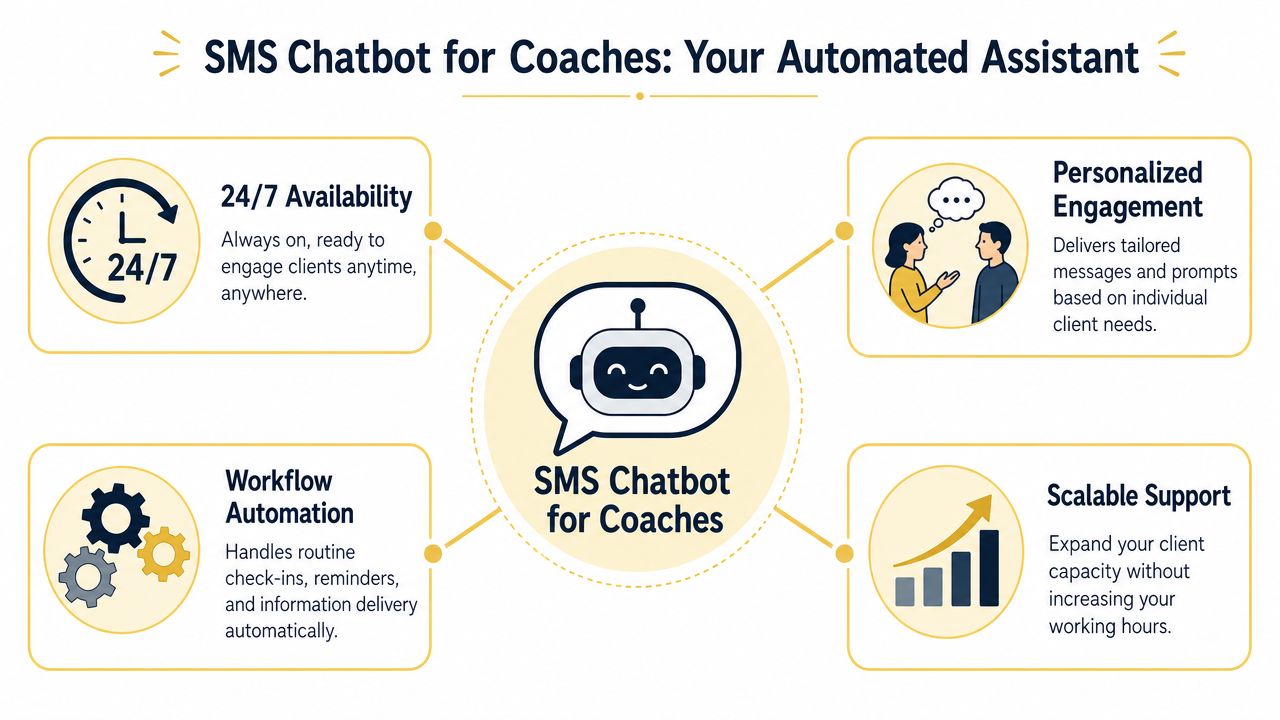
A coaching SMS bot isn't the annoying customer service loop people fear. It's closer to an automated executive assistant with one job. It runs the simple communication patterns you already use so they happen reliably.
Rule-based first, AI second
At the simplest level, an SMS chatbot uses keywords and predefined flows. A client texts START. The system sends a welcome message. A client replies RESCHEDULE. The system gives booking options or routes the conversation for personal follow-up.
A more advanced version uses natural language processing to interpret free-form replies and respond more flexibly. That can be useful, but many coaches don't need complexity on day one. They need reliability.
According to Scoop Market's chatbot statistics, 82% of customers say they'd use a chatbot instead of waiting for a human representative, and 62% prefer chatbot interaction for routine inquiries. That matters because most coaching SMS use cases are routine by design. Reminders, prompts, confirmations, quick nudges. You're not automating the breakthrough moment. You're automating the runway that gets clients to it.
What it looks like in coaching
Think about these examples:
| Coaching moment | What the bot handles | What you handle |
|---|---|---|
| New client joins | Welcome text, intake prompt, scheduling link | Reviewing goals and leading the first session |
| Session tomorrow | Reminder, prep question, confirmation request | Reading context and showing up prepared |
| Midweek dip | Accountability nudge, reflection prompt | Follow-up when a client signals struggle |
| Program close | Feedback request, renewal prompt | Renewal conversation and next-step design |
What makes it feel human
An SMS bot feels robotic when coaches automate the wrong thing. Generic motivation texts don't help. Overly polished corporate language doesn't help either.
What works is this:
- Use your real voice: Write the way you already text clients.
- Trigger around moments: Send messages before decisions, not at random.
- Leave room for escalation: If a client sounds stuck, sensitive, or avoidant, the system should alert you or pause automation.
Practical rule: Automate the pattern, not the relationship.
A strong chat bot SMS workflow doesn't pretend to be you. It extends your consistency.
How an SMS Bot Supports Your Coaching Workflow
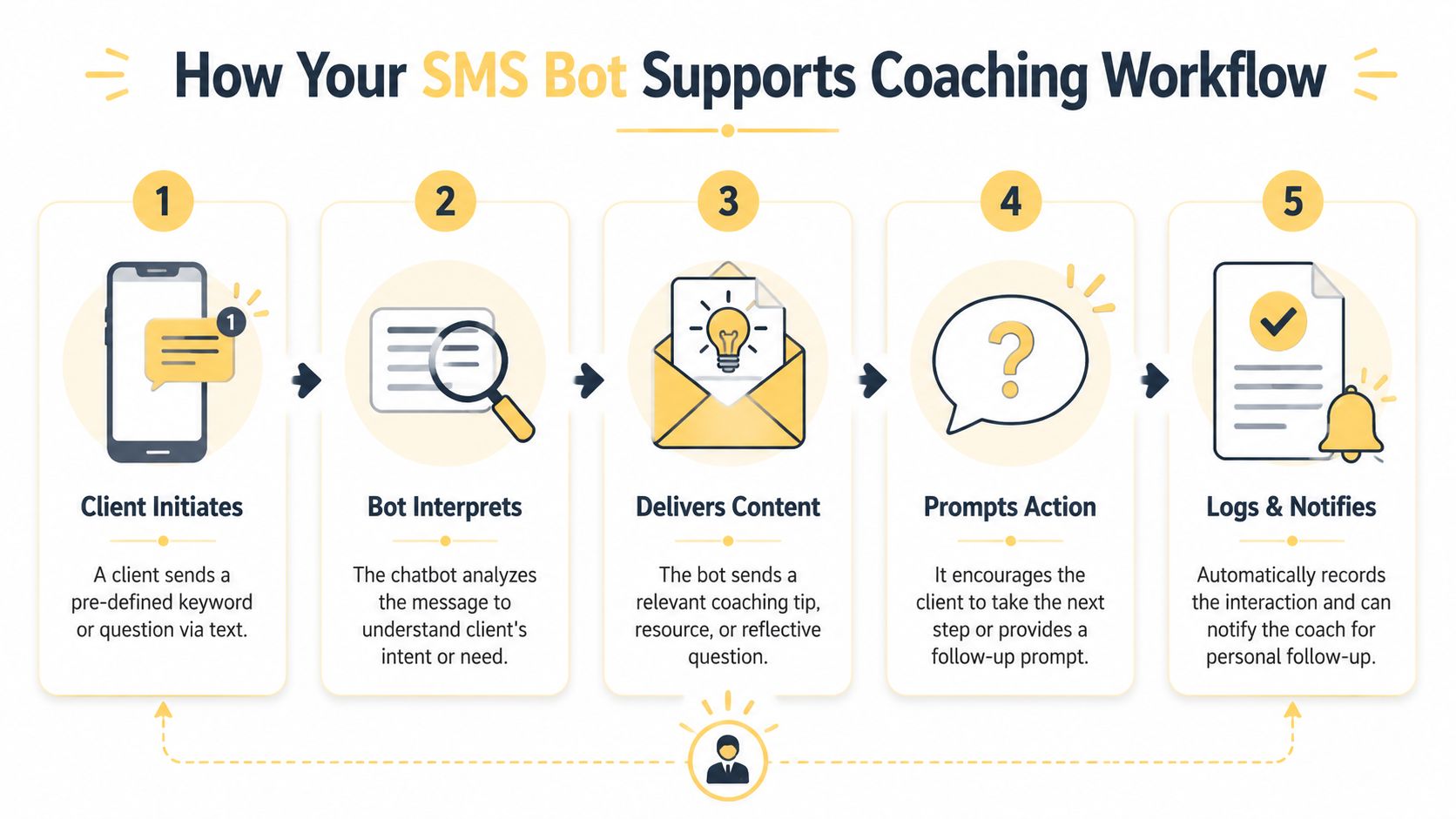
Most coaches don't need to understand code. They need to understand flow. If a client texts a keyword or responds to a prompt, the system should know what happens next.
The simple mechanics behind it
A practical SMS bot usually includes four parts:
A trigger A client sends a word like START, CHECK-IN, or CHANGE. Or the system triggers a message based on time, session date, or onboarding status.
A script You map the conversation in advance. If the client says yes, send this. If they don't respond, send that. If they ask for help, notify the coach.
An SMS provider Services like Twilio handle message delivery and the business number.
A connection layer Webhooks and integrations pass information between tools so messages, forms, and client records stay connected.
According to Notifyre's guide to SMS chatbots, building an SMS chatbot involves mapping a complete SMS sequence script, integrating with an SMS provider like Twilio, obtaining a verified number, and implementing opt-in and opt-out logic. That's the practical backbone.
A coaching example that actually works
Say a new client texts START after signing their agreement.
The workflow might look like this:
- Message 1: Welcome them and set expectations.
- Message 2: Send their intake form.
- Message 3: Prompt them to book their first session.
- Message 4: If they don't complete intake, send a gentle nudge the next day.
- Message 5: If they reply with a question, route it for personal follow-up.
Coaches frequently encounter this challenge. They think they need to build a giant AI assistant. They don't. They need one clean workflow tied to one real business moment.
If you're exploring AI solutions, it's worth studying how teams design narrow, useful automations instead of bloated systems that try to do everything. Coaching benefits from that same restraint.
What to connect first
For most practices, the best first integration isn't fancy. It's onboarding.
A strong onboarding automation can connect your SMS number, booking flow, and intake process so clients don't slip through the cracks. If you want a practical model, this guide to automating client onboarding shows the kind of sequence thinking coaches should borrow, even if your exact tool stack differs.
The important trade-off is simple. The more branches you add, the more useful the workflow can become. But every extra branch increases maintenance. Start with the shortest path that removes real friction.
Real Coaching Scripts for Your SMS Chatbot
At this stage, coaches typically relax. Once they see actual text examples, the whole thing feels less technical and more usable.
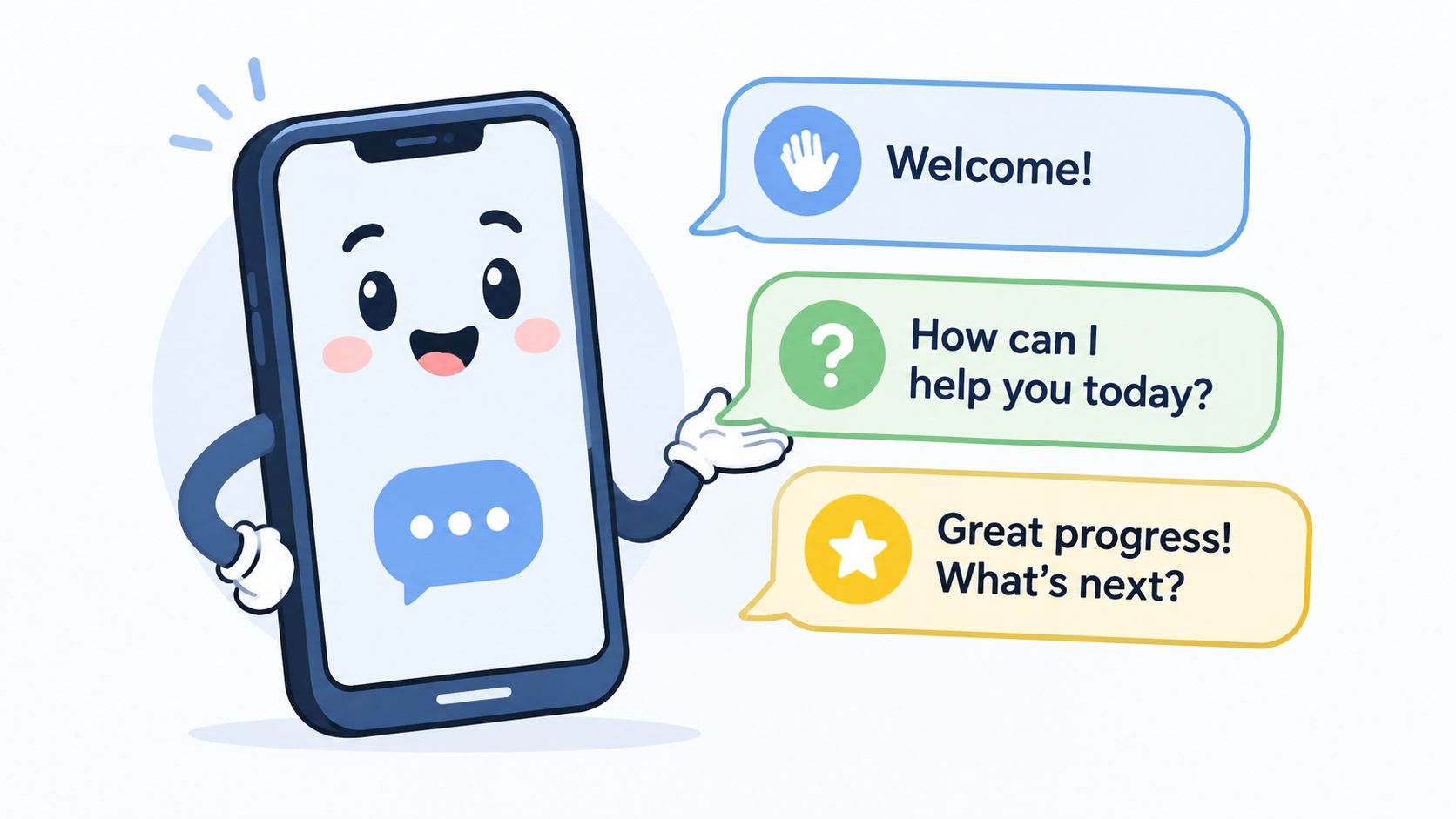
The fear is often the same. "Won't this sound fake?" It will if you write like a marketing department. It won't if you write like the coach your clients already know.
Script for a new client welcome
Use this when a client has signed and opted in to SMS.
Hi [First Name], welcome. I'm glad you're here. Over the next few minutes I'll help you get set up so our first session is focused and useful. First step: please complete your intake form here: [link]
Once that's done, book your first session here: [link]. If you'd like, reply with one thing you most want help with right now.
Why this works: it lowers uncertainty and gives the client one clear next step at a time.
If you're refining language and tone, examples from a strong welcome message library can help you shape SMS copy that sounds warm without becoming vague.
Script for a session reminder with emotional prep
Most reminder texts are transactional. Better ones prepare the client psychologically.
You're on for tomorrow at [time]. Before we meet, reply with one word for how you're arriving into this session.
Optional prep: what's one conversation, decision, or habit you want us to untangle together?
This kind of reminder does two things. It reduces no-shows and improves session quality. You're not just confirming attendance. You're helping the client re-enter the work.
Script for midweek accountability
This is one of the highest-value uses of chat bot SMS in coaching.
According to Circle's review of coaching platforms, between-session engagement via AI bots and nudges correlates with a 41% increase in milestone completion rates. That's why accountability prompts matter when they're timed well and tied to a real commitment.
Use messages like these:
Midweek check-in. What's one win since our last session?
Quick reset. What's the next smallest step on your goal? Reply with the action, not the whole plan.
You said this week was about consistency. On track, off track, or restarting today?
These prompts work because they reduce cognitive load. Clients don't need to craft a long update. They only need to re-engage.
Script for a stuck client
A good bot shouldn't only cheerlead. It should also normalize friction.
If this week got messy, you're not behind, you're in the work. Reply 1 if you want a simple reset prompt. Reply 2 if you'd like me to flag this for personal follow-up.
That message gives dignity to the struggle. It doesn't punish silence. It creates a bridge back.
Clients often don't need a brilliant message. They need a low-friction way to re-enter after avoidance.
Script for post-session reinforcement
Send this shortly after the call while the session is still emotionally alive.
Good work today. Your focus before we meet again is: [goal]. Reply with the day and time you'll do the first step.
If resistance shows up, what's the thought you're most likely to have? Text it back now so we can make it visible early.
This script extends the session without creating another full conversation.
Script for program feedback and renewal
At the end of a package or cohort, keep the ask simple.
As we wrap this phase, what's one change you've noticed in how you think, decide, or act?
If you'd like to continue, reply CONTINUE and I'll send next-step options. If you'd rather pause, reply PAUSE and I'll note it.
Notice the structure. Clear choices. No pressure. No long paragraph asking for three things at once.
Building Your First SMS Automation Workflow
You don't need an advanced architecture to get started. You need one useful workflow with clean boundaries.
Start with one repeatable moment
Pick the task you already perform most consistently and least creatively. For most coaches, that's session reminders or new client onboarding.
Don't start with crisis support. Don't start with a fully conversational AI coach. Start with something you can map in ten minutes on paper.
A good first workflow includes:
- A clear trigger: Session is 24 hours away.
- A short message: Confirmation plus one prep question.
- A simple response path: YES confirms, CHANGE requests reschedule, HELP alerts you.
- A stop condition: Once the client confirms, the sequence ends.
Map the conversation before touching software
Write the conversation as a branching tree.
- Opening text: What does the client receive first?
- Expected replies: What are the two or three most likely responses?
- Fallback: What happens if they say something unexpected?
- Human handoff: When does the bot stop and you step in?
This is also the stage where consent matters. Clients need to opt in to receive texts, and your system needs a clear opt-out path. If you're still tightening that intake flow, this walkthrough on how coaches collect phone numbers properly is worth reviewing before you launch.
Keep your first build boring
Boring is good. Boring means reliable.
Common mistakes on the first build:
- Too many branches: Coaches try to anticipate every edge case.
- Too much personality: The copy becomes cute but unclear.
- No escalation logic: Sensitive replies still get automated responses.
- No review process: Nobody checks whether messages still fit the program.
A better first version might be only three messages deep.
After you've mapped the first flow, watch a live build process and notice how simple the logic can be when it's organized well.
Test like a skeptical client
Before you switch it on, run the full sequence from your own phone.
Reply late. Misspell things. Ask an odd question. Try opting out. Try restarting. You want to find awkward moments before a paying client does.
Your goal isn't technical perfection. It's client confidence. If the workflow feels easy, respectful, and clear, you're ready to launch.
Measuring the Success of Your SMS Bot
Coaches often measure the wrong things first. Message volume isn't the goal. A busy bot can still produce weak coaching outcomes.
The better question is this: did the automation improve client follow-through and reduce admin drag?
Metrics that matter in coaching
Start with behavior tied to real coaching progress:
- Prep completion: Are clients responding to pre-session prompts?
- Confirmation consistency: Are reminder texts reducing back-and-forth before calls?
- Check-in response quality: Are clients replying with concrete actions instead of disappearing?
- Escalation usefulness: Are the right situations getting routed to you quickly?
Then measure your own workflow. If the system still requires constant babysitting, it isn't helping enough.
According to Delenta's overview of AI coaching platforms, coaches in enterprise settings lacking automation lose an average of 4.2 hours per week on manual administrative tasks, and client engagement can drop by 18% at that threshold. That should get every serious coach's attention. Admin isn't neutral. It pulls time and focus away from the work clients pay for.
Read the data like a coach, not a marketer
If response rates drop, don't assume the bot failed. Ask better questions.
| Signal | What it may mean | What to adjust |
|---|---|---|
| Clients ignore reminders | Message is too generic or sent at the wrong time | Tighten timing and wording |
| Clients reply but vaguely | Prompt is too broad | Ask for one concrete action |
| Clients request human help often | Workflow may be over-automated | shorten the bot path |
| Clients engage early then fade | Sequence lacks variation or relevance | tie prompts to session commitments |
Watch for this: the best SMS automations don't create more conversation. They create better conversation.
A useful dashboard helps, but coaches shouldn't become trapped by dashboards. Read a sample of actual message threads every week. That's where tone problems, missed opportunities, and client friction show up fastest.
Start Small Scale Your Personal Touch
The best argument for SMS automation isn't efficiency by itself. It's capacity for better presence.
When you stop spending your evenings sending predictable reminders and routine check-ins, you get something far more valuable than convenience. You get attention back. Attention to notice patterns. Attention to prepare thoroughly. Attention to respond like a coach instead of a hurried administrator.
Start with one workflow. Session reminders are enough. Then add onboarding. Then add a midweek accountability prompt. Let the system earn your trust in layers.
Many coaches need to be a little firmer with themselves. If your practice depends on you remembering every follow-up manually, your client experience will eventually become inconsistent. Not because you don't care. Because human memory is a terrible operating system for a growing practice.
A good chat bot SMS setup doesn't make your work less personal. It protects the personal part from being crowded out by repeatable tasks. That's the shift. You stop proving care through manual effort and start proving it through consistency, timing, and thoughtful support.
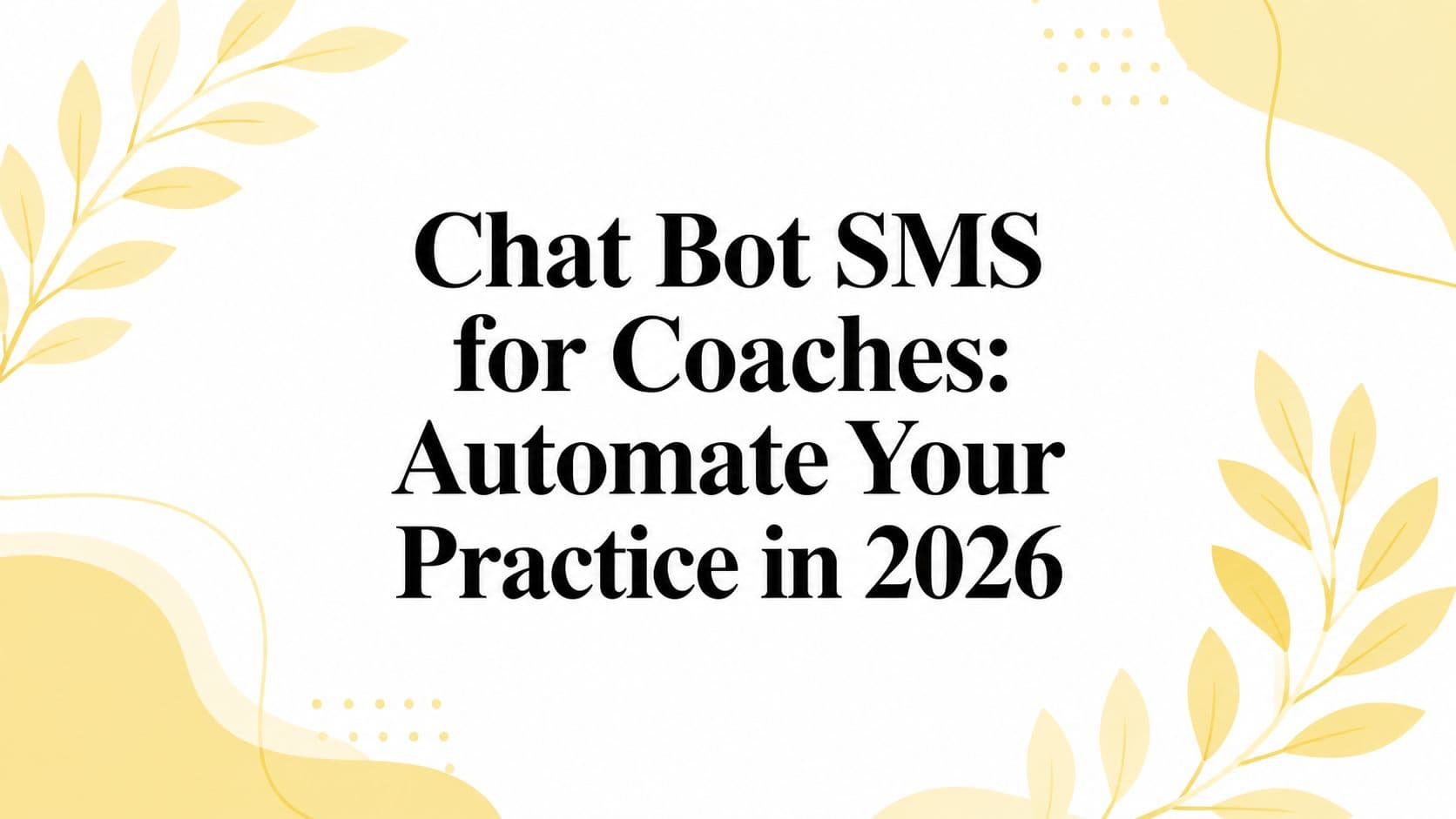
If you're ready to turn scattered admin into a clean client journey, Coachful gives coaches one place to manage onboarding, scheduling, messaging, notes, payments, and progress tracking without stitching together a dozen tools. It's a strong fit for solo coaches and teams that want more structure, better accountability, and more time for actual coaching.