Coaching Capability Statement Template: 6 Sections and an Example

Nour
Founder, Coachful
A coaching capability statement should tell an HR or procurement buyer whether your practice is qualified to deliver their kind of work. Make a concise, reusable supplier overview covering your services, relevant experience, verified credentials, delivery capacity, business details and contact route. Usually, aim for one readable page, with supporting evidence available separately.
If a corporate contact has asked you to “send something about your capabilities,” resist sending your entire website as a PDF. They may need to introduce you to a colleague, compare potential suppliers or check whether you belong on a shortlist. Your job is to make that decision easier, not to imply you have already designed their engagement.
This guide gives coaches a practical structure, a copyable template and a fictional example. It is commercial writing guidance, not legal advice, a procurement certification or a substitute for the buyer’s required submission.
What is a coaching capability statement?
A capability statement is a brief account of the work your business can credibly provide. For a coach, that means identifying the people you work with, the development situations you support, the formats you deliver and the evidence behind your claims. It describes the supplier before specifying a particular purchase.
A real coaching example is BenchStrength Coaching’s public capability statement, organized around expertise, core competencies and differentiators. That demonstrates the document’s use in this market. Its business claims belong to that company and are not benchmarks or copy for your own practice.

Keep those jobs separate. A media kit supplies interview background and approved publicity assets. A proposal responds to a buyer’s situation. A statement of work defines purchased delivery. None is automatically interchangeable with a capability statement.
Before writing, ask the contact: “Is this for an internal introduction, supplier screening or a specific procurement request? Do you have required headings or a page limit?” That small clarification prevents you from building the wrong document.
1. Lead with the work you are qualified to deliver
Write a one-sentence description that joins an audience to a useful service. “Leadership coaching for first-time managers practicing delegation and feedback” is more informative than “unlocking human potential.” It helps a buyer match you to a need without promising an outcome you cannot control.
Then list a small number of actual service capabilities. Name the work, not just a theme: individual manager coaching, facilitated peer reflection or a workshop on preparing for feedback conversations. Distinguish coaching from consulting, training or assessment work when you provide more than one.
Include the practical delivery format where it changes suitability: individual or group, online or in person, language and geographic coverage. Do not claim global delivery merely because your video software works internationally. Availability, insurance, time zones, competence and local requirements still matter.

Your delivery catalogue is a useful cross-check, not something to paste indiscriminately into the statement. If a program still exists only as a collection of notes, describe it as in development or leave it out. A purchasing contact should not have to discover after selection that your flagship offer is unfinished.
2. Replace impressive adjectives with relevant evidence
Choose evidence that answers the buyer’s actual question. A manager-development buyer may need to know whether you have supported similar responsibilities and organizational conditions. An unrelated audience number or a long list of famous employers from an earlier career may not answer that.
For each past-work example, record the context, your exact role, the service delivered and the evidence you are allowed to share. Separate your own delivery from work performed by a former employer or a team. “Led delivery as an employee of…” is not the same claim as “Our practice supplied…”
Be particularly careful with outcomes. An attendance record supports a delivery claim. A participant survey supports a statement about those respondents’ reports. Neither automatically proves coaching caused higher retention, promotion or profit. If you cannot defend the measurement, attribution and permission, narrow the sentence.

A practical internal evidence log can use five fields: proposed claim, underlying source, period covered, permission or restriction, and person responsible for checking it. Keep that log private. The public statement needs the defensible conclusion, not every underlying record.
If you are new to corporate coaching, say so without apologizing for your existence. Relevant prior professional experience, accurately described training and a bounded pilot design can help a buyer assess you. Do not rename practice sessions as corporate contracts or invent client logos to fill an empty section.

Internal records can help you find material to verify. They should never become a shortcut around verification. Check what an hour total includes and whether the proposed public claim accurately describes it before exporting anything into a sales document.
3. Make credentials and differentiators checkable
List only relevant qualifications and current professional credentials, using the issuing body’s accurate terminology. A completed training course, association membership and independently awarded credential are different facts. Do not bundle them into “fully accredited” and make the buyer guess what that means.
Where an issuer provides a verification route, use it. Check the name, award and current standing before publication. If you list an assessment qualification, confirm that you are authorized to use the particular instrument and that your description does not imply clinical competence you do not hold.

A differentiator is a relevant, defensible reason this buyer might prefer your practice. It could be substantial experience in their sector, delivery in a language they need or a particular combination of skills. “Passionate,” “bespoke” and “results-driven” do not help a buyer distinguish you from the next coach.
Translate the fact into its practical relevance without making a leap. “Previously managed distributed engineering teams” can explain familiarity with that working context. It does not establish that you can resolve every engineering leader’s problem or guarantee a performance improvement.
4. State delivery capacity without selling imaginary scale
Explain who delivers the work, how delivery is arranged and what availability needs confirmation. A solo practice can be a suitable supplier. Pretending it is an international bench of associates creates a problem as soon as the buyer asks who will coach their people.
If associates are part of your offer, distinguish contracted capacity from people you might approach later. Confirm their availability, qualifications, responsibilities and permitted use of their information. A list of friendly coaches is not a staffed delivery team.
Check the workload behind a capacity claim. In a hypothetical month, four participants receiving two one-hour sessions each create eight live coaching hours. Preparation, coordination, sponsor contact, reporting and agreed support still need room. That calculation illustrates the hidden commitments; it is not a recommended caseload.

Use a statement such as “Current capacity and start dates confirmed during scoping” if that is accurate. If you publish a specific intake limit, define its period and keep it updated. Do not promise immediate starts on a document you only review once a year.
Briefly describe your reporting approach when relevant: sponsor alignment and agreed administrative updates, with participant confidentiality defined before delivery. Avoid promising unrestricted notes access to make the practice look transparent. Procurement convenience does not remove your ethical responsibilities.
5. Protect confidential work while making proof usable
A capability statement may be forwarded far beyond your original contact. Treat it as a broadly shareable document unless a specific restricted process says otherwise. Exclude private session details, personal development goals, health information and screenshots of identifiable client records.
Before naming an organization or quoting a participant, check the actual permissions and contractual restrictions. Permission to deliver coaching does not automatically grant permission to market the relationship. Permission for one testimonial does not necessarily cover a new procurement document or a public webpage.

An anonymized description can be useful, but assess whether the combination of sector, location, role and timing identifies someone. If it does, get appropriate permission or generalize further. Do not add fake detail to make an example sound more substantial.
Offer a controlled reference process where appropriate: “Relevant references available subject to permission and fit.” Ask the referee before sharing their contact details. A buyer’s legitimate due diligence is not a reason to circulate a former client’s personal mobile number without agreement.
6. Include the business details this buyer needs
Give the correct trading name, legal supplier name where applicable, website and monitored contact route. Include service geography, language and a review date. Make it easy to identify the entity that would contract, rather than leaving procurement to reconcile three names across your invoice, website and biography.
Some buyers require insurance information, supplier registrations, tax documentation or specific identifiers. Confirm what applies instead of copying a government-contracting template wholesale. Do not imply that every private-sector coach needs the same registrations or that a registration is an endorsement.
Keep sensitive documents outside the public sheet. Banking instructions, identity documents and private tax forms belong in the buyer’s verified secure onboarding process, not a downloadable marketing PDF. Independently verify a request for changed payment details before acting on it.
Prices usually belong in a scoped commercial discussion unless the buyer requests them here. If you include a starting price or rate, state what it covers, currency and relevant conditions. A capability statement cannot responsibly quote every possible engagement as if its scope were identical.
Copyable coaching capability statement template
Replace every bracketed field and remove anything you cannot substantiate. This is a writing scaffold, not a contract or an instruction to disclose confidential information.
[Practice name] | [Specific coaching service]
[One sentence identifying the people, situation and work you support.]Core capabilities
• [Service and audience]
• [Service and delivery format]
• [Related service within your competence]
Delivery: [Languages, location or online coverage, with real limits.]Relevant experience
[Context, your role and specific service delivered.]
[Defensible result or delivery evidence, with appropriate limitations.]
[Reference route, only with permission.]Qualifications and differentiators
[Accurately named current award and verification route.]
[Relevant professional experience or specific delivery capability.]Delivery and boundaries
[Who delivers; availability subject to what confirmation.]
[How scope, sponsor communication and confidentiality are agreed.]Supplier and contact details
[Correct supplier identity; buyer-required nonsensitive details.]
[Name, role, monitored email or enquiry route, website.]
Reviewed: [Date] | Maintained by: [Responsible person]

A filled example for a fictional coaching practice
The following is entirely fictional. It demonstrates wording and boundaries, not a real company, credential, client engagement or verified outcome.
Harbour Manager Coaching | Coaching for newly appointed managers
We support first-time managers practicing delegation, feedback and clearer workplace requests through structured individual coaching.
Capabilities: Individual manager coaching; facilitated reflection on workplace experiments; sponsor alignment conversations with reporting boundaries agreed in advance. Online delivery in English, with scheduling and service geography confirmed during scoping.
Experience: The lead coach’s prior professional background is in people management. Corporate coaching references are not yet available. Buyers can review a sample engagement outline and discuss a bounded pilot; these are not presented as past performance.
Qualifications: Insert only the practice’s actual relevant training and independently verified current credentials. No professional award is claimed in this fictional example.
Delivery: A solo-led practice. Capacity and start dates are confirmed against the complete scope. Sponsor updates and participant confidentiality are agreed before delivery; private session notes are not offered as proof of service.
Next step: Contact the named lead through the practice’s verified business enquiry route to discuss fit and purchasing requirements. The final supplier name, real contact details and review date must be completed before sharing.
Notice what this example does not do. It does not manufacture an impressive client list, claim a credential by implication or promise a business outcome. A newer practice can still communicate its boundaries and invite a sensible qualification conversation.
Before you send it: run a buyer-path check
Open the final document on a phone and at normal desktop zoom. Can a reader identify your services, relevant proof and contact route without enlarging tiny text? If not, cut content or move supporting material to a separate resource. Do not solve an overcrowded page with smaller type.
Keep PDF text selectable and provide an accessible live-text alternative where practical. Check reading order, contrast and link labels. Name the file with the practice and version or date, and remove internal comments, draft placeholders and sensitive document metadata before distributing it.
Ask someone unfamiliar with the practice: “What work would you shortlist us for, and which claim would you want to verify?” If they describe something you do not deliver, revise the opening. If they cannot find evidence, fix the claim rather than adding another adjective.
Your next step
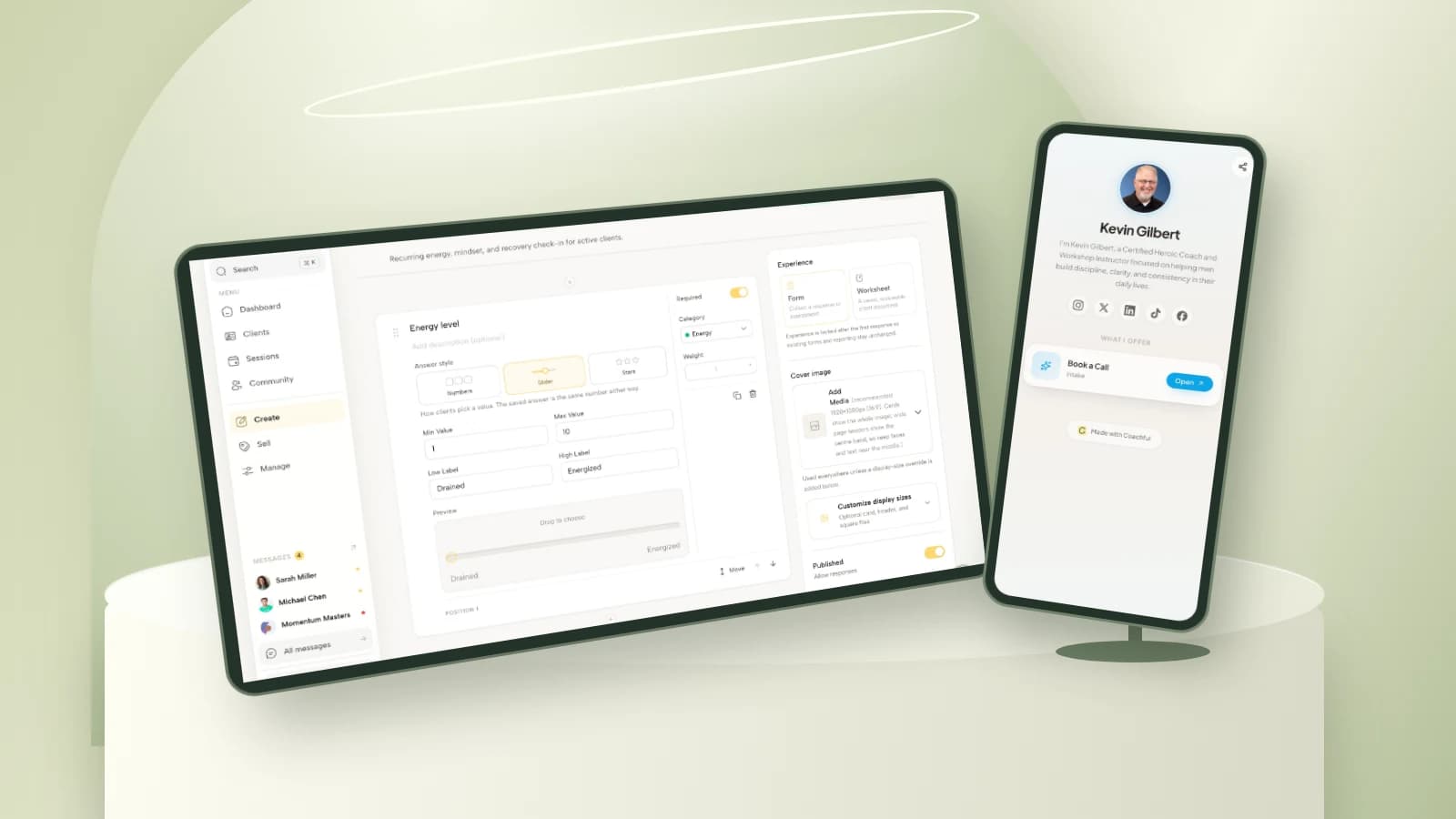
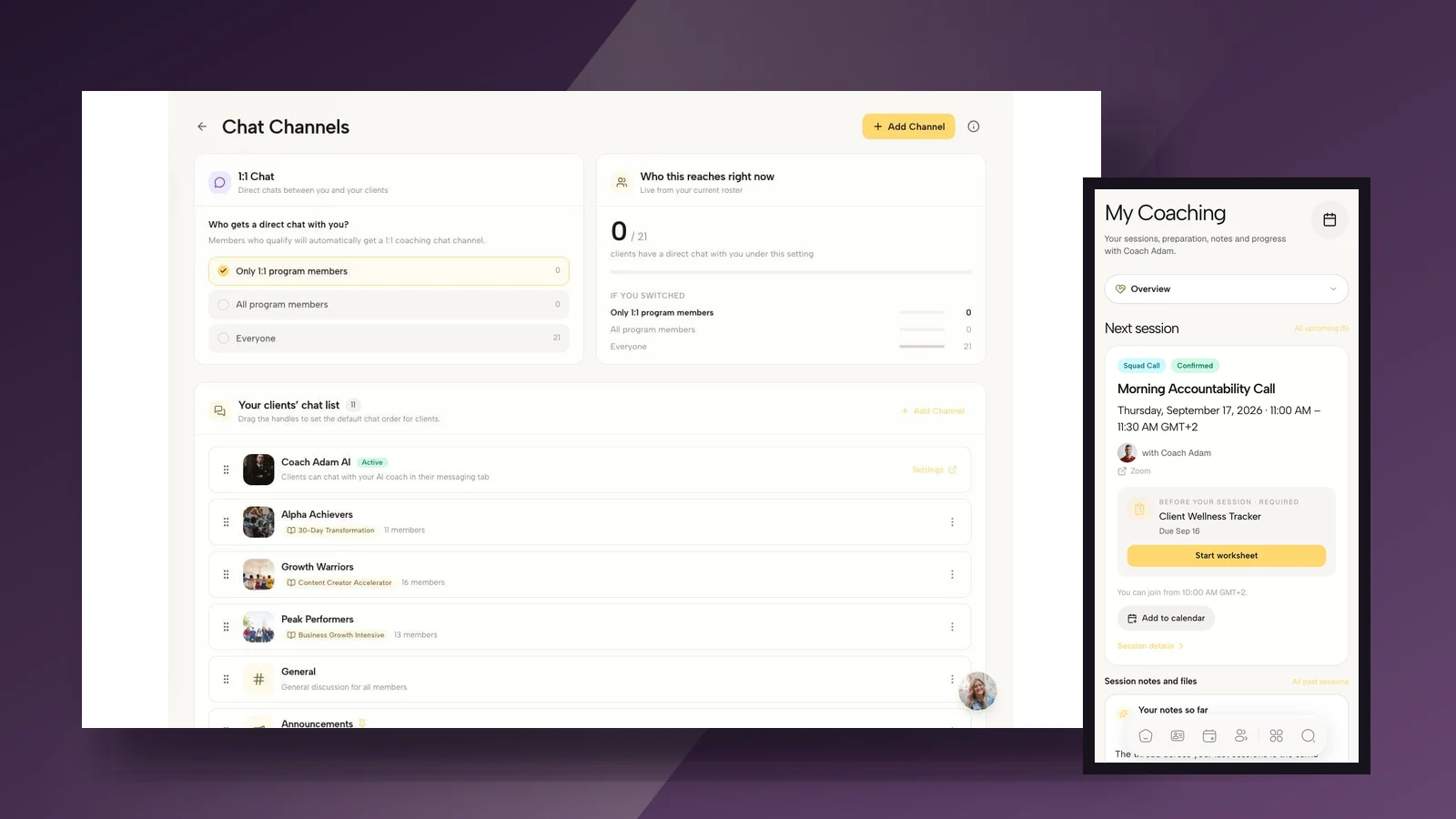
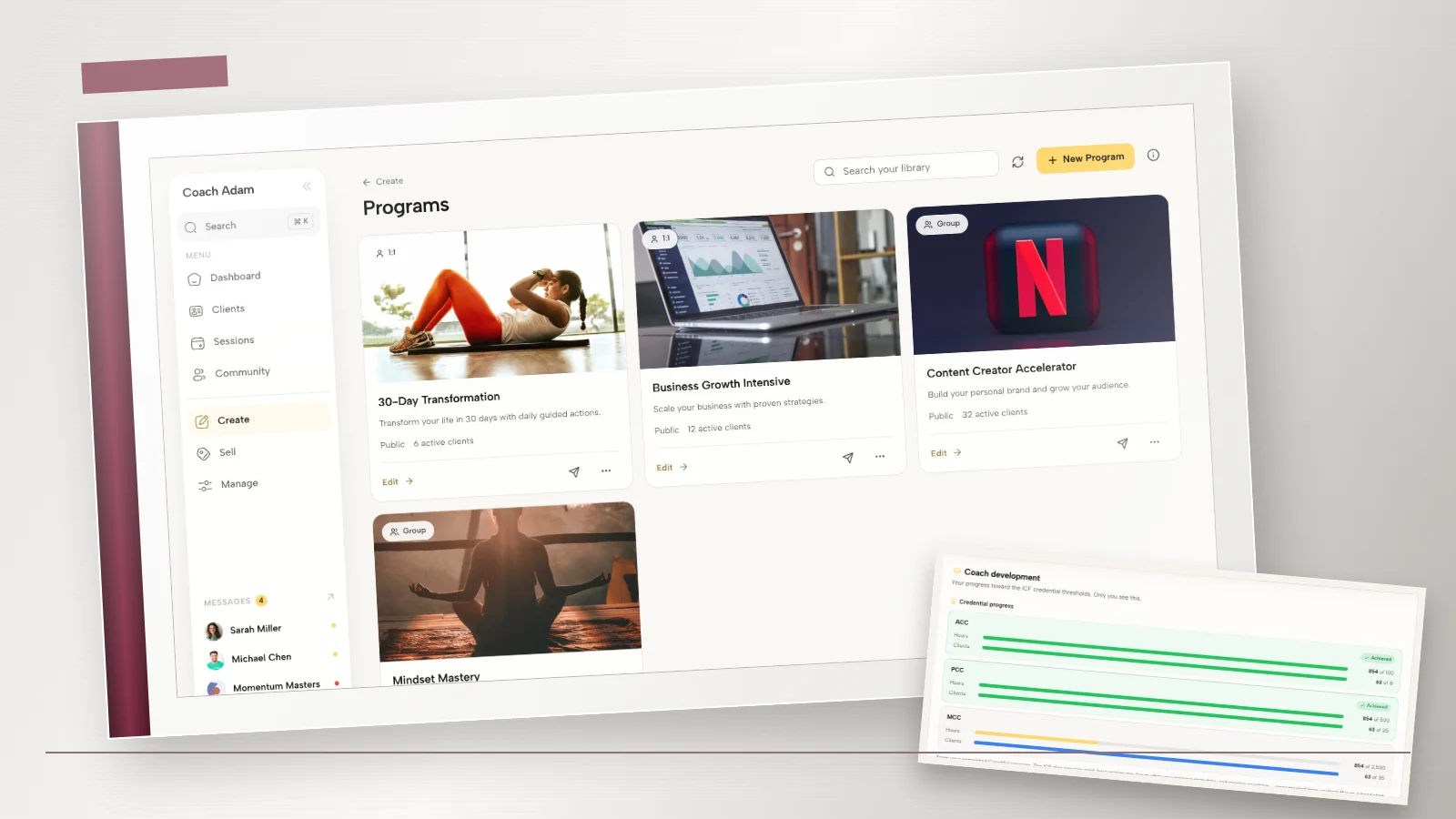
Before polishing the PDF, reconcile its promises with the way you actually run delivery. Review the programs you can provide and the records behind your experience claims. The Coachful screens here illustrate those internal checks, not a capability-statement generator, credential-verification service or procurement approval.
If that reconciliation is your next practical task, try the interactive Coachful demo to inspect the program library and development surfaces. Then check your own records and independent credentials before adding any claim to the sheet. Software can help organize proof; it cannot make an unsupported claim true.
Frequently asked questions
Should a coaching capability statement be one page?
One readable page is a useful default for a reusable introduction, not a universal procurement rule. Follow the buyer’s requested structure or limit. Put extensive biographies, case studies and supporting documents in separate, appropriately accessible resources rather than shrinking the whole business into tiny type.
Can I use one without corporate clients?
Yes, provided you describe your position honestly. Show relevant professional experience, accurate qualifications and the bounded work you are prepared to deliver. Label samples as samples. Do not imply that coaching practice, a previous employer’s contracts or a proposed pilot are your firm’s completed corporate engagements.
Is it the same as a coaching proposal?
No. A capability statement explains why you may be a suitable supplier. A proposal recommends work for a particular buyer. Once a purchase is being defined, the agreed scope and reviewed contractual documents do a different job again.
Should I publish client logos?
Only when you have the necessary permission and the use accurately represents the relationship. A logo can imply endorsement, not merely experience. If permission is unclear, use a lawful, appropriately anonymized service description or omit the example rather than borrowing authority.
How often should I update it?
Review it whenever credentials, supplier details, services, team arrangements or published availability change. Assign an owner and include a review date. Before each important submission, check the specific version being sent, not just the master document you remember updating.