How to Market a Coaching Workshop: 5 Ways to Sell Seats

Nour
Founder, Coachful
“My coaching workshop is ready, but how do I get the right people to buy a seat?” Start with people who already recognise the problem, give them a specific piece of work to buy, and choose two distribution channels you can actually support. Do not launch five social accounts because the registration counter is quiet.
The five useful routes are your eligible warm audience, relevant partners, public demonstrations, searchable event listings and tightly bounded paid promotion. They are not equally suitable for every workshop. Choose by audience access, buying context and the cost of a paid seat, not by which channel looks busiest.
This guide is for a coach selling a standalone workshop, online or in person. It covers promotion before the event, not using a free webinar to sell a larger coaching package. The four-week plan, outreach specimen and channel counts below are teaching examples, not evidence of actual campaign results.
Before promotion: sell a piece of work, not a broad topic
“Leadership workshop” asks a buyer to invent the benefit. “Draft and practise the opening of a delegation conversation” tells them what they will do. A paid workshop should be useful even if nobody buys your subsequent coaching.
Write a one-sentence promise with four parts: the intended participant, the situation, the activity and a proportionate takeaway. For example: “A live practice workshop for first-time managers who need to delegate a recurring task, where you draft an opening, rehearse it and revise your wording.” This is a fictional offer, not a promise of improved team performance.
- Audience: who will find the work relevant, and any prerequisite.
- Commitment: date, time zone, duration, location or online format, price and participation expectations.
- Deliverable: a draft, practised skill, comparison or plan participants can reasonably complete.
- Boundaries: recording, sharing, access arrangements, cancellation terms and what the ticket excludes.
- Action: one specific registration route that works on a phone.
State whether people will practise with others. Someone buying a quiet presentation should not discover compulsory role play after paying. Decide your capacity from the feedback you can deliver, not from a persuasive-looking seat limit.

Set a run-or-cancel decision date before you begin. Work backwards from venue commitments, participant preparation and the cancellation terms you have actually published. A real logistical deadline is useful information; a countdown that resets is not.
1. Invite an eligible warm audience first
Best when: you have subscribers, former participants or current clients who can appropriately receive this promotion and recognise the problem. Existing trust can reduce the amount of explanation required, but it is not permission to market indiscriminately.
Choose a relevant segment rather than sending every offer to every contact. A manager who requested your delegation guide is a better contextual fit than someone who attended an unrelated career-change session. Check consent, recipient type, jurisdiction and opt-outs before deciding who belongs in the segment.
The first invitation should answer three questions: why this is relevant, what the participant will do and what buying involves. Put the price and date in the message. Do not hide them behind a mysterious “learn more” button to manufacture curiosity.
A second message earns its place by resolving a real uncertainty. Show a short sample exercise, explain how paired practice works or answer a question about experience level. A final message can communicate a genuine closing date. There is no universal number of emails that guarantees sales.

Remove registrants from further invitations where your workflow supports that distinction, and verify the rule rather than assuming it exists. Their confirmation and preparation messages are a different communication job. Do not let a buyer receive “still thinking about joining?” after they have paid.
For complete wording, use our coaching workshop invitation email templates. This article's task is choosing and executing distribution, rather than supplying another set of invitation scripts.
Trade-off: a small relevant list has a real ceiling. If you have already made a clear invitation and answered the important questions, repeatedly emailing the same people will not create a larger suitable audience. Move to a complementary route.
2. Ask relevant partners to share a specific invitation
Best when: a community, association, coworking space, alumni group or complementary professional already serves your intended participant. Choose audience overlap over impressive follower counts.
For the fictional delegation workshop, a first-time-manager community is a stronger starting point than a huge general business newsletter. Review what the partner actually publishes and whether event sharing is permitted. Do not pretend that membership of a community entitles you to its mailing list.
Make a small, concrete request: an event-calendar listing, a newsletter mention or an agreed short demonstration. Give the partner the real date, price, audience, activity, registration link and a reason the workshop fits their members.
Fictional partner pitch: “Your recent manager discussion raised the difficulty of delegating recurring tasks. I am hosting a paid practice workshop where new managers draft and rehearse the opening of that conversation. Would a short event listing be useful to your members? I can send the date, price, participation details and concise copy. There is no need to transfer anyone's contact details.”

Agree who is sharing, whether there is payment or another commercial benefit, and what disclosure is needed. A paid listing is not an independent recommendation. If a partner earns a referral fee, address relevant ethical and legal requirements before promotion.
Ask the partner to send through their own appropriate channels. Interested people can register directly and see who receives their information. Avoid a shared spreadsheet containing members' private circumstances or a “send me your whole list” arrangement.
Trade-off: partners have their own editorial schedules. Ask early enough for a considered decision and make declining easy. Do not create your workshop budget around a verbal “sounds interesting” that was never an agreement to promote.
3. Publish a useful demonstration, then name the workshop
Best when: your intended audience already pays attention to your public content, or you participate appropriately in a community that allows relevant promotion. Choose one channel where you can demonstrate the work convincingly.
A workshop is easier to understand when people can see a small part of the activity. A speaking coach might demonstrate a rambling introduction and a tighter version using a fictional scenario. A career coach could compare two invented options against one decision criterion.
Give the demonstration independent value. Do not deliberately leave out the crucial step and call the workshop the only way to get the answer. The paid difference can be protected practice time, feedback and application to the participant's situation.
- Demonstration: show one task, with an example someone can understand without background knowledge.
- Participation preview: explain what attendees will write, practise or decide during the live workshop.
- Fit answer: address one genuine question, such as whether beginners are welcome or whether sharing is optional.
- Invitation: connect that useful content to the dated session with an accurate price and registration route.

Use fictional or explicitly authorised material. Do not turn a client's difficult conversation into a recognisable marketing story because you removed their name. Avoid implying that a hypothetical example demonstrates a client result.
Keep the destination specific. A post about a delegation workshop should not send someone to a crowded profile where they must hunt for an event. If the platform restricts links, give a clear instruction and check the route from the actual mobile experience.
Trade-off: attention is not purchase intent. Save counts and encouraging comments can tell you the topic resonates, but they are not paid seats. Keep recording purchases separately from reactions, and do not ask commenters to disclose sensitive work problems publicly.
4. Use event listings where people already look for the subject
Best when: a local calendar, professional association, community directory or event marketplace has a plausible audience for the workshop. For in-person events, geography and travel expectations matter as much as the topic.
Search as a potential participant would: subject, location, format and date. Review the listings that actually appear. A giant directory with no relevant category is less useful than a small professional calendar your intended buyers consult.
Make the listing understandable without your social profile. Put the intended participant and practical activity in the opening lines, then make the price, location, timing, participation and cancellation details easy to find. Use the same facts as your main registration page.
Check platform fees, payment arrangements, refund handling and what participant data you receive before choosing a ticketing route. A listing that links to your existing registration page creates a different operational setup from a marketplace that takes payment and controls customer communications.
Eventbrite's workshop ticketing overview illustrates the event-page, promotion and registration model. That does not establish that its audience will suit your workshop, or that a paid placement will be profitable. Compare your actual terms rather than assuming a large platform supplies demand.

If several pages sell the same event, check capacity and registration reconciliation. Two disconnected ticket counters can oversell the feedback capacity you promised. Assign an owner to reconcile sales and keep the published event facts aligned.
Trade-off: listing availability is not distribution. Ask where the event will appear, whether placement costs extra and how a buyer reaches checkout. Do not add a directory merely because it offers another place to paste the same description.
5. Test paid promotion only with a defined loss limit
Best when: the audience and promise are specific, the registration journey works and you can afford a test that produces no buyers. Advertising is not the emergency repair for an unclear workshop.
Start with the workshop's economics. Identify the amount left from a ticket after payment costs, materials, venue allocation and other variable delivery costs. That amount is not all available for acquisition: your preparation, delivery time and required profit still need paying.
Set a total test budget, an end date and a review rule before buying traffic. Decide whether you are testing audience fit, message clarity or purchase completion. Changing all three simultaneously makes a small test hard to interpret.

Use a relevant ad destination that repeats the ad's promise. Check payment and registration on mobile first. Do not advertise a free experience and reveal a compulsory ticket price only after someone gives you contact details.
If clicks arrive without purchases, inspect the page and commitment before simply increasing spend. Are date and price visible? Does the promised activity match? Is a technical error stopping checkout? Is the event intended for the person the ad reaches?
Trade-off: small workshops cannot absorb unlimited acquisition cost, and small datasets are unstable. A single sale does not establish a repeatable channel. Stop at the agreed limit, keep the actual spend visible and do not count hoped-for future coaching sales as guaranteed workshop revenue.
A four-week workshop promotion plan you can adapt
Four weeks is an illustrative planning window, not a universal best practice. An employer purchasing for a team may need longer; a familiar recurring local session may need less. In-person commitments and cancellation terms should determine the actual timetable.

- Four weeks before: confirm the intended participant, activity, price, capacity and decision date. Publish the registration details and test the permitted preview or test journey. Identify a short list of relevant partners and suitable calendars.
- Three weeks before: invite the eligible warm audience. Send personalised partner requests and submit permitted listings. Record where every invitation is going, who owns it and which exact event URL is used.
- Two weeks before: share a useful demonstration and answer real questions. Review paid seats, not just engagement. If appropriate, run only the paid test you already scoped. Check whether registrants are receiving the right practical information.
- Final week: communicate the real closing date and remaining availability only when accurate. Make the run-or-cancel decision early enough to honour your terms. Stop ticket promotion when registration closes, and focus on participant preparation.
A sensible minimum version uses one warm channel and one partner channel. The five routes are a menu, not a requirement to make five campaigns. Your preparation time belongs in the economics too.
Track paid seats without inventing attribution certainty
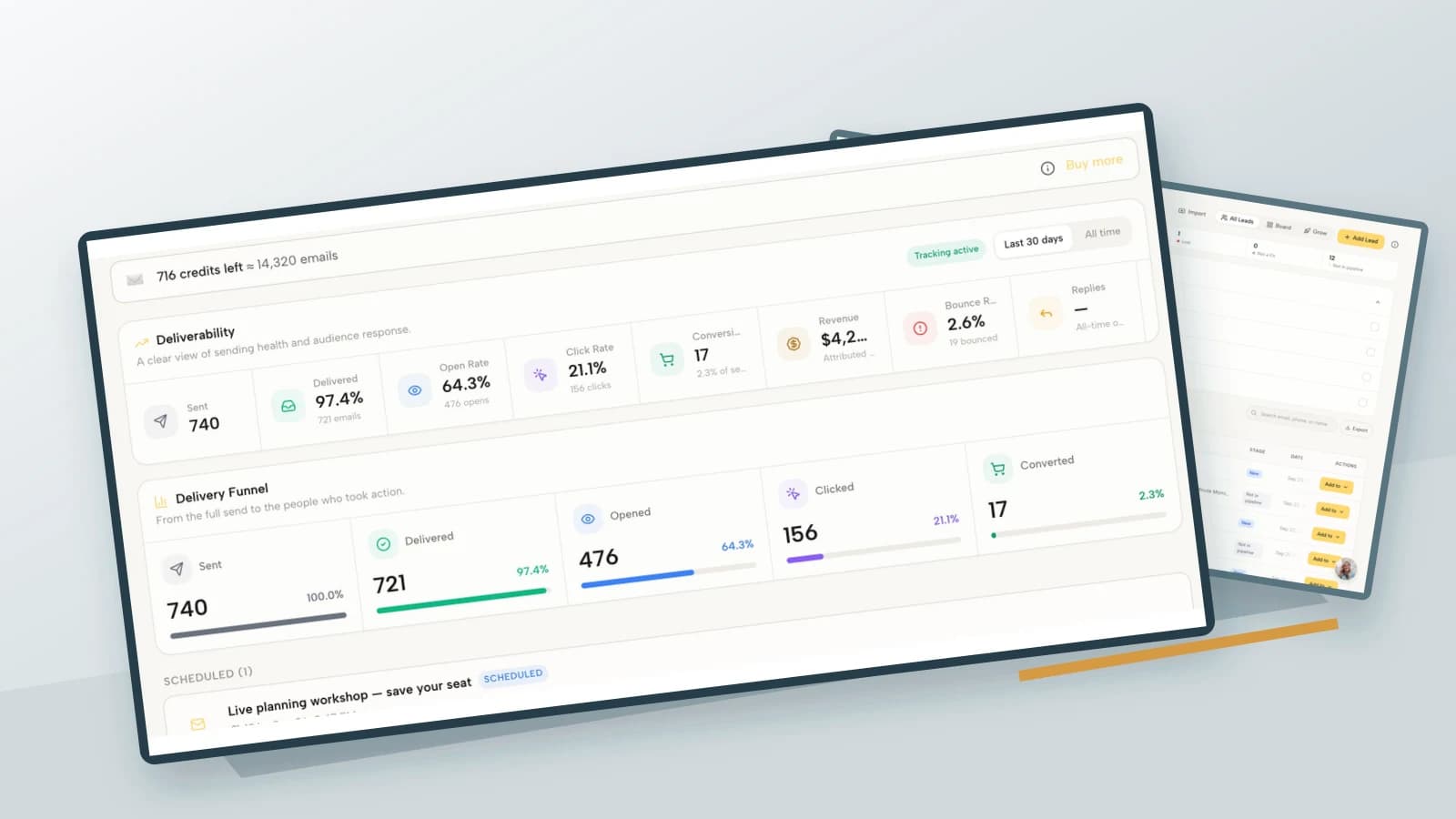
Keep a small channel log: placement, date, cost, destination, recorded visits where available, paid seats associated with that source, and questions raised. Include an unknown or multi-touch category instead of forcing every buyer into one channel.

In the fictional visual example, the newsletter has 60 recorded visits and three associated paid seats, a partner listing has 25 visits and two seats, and a social demonstration has 80 visits and one seat. These counts explain the log. They do not prove that a partner is universally better, or that any one touchpoint caused the purchase.
Someone may see your demonstration, receive a partner email and later buy through your newsletter. Link records and an optional “where did you first hear about this?” question offer different evidence. Do not present either as a complete history of influence.
At the decision date, compare actual registrations with your own minimum viable delivery plan. If the workshop cannot run responsibly, follow the stated cancellation and refund arrangements. If it can run as a smaller group, check the economics and participant experience before proceeding. Do not invent registrations to create urgency.
Frequently asked questions
How do I promote a workshop with a small audience?
Start with a sharply relevant offer and two reachable channels. A permitted invitation to a small warm audience plus a relevant partner listing is more manageable than building several new social accounts. If you have no suitable audience access yet, validate interest before committing to expensive logistics.
Should I make the workshop free to get more people?
Choose free only when it serves the workshop's actual purpose and economics. It changes the commitment and the revenue model; it does not solve an unclear promise. A standalone paid practice workshop should offer value without requiring a later coaching purchase.
How often should I post about the event?
Choose a cadence you can sustain and the audience context permits. Each piece should do a job: demonstrate, clarify fit, answer a question or communicate a real deadline. Repeating the same poster more frequently is not the same as giving people a better reason to attend.
Can I promise a replay?
Only after deciding what can appropriately be recorded, obtaining required permissions and confirming the access arrangement. A workshop involving personal examples or paired practice may need a different replay plan from a lecture. State what a ticket includes before purchase.
Make the next registration easy to understand
Choose two distribution routes, give each an owner and a next action, and keep the page promise consistent with the invitation. For delivery planning after the marketing work, use our online coaching workshop run sheet.
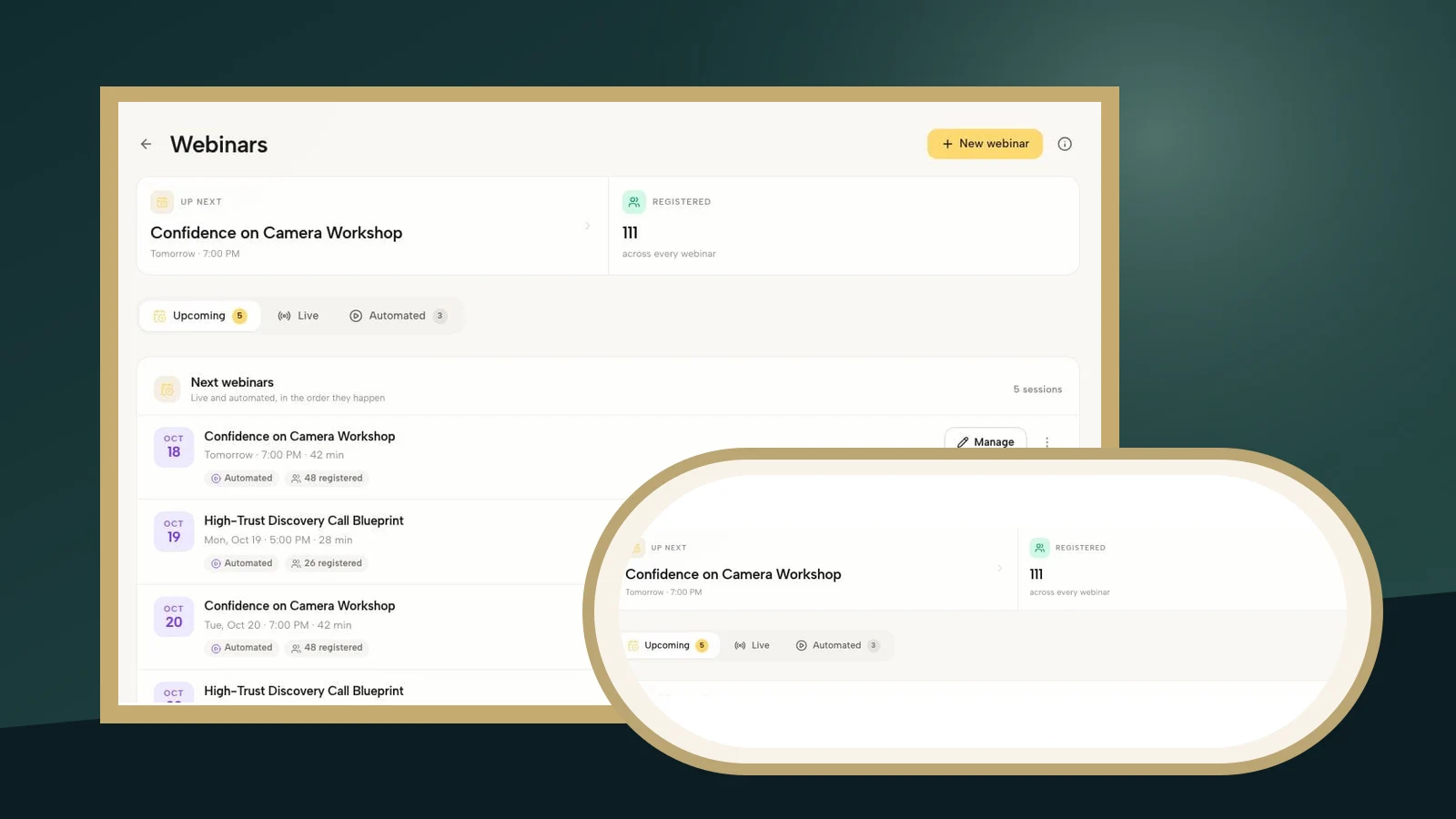
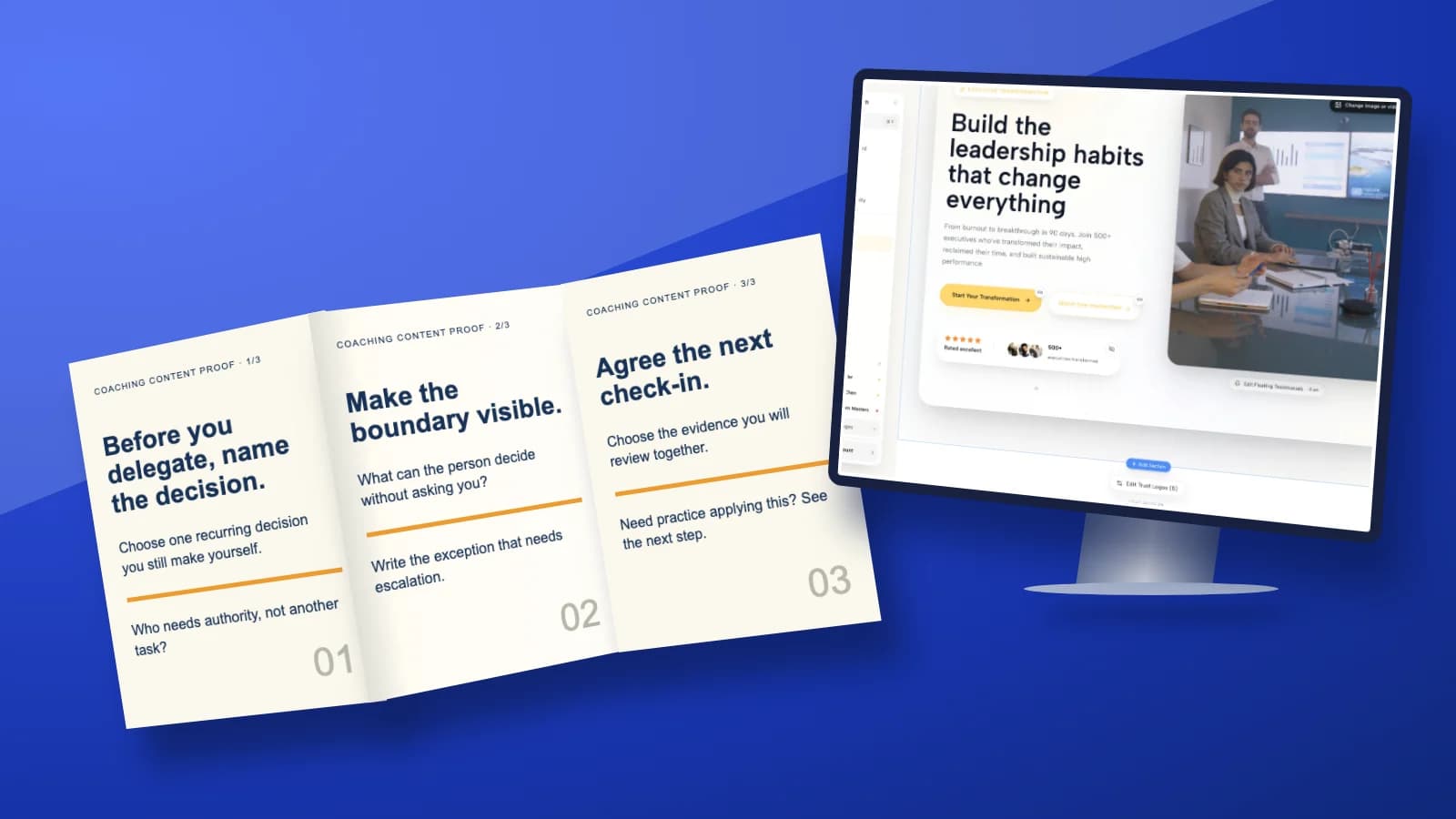
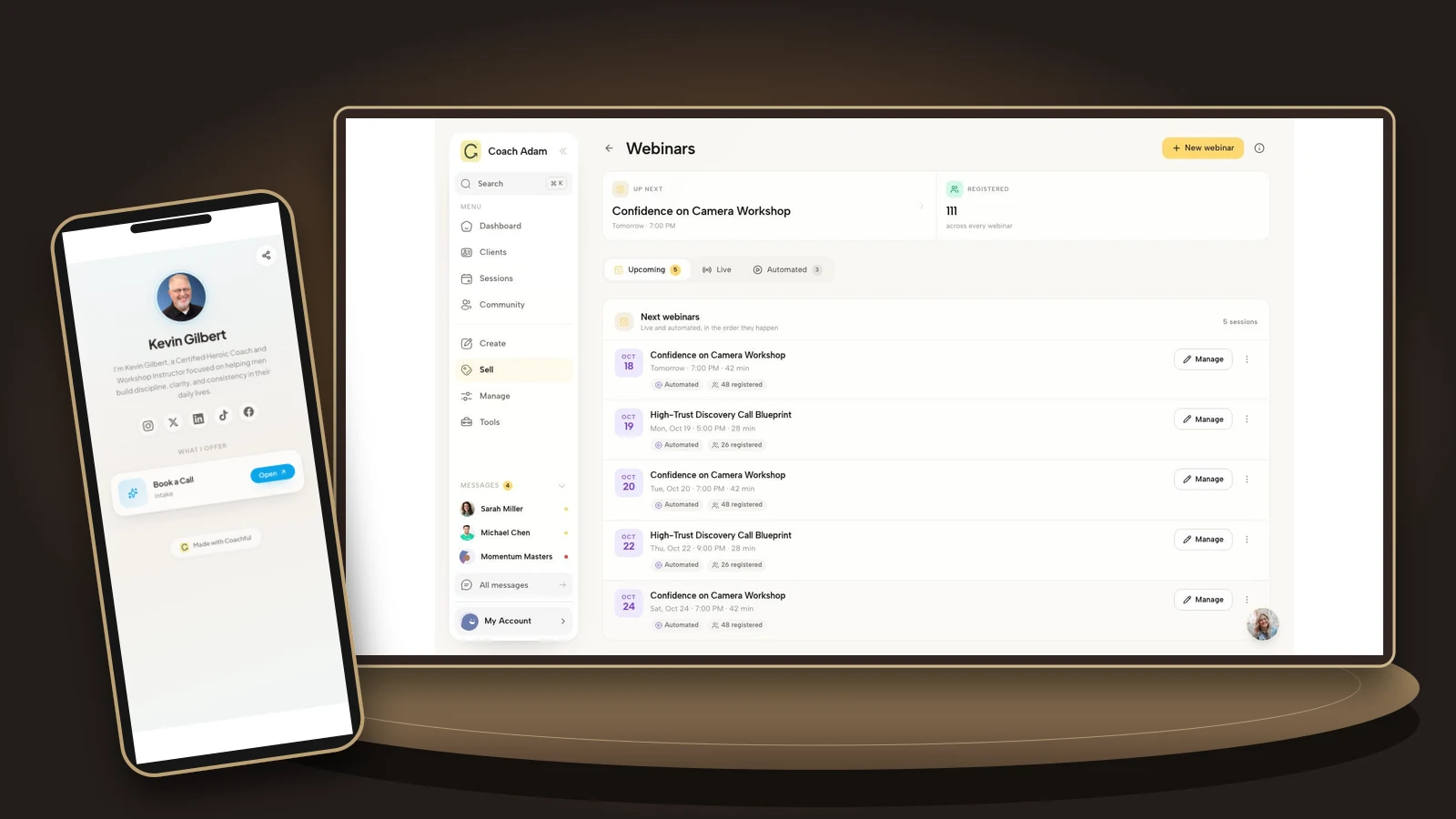
If you need to assess the operational handoff, try the interactive Coachful demo. Inspect the event, email, public-link and funnel surfaces shown here, then compare them with the route your own participant must take. The useful question is whether interest can become an understandable registration, not whether another dashboard can supply demand for you.