
Mental Health Coach Certification: An Honest Guide
A mental health coach certification is a training certificate, not a license, and "mental health coach" isn't a regulated title in most places. No certification lets a coach diagnose or treat a mental health condition; that's the work of licensed clinicians such as psychologists, counselors, clinical social workers and psychiatrists. What a mental health coach certification can do is teach you to support wellbeing, habits and goals with non-clinical clients, and to recognize when someone needs a clinician instead.
That honesty matters, because this is the corner of coach training where marketing drifts furthest. Some programs describe a coach's work in language that sounds like therapy. This guide looks at the programs that use the "mental health coach" name and the credible adjacent routes, positive psychology, health and wellness coaching, ICF coach training, Mental Health First Aid and peer support, as their own sites described them in October 2026, and says where each one's limits are.
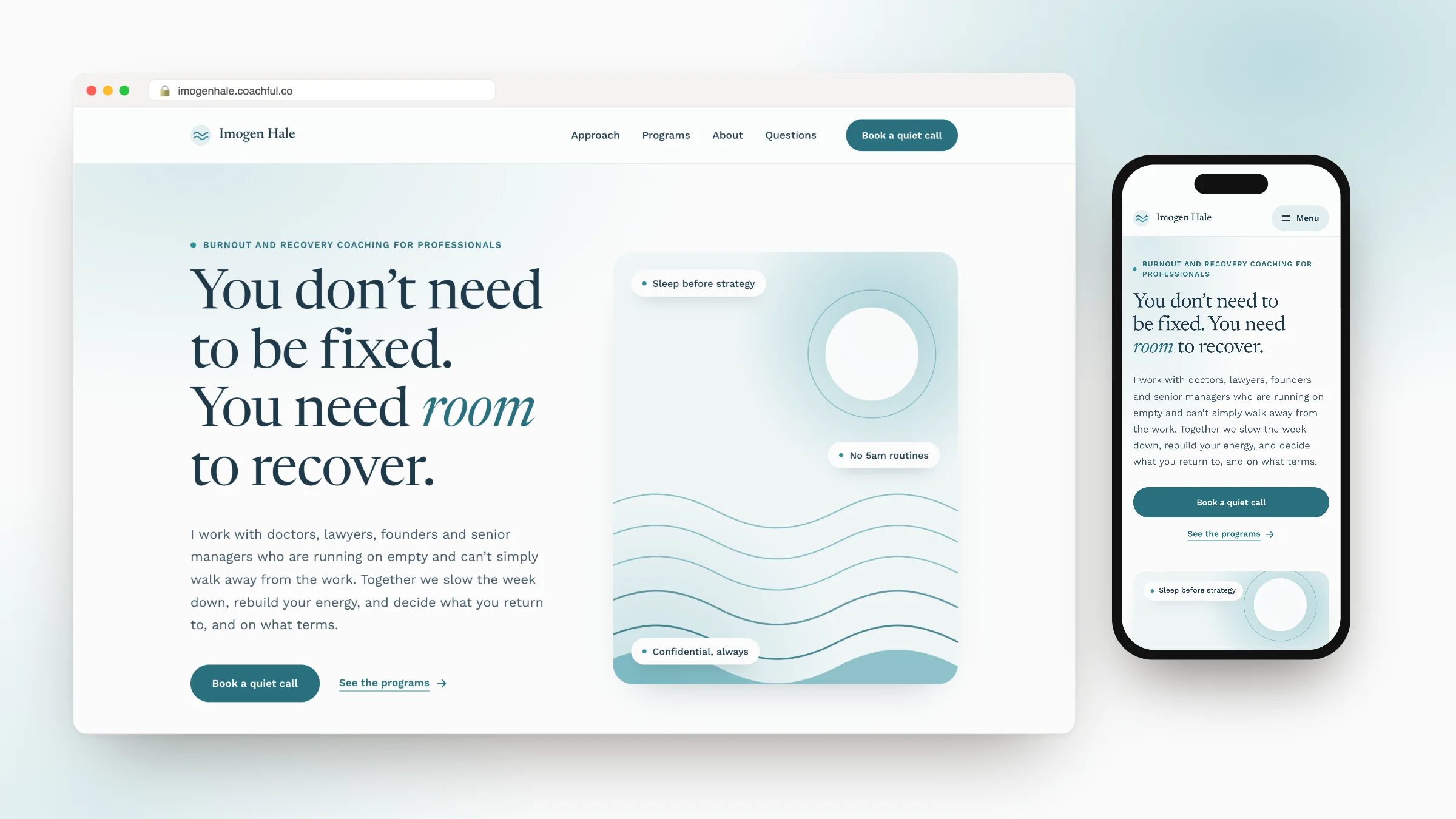
When you're trained and ready to work within that scope, Coachful's team will build your coaching website for free on every plan, including clear wording on what you do and don't offer.
Coaching, therapy and peer support: where the lines are
| Role | Licensed? | Works with | Does not |
|---|---|---|---|
| Therapist or counselor | Yes, by the state or country | Diagnosable conditions, trauma, crisis | Practice without a license |
| Wellbeing or mental health coach | No | Generally well clients working on goals, habits, stress and resilience | Diagnose, treat, or provide psychological therapeutic interventions |
| Peer support specialist | A credential, not a clinical license | People in recovery, drawing on lived experience | Replace clinical treatment |
| Mental Health First Aider | No; a short course certificate | Anyone in distress, until professional help arrives | Provide ongoing care |
The National Board for Health & Wellness Coaching puts the coaching line clearly in its scope of practice: on their own, coaches "do not diagnose" and do not "provide psychological therapeutic interventions," which it describes as methods such as CBT, EMDR or DBT used by qualified professionals to remediate a diagnosed condition. It adds that coaches working under the license of a qualified professional may support that professional's treatment plan.

Programs that use the "mental health coach" name
Light University (AACC): Mental Health Coaching
About 42 hours of self-paced online training with a year of access, leading to a Diploma in Mental Health Coaching and what the provider calls an "Educational Pathway" to a Certified Mental Health Coach credential from the International Board of Christian Care. When we checked, it was offered as a full scholarship plus a $69 technology fee. Its scope wording is the clearest in this category: a mental health coach is "a trained, non-clinical support person," and the training "does not prepare individuals to diagnose or provide clinical treatment." Know before you enroll: it's a Christian, faith-based provider; it says the program isn't approved for NBCC continuing education credit; and some course titles, on suicide intervention, psychotropic medication and trauma, reach into territory a coach should refer out.
iNLP Center: Mental Health Coach certification track
A bundle of five certifications, including NLP practitioner and master practitioner, life coaching and mental health coaching, delivered online with self-paced work and at least 20 live Zoom sessions, in as little as nine months, for $7,900 paid in full. Its page describes "125-hour Level 2 Accredited Training" with the ICF and Board Certified Coach training through the Center for Credentialing & Education. Read carefully: the same page gives both 200 hours and 165 ICF hours, and uses language about healing "unresolved emotional wounds" and "breakthrough outcomes for your clients, every time," which is therapeutic, outcome-guaranteeing language a coach shouldn't use with clients. Check its ICF level in the ICF's directory before relying on it.
We couldn't verify other programs sold as "certified mental health coach" courses on their own sites, so we haven't listed them.
Credible adjacent routes
ICF-accredited coach training
The most portable option is general coach training accredited by the International Coaching Federation at Level 1 or Level 2, then a credential such as the ACC or PCC. It's built around the ICF Core Competencies and Code of Ethics, and accredited programs must include observed coaching with feedback. Note that the ICF's education requirements say training in psychology, counseling or NLP doesn't count as coach education unless it's explicitly taught as coaching aligned to ICF standards. Our guide to ICF accredited coaching programs compares options.
Positive psychology
The Flourishing Center's Certification in Applied Positive Psychology runs nine months, blended, with twice-weekly live classes and 50 ICF continuing education hours, at $4,500 paid in full. The center says plainly that it "is not intended to be a coach certification program." For coaching, it points CAPP graduates to a separate program, Applied Positive Psychology Coaching, which it describes as 175 hours and ICF accredited at Level 2.
Health and wellness coaching
If your focus is stress, sleep and lifestyle, the NBHWC's board certification is a recognized, scope-clear route: an approved program, 50 coaching sessions and a board exam. Our guide to health coach certification compares approved programs.
Mental Health First Aid
Not a coaching credential, but useful for anyone who works with people. The National Council for Mental Wellbeing's course teaches its ALGEE action plan, in person in a day or blended (a two-hour self-paced course plus a half-day session). The certification is valid for three years; recertification costs $30.95, and course prices are set by each instructor.
Peer support
Peer support is a distinct role built on lived experience. NAADAC's National Certified Peer Recovery Support Specialist credential, for example, is for people in recovery from substance use or co-occurring mental health disorders and is described as "experiential-based." We couldn't open NAADAC's eligibility page to verify its current requirements, so check them there directly.

Refer to a licensed professional when...
- A client mentions thoughts of suicide or self-harm. In the US, they can call or text 988, the Suicide & Crisis Lifeline; elsewhere, use the local emergency number.
- Symptoms of depression, anxiety, trauma or an eating disorder are shaping the sessions.
- A client is in crisis, unsafe at home or being harmed.
- Substance use is escalating or out of control.
- A client asks you about diagnosis or medication.
Put your referral process in your coaching agreement before the first session, keep a short list of local clinicians and crisis lines, and treat referring as part of the job, not a failure. Some clients see a coach and a therapist at the same time; when they do, agree with the client how, or whether, you'll coordinate.
How to describe your work honestly
Your website and agreement are where scope becomes real. Clients searching for help at a hard moment deserve to know exactly what you offer. A plain statement does more for trust than any certificate badge. For example:
- On your site: "I'm a certified coach, not a therapist. I work with people who are generally well and want support with stress, habits and goals. If you're struggling with your mental health, please speak to a doctor or licensed therapist; I'm happy to work alongside them."
- In your agreement: "Coaching is not therapy, counseling or medical care, and does not diagnose or treat any condition. If concerns arise that need clinical support, the coach will recommend a referral, and coaching may pause." Have a lawyer check your final wording.
- In your intake form: a question asking whether the client is currently working with a therapist or doctor, and whether they're comfortable with you knowing.
Avoid "mental health treatment," "therapy," "heal" and any promise about symptoms. If a program you're considering teaches you to use that language, that tells you something about the program.
Red flags in mental health coach certification
- Promises to heal, cure or "fix" trauma, anxiety or depression.
- Guaranteed outcomes, "every time."
- Clinical techniques taught to non-clinicians with no scope guidance.
- Arguments against medical treatment in the course marketing.
- Hour totals that change between sections of the same page.
- A credential from a body you can't look up independently.
Our seven checks before you enroll include questions about ethics and referral to ask any school in writing.

Which route fits you
| If you want to... | Consider |
|---|---|
| Coach wellbeing, stress and resilience with well clients | ICF-accredited coach training, or NBHWC-approved health and wellness coaching |
| Bring the science of wellbeing into your work | A positive psychology certificate, plus coach training |
| Support people in faith communities | Light University, knowing its limits and faith basis |
| Use your own recovery experience | Peer support certification |
| Respond well to someone in distress | Mental Health First Aid |
| Diagnose and treat mental health conditions | A licensed clinical degree, not a coaching certificate |
If you're still weighing the career, our guide to how to become a mental health coach covers the whole path, and our guide on whether you need a license to coach explains the legal basics.

Where Coachful fits after you certify
Coachful doesn't train or certify anyone, and it isn't a clinical records system. It's a coaching platform, and a Coachful membership includes tools that suit wellbeing coaching within scope:
- Morning and evening check-ins and recurring wellbeing forms in the client app on iPhone and Android.
- Mood and check-in trends across clients, with a list of clients to check in on.
- Coaching agreements sent for e-signature before the first session, where your scope and referral policy belong.
- Booking, payment, programs and session notes in one place.
Coachful isn't HIPAA-certified; it's GDPR-ready with full data export. If you'll work under a clinician's license, check that practice's requirements first. See the Coachful page for mindset coaches or for life coaches.

Why Coachful stands out: a free white-glove service. Coachful's team builds your coaching website, first offer page and first program in your own account, free on every plan, usually within about 24 hours. A psychologist-turned-coach working on emotional eating, for example, got a new homepage with three clear paths: book a call, join a free community or enroll in a program. Nothing gets invented, including credentials. See what the free build includes.

Frequently asked questions
Is a mental health coach certification legit?
Some programs teach useful non-clinical skills, but none is a license, and "mental health coach" isn't a regulated title in most places. Look for clear scope-of-practice teaching, observed practice and, if you want a portable credential, ICF or NBHWC routes.
Can a mental health coach diagnose or treat anxiety or depression?
No. Diagnosis and treatment belong to licensed clinicians. The NBHWC's scope says coaches on their own don't diagnose or provide psychological therapeutic interventions such as CBT, EMDR or DBT.
What can a certified mental health coach do?
Support generally well clients with goals, habits, stress and resilience; help clients follow a plan their clinician has set, if working alongside one; and recognize when to refer. Light University describes its mental health coaches as non-clinical support people.
Do I need a license to be a mental health coach?
Not for coaching itself in most places, since coaching isn't licensed. The moment work becomes diagnosis or treatment, it requires a clinical license, whatever the job title says.
Is Mental Health First Aid a coaching certification?
No. It's a short course from the National Council for Mental Wellbeing that teaches how to help someone in distress until professional help arrives. The certification is valid for three years.
How much does mental health coach certification cost?
It varies widely. When we checked, Light University's course was a full scholarship plus a $69 fee, The Flourishing Center's positive psychology certificate was $4,500, and iNLP Center's bundle was $7,900, as listed in October 2026.
Will Coachful build my coaching website?
Yes. Coachful's team builds your website, first offer page and first program for free on every plan, usually within about 24 hours. Coachful itself is a paid membership with a free trial; the build costs nothing extra.












