
Do You Need a License to Be a Life Coach? What's Required
No. In the US, the UK, Canada, Australia and most other countries, you don't need a license to be a life coach, because no government licenses life coaching or protects the title. What is regulated is the work next door: diagnosing or treating mental health conditions, giving medical or clinical nutrition advice, recommending investments and giving legal advice. A life coach who stays out of those areas can practice legally without any license or certification.
That makes the real question "what are the life coach requirements I can't ignore?" This guide covers the legal and credential side: why there's no license, where the regulated lines sit, what you may call yourself and what to put in writing. If you're starting from zero, our guide on how to become a life coach covers training and setup, and for the business side (registering, local permits, tax IDs) our US business license checklist for life coaches walks through it state by state and county by county.
Once the boundaries are clear, the setup is the easy part: Coachful's team builds your coaching website, first offer and first program for free on every plan, including the privacy policy page and the booking flow your agreement sits in.
Why there is no license to be a life coach
A license is a government permission to do work the law reserves for qualified people, like practicing medicine, psychology or law. Lawmakers license a job when the public can be harmed by unqualified practice and the harm is hard to judge in advance. Coaching, which works on goals and follow-through with people who are not in clinical distress, has never been put in that category.
The US Bureau of Labor Statistics put it plainly in its Career Outlook profile of life coaches: there are no formal requirements to become one, the field is unregulated, and training and certification are optional ways to build skill and trust.
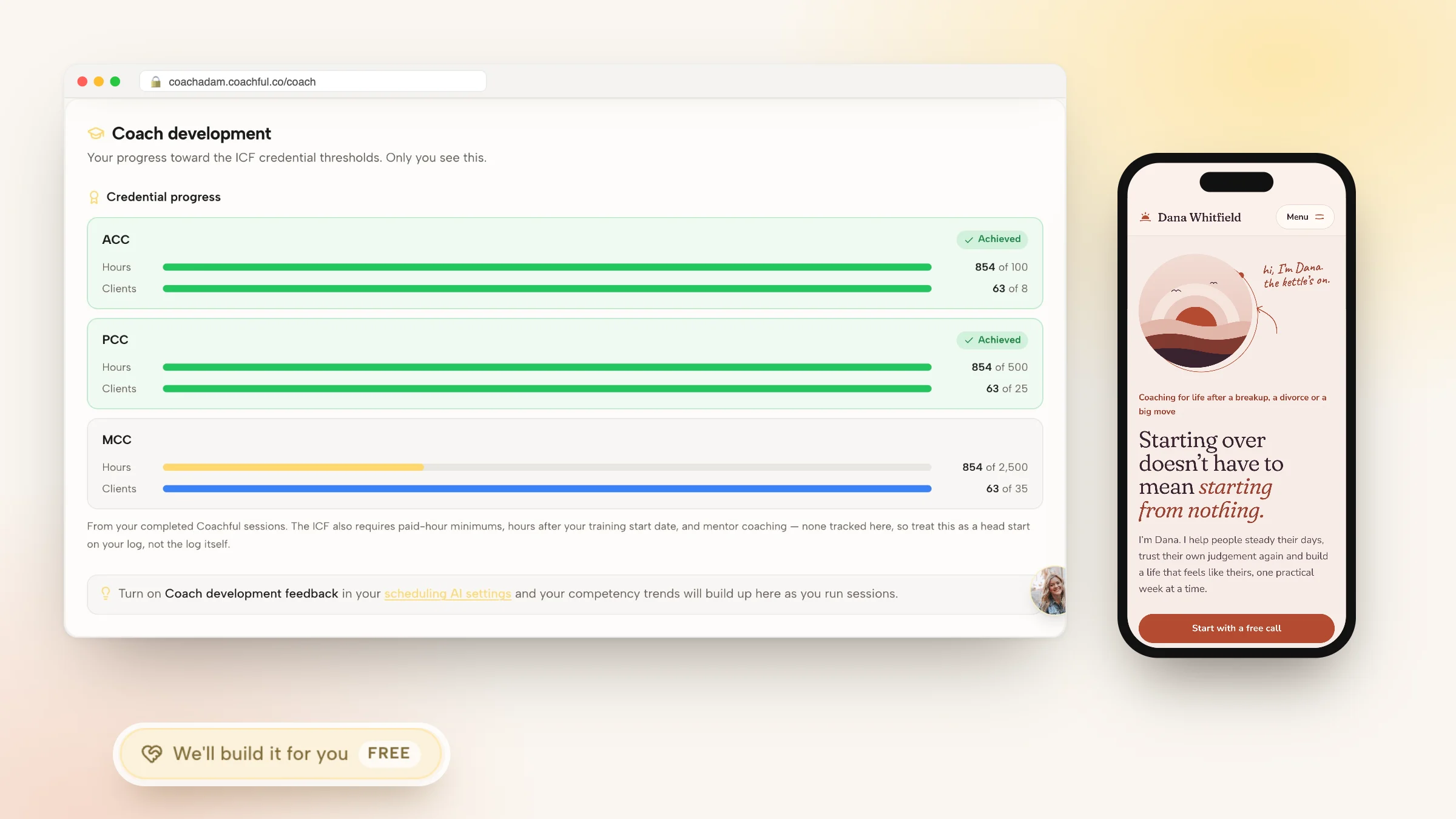
The credentials you'll hear about, such as the International Coaching Federation's ACC, PCC and MCC, are voluntary professional standards set by a membership body, not licenses. They matter to some buyers. They don't give anyone legal permission to coach, and not having one doesn't make coaching illegal. Our guide to becoming a certified life coach covers the ICF route if you want one.
Where the regulated lines sit
The risk for a life coach isn't coaching without a license. It's drifting into work that does need one. These are the borders to know:
| Regulated work | Who is licensed to do it | What a life coach can do instead |
|---|---|---|
| Diagnosing or treating mental health conditions | Psychologists, licensed counselors, therapists, clinical social workers, psychiatrists | Work on goals and next steps with people who are well enough to do so, and refer when something clinical shows up |
| Medical advice and treatment | Physicians, nurses and other licensed clinicians | Support habits a client's own clinician has approved, without diagnosing or prescribing |
| Individualized clinical nutrition advice | Dietitians and nutritionists, in places that regulate them; rules vary by state and country | Coach routines and follow-through around general healthy eating, and check local rules before giving meal plans for a condition |
| Investment and securities advice | Registered investment advisers and other licensed financial professionals | Coach budgeting habits, money conversations and goals, without recommending specific investments |
| Legal advice | Lawyers | Help a client prepare questions for their lawyer, for example during a divorce |
| Couples or family therapy | Licensed marriage and family therapists and other clinicians | Coach communication goals with couples who aren't in crisis, and refer when they are |
The names of the licensed professions are protected too. Calling yourself a therapist, counselor or psychologist when you don't hold that license is where coaches get into real trouble, even if the work itself was coaching. Our guide to keeping therapy and coaching separate covers the practical side, and trauma-informed coaching explains how to notice when a session has moved out of coaching.

Life coach requirements that do apply
No license doesn't mean no rules. Most life coach requirements come from ordinary business and consumer law that applies to any self-employed person:
- Register the business and pay tax. Depending on where you live, that might mean a sole proprietorship, a local business license, a tax registration or an LLC. The US checklist covers state and local rules.
- Tell the truth in your marketing. Consumer protection law in most countries bars misleading claims. Don't promise guaranteed results, invent testimonials or imply credentials you don't hold.
- Protect client information. If you coach people in the EU or UK, data protection law such as the GDPR applies to the notes, forms and recordings you keep. Publish a privacy policy that says what you collect and why.
- Put the terms in writing. Scope, confidentiality and its limits, cancellations, refunds and what happens if a client needs a different professional.
- Consider insurance. Professional liability insurance isn't legally required for most coaches, but many carry it, and some clients and venues ask for it. Our seven checks before you buy life coach insurance explain what to compare.
- Follow niche rules. A coach working with money, food, health or children may run into rules that a general life coach doesn't. Check them before you design the offer.

Is life coaching regulated in your country?
Here's what we could confirm for the countries most of our readers coach in. Laws change and local rules vary, so treat this as a map, not legal advice.
| Country | Life coaching licensed? | What is regulated nearby |
|---|---|---|
| United States | No, in any state | States license psychologists, counselors, therapists and social workers, and some regulate dietetics and nutrition advice. Investment advice is regulated federally and by states. |
| United Kingdom | No | Titles such as "practitioner psychologist" are protected and registered with the Health and Care Professions Council. |
| Canada | No | Psychology is regulated in each province, and some provinces, such as Ontario, regulate psychotherapy itself. |
| Australia | No | Psychologists are registered nationally; the title is protected. |
| European Union | No EU-wide license | Each country regulates its own health professions. The GDPR applies to client data everywhere in the EU. |
If you coach clients in another country, their consumer and data protection rules can apply to you as well. For anything that touches health, money or law, a short call with a local lawyer or accountant is cheaper than a complaint.
What you can call yourself
Titles are where a lot of coaches trip over consumer law without meaning to. A simple test: could a reasonable client be misled about what you're qualified to do?
- "Life coach": fine for anyone. It isn't a protected title.
- "Certified life coach": fine if a training program certified you. Say which one if anyone asks.
- "ICF ACC" or "ICF-credentialed": only if the ICF awarded you that credential and it's current.
- "Licensed life coach": avoid it. No license exists, so the phrase implies a government approval you can't have.
- "Therapist," "counselor," "psychologist": only if you hold that license where your client lives. "Coach" is the honest word for coaching.
The same goes for results. "I help women in their 40s decide what's next after a career break" describes your work. "Guaranteed to cure your anxiety" makes a clinical claim you can't back up. Our life coach About page guide shows how to describe your background honestly and still sound like someone worth hiring.

Put your scope in writing
The single most useful legal document a life coach has is the coaching agreement. If a client ever complains, the first thing anyone looks at is what you told them the service was. Cover at least:
- What coaching is and isn't. "Coaching is not therapy, counseling, medical, legal or financial advice, and it doesn't replace them."
- The client's responsibility. The client makes their own decisions and stays under the care of any clinician they already see.
- Referrals. "If I believe you'd be better served by a licensed professional, I'll tell you and may pause our work."
- Confidentiality and its limits, including a risk of serious harm.
- Recording and data. What you store, where, for how long, and whether sessions are recorded.
- Money. Price, payment plan, cancellations, refunds and unused sessions.
Start from our coaching agreement template and have a local lawyer review it once. Then screen at intake: a few questions about what the client wants to work on, and whether they're currently in treatment, tell you early if coaching is the right service.

Keep a short referral list with two or three local therapists, a crisis line and any specialists your niche needs, so a referral is a kind sentence rather than a scramble.
Requirements by life coaching niche
Some niches sit closer to a regulated line than others. If yours is on this list, design the offer with the border in mind:
- Health and wellness: coach habits and follow-through; avoid diagnosing, and check whether your state or country restricts nutrition advice.
- Money: coach budgeting and behavior; don't recommend specific investments. Our guide to becoming a financial life coach covers this border.
- Relationships and divorce: coach communication and decisions; refer couples in crisis and leave legal questions to their lawyers.
- Grief, trauma and faith: stay trauma-informed and know when to refer. Our guides to spiritual life coaching and Christian life coaching cover the pastoral and clinical lines.
- Children and teens: parental consent, safeguarding and local rules on working with minors apply.
Set up a practice that keeps its boundaries visible
Most of what keeps a life coach on the right side of the line is paperwork that happens every time: an intake form, a signed agreement, a privacy policy and honest pages. A Coachful membership includes the website, booking, payments, programs and client app, and the boundary pieces are built in:
- Agreements go out for e-signature before the first session and are stored on the client record. Agreements signed elsewhere can be uploaded and filed beside them.
- Intake questions attach to the booking or the onboarding flow, so screening answers sit on the client record. See forms and questionnaires.
- Legal pages such as your privacy policy live alongside your website pages.
- Data stays exportable: Coachful is GDPR-ready with a full client data export. It isn't HIPAA-certified, so it's built for coaching, not clinical records.
Payments go to your own Stripe or Razorpay account with a 0% Coachful platform fee, and the Coachful page for life coaches shows the rest.

You don't have to set it up yourself. Coachful's team builds your website, first offer and first program for free on every plan, inside your own account. Coachful itself is a paid membership, and you can start with a free trial. Click Fill in a form on the "Want us to build it for you?" card on the Website page, list the pages you need (including the privacy policy) and what each should do, and attach your agreement or notes. The team replies by email with next steps, usually within about 24 hours, though that isn't guaranteed.

The team's rule fits this topic well: nothing gets invented. No credentials you don't hold, no testimonials, no prices you haven't set. Anything missing is left for you to fill in. See everything the free build covers.

Frequently asked questions
Do you need a license to be a life coach in the US?
No. No US state licenses life coaches. States do license psychologists, counselors, therapists and social workers, and some regulate nutrition advice, so a life coach must stay out of that work and avoid those titles. Separately, your city or county may require an ordinary business license.
What are the requirements to be a life coach?
There are no legal education or credential requirements in most countries. The practical life coach requirements are business registration and tax, honest marketing, a written coaching agreement, a privacy policy if you hold client data, and a referral plan for clients who need a licensed professional.
Is life coaching regulated?
Not in the US, UK, Canada, Australia or most of the EU. The ICF and similar bodies set voluntary professional standards and credentials, but they're membership organizations, not regulators. What's regulated is the clinical, medical, financial and legal work next to coaching.
Can I call myself a licensed life coach?
Avoid it. No life coach license exists, so the phrase implies a government approval you can't have. "Certified life coach" is accurate if a program certified you, and "ICF ACC" only if the ICF awarded you that credential.
Can a life coach work with clients who have anxiety or depression?
A coach can work on goals with someone whose condition is being treated and who is well enough for coaching, ideally with their clinician aware. A coach must not diagnose or treat the condition, and should refer if symptoms are driving the sessions.
Do I need a license to coach clients in another country?
Life coaching isn't licensed in most countries, so usually not. Their consumer protection and data protection rules can still apply to you, such as the GDPR for clients in the EU. Check the rules where your clients live if you work in health, money or law.
Do life coaches need insurance?
It isn't legally required for most life coaches, but professional liability insurance is common and some clients and venues ask for it. It covers claims that your coaching caused a client a loss.
Will Coachful build my coaching website, including the legal pages?
Yes. Coachful's team builds coaching websites, offer pages and programs for free on every plan. List the pages you need, including your privacy policy, in the request form and the team replies with next steps, usually within about 24 hours. You supply your own legal text; the team doesn't give legal advice.












