
Weight Loss Coaching: What Works, Costs and Red Flags
Weight loss coaching is ongoing support from a coach who helps you change the habits behind your weight: what and when you eat, how much you move, sleep, stress and the situations that knock you off course. It works through regular sessions, tracking and accountability rather than a diet sheet. Structured behavioral programs with frequent contact have good evidence behind them, and a coach can deliver much of that structure. A coach does not prescribe diets for medical conditions or manage medication; that is a dietitian's or doctor's job.
That last point matters more than it sounds. The weight loss market is full of confident people selling plans, and the best coaches are often the ones most careful about what they will not do. This guide covers what a weight loss coach actually does, how it compares with a dietitian, doctor or trainer, what the research shows, what it costs (including programs you may be able to join at no cost), and how to spot a coach worth trusting.
What a weight loss coach does
A good weight loss coach spends most of the time on behavior, not food rules. In practice that looks like:
- Setting a realistic target. Often 5 to 10 percent of your starting weight. The CDC notes that even a modest loss of that size can bring health benefits (CDC).
- Tracking that you will keep doing. Food, steps, weight or simply whether you followed the plan today. The coach helps pick the lightest tracking that still tells you something.
- Finding the pattern. The 4pm vending machine, weekend takeout, eating after a hard call. Coaching is about the situations, not willpower.
- Building routines. Meal planning, a grocery list, a walk after dinner, a bedtime.
- Planning for setbacks. Holidays, travel, illness and the week everything goes wrong.
- Keeping it going. Most people can lose weight for a while. A coach's real value shows in months four to twelve.
The CDC's guidance is that people who lose weight gradually, about 1 to 2 pounds a week, are more likely to keep it off (CDC, losing weight). A coach who promises much faster results is selling something else.
Weight loss coach, dietitian, doctor or trainer?
| Who | What they are for | Licensed or regulated? |
|---|---|---|
| Weight loss or health coach | Habits, accountability, motivation and routines | No. The title is unregulated; a national board certification exists |
| Registered dietitian (RDN) | Personalized eating plans, medical nutrition therapy for conditions such as diabetes or kidney disease | Yes, a credentialed profession |
| Doctor, nurse practitioner or obesity specialist | Health assessment, medication, surgery referrals, managing related conditions | Yes |
| Personal trainer | Exercise programming and technique | Certified by private bodies, not licensed in most places |
| Therapist | Eating disorders, binge eating, emotional eating tied to trauma, depression or anxiety | Yes |
Medicare states that only a registered dietitian, or a nutrition professional who meets certain requirements, can provide medical nutrition therapy (Medicare). If you have diabetes, kidney disease or another condition where food choices are part of treatment, a dietitian belongs on the team.
See a licensed professional when...
- You have diabetes, heart disease, kidney disease, high blood pressure or another condition, or you take medication that affects weight or blood sugar. Talk to your doctor before changing how you eat or exercise.
- You take, or are considering, a weight loss medication or surgery. Your prescriber or surgical team manages that, and a coach should work around their plan, never against it.
- You notice signs of an eating disorder, such as an ongoing preoccupation with weight, body shape or controlling food, bingeing, purging or severe restriction. The National Institute of Mental Health calls eating disorders serious illnesses (NIMH). A therapist and doctor come first.
- You are pregnant or breastfeeding, or the person who wants help is under 18.
- Low mood or anxiety is driving the eating. In a crisis in the US, call or text 988.
What weight loss coaching sessions look like
Expect a longer first session: your history with weight, health conditions and medications (so the coach knows when to refer), what a normal day of eating and moving looks like, what has worked before and why it stopped, and what you want to be different in six months. Some coaches ask you to fill in a short form before each session, which makes the time go further. If the weight change arrived with perimenopause, menopause coaching may be worth a look.

Regular sessions then run weekly or every other week for 30 to 60 minutes. A typical one reviews the week's tracking, celebrates what went right, looks honestly at one sticking point and agrees one or two changes for the coming week. Between sessions, many coaches use daily check-ins and habit tracking.

A clear, dated goal helps both sides judge progress. "Walk 30 minutes five days a week and cook dinner four nights" can be checked every Sunday; "eat better" cannot.

Some coaches set up short morning and evening check-ins, asked automatically, so the client spends a minute a day reflecting and the coach sees the pattern.

And messaging is where much of the accountability lives. A message that says "skipped the walk again, rough week" should get a practical reply, not a guilt trip.

Does weight loss coaching work?
The evidence for structured behavioral weight loss programs is stronger than for most kinds of coaching. The evidence for any individual coach is, of course, nil until you try them.
- The US Preventive Services Task Force recommends it. In 2018 the Task Force recommended that clinicians offer or refer adults with a BMI of 30 or more to intensive, multicomponent behavioral interventions, a grade B recommendation with harms judged small to none (USPSTF, JAMA 2018). In the trials it reviewed, most programs had 12 or more sessions in the first year, and participants lost about 2.4 kilograms (5.3 pounds) more than controls after 12 to 18 months and were about twice as likely to lose 5 percent of their weight.
- A coach-led program cut diabetes risk in a large trial. The CDC's National Diabetes Prevention Program uses a research-based curriculum and trained coaches. In the randomized trial behind it, the lifestyle program reduced the chance of developing type 2 diabetes by 58 percent compared with placebo, and by 71 percent in people 60 and older (CDC).
- Health coaching studies are mixed in a useful way. A small randomized trial of 44 adults with obesity found those coached in about six sessions over 12 weeks lost 5.4 kilograms against 0.3 kilograms in the comparison group (Suminski and colleagues, 2022). A 2023 meta-analysis of health coaching combined with tracking apps found weight loss of about 2 kilograms more than controls, but no clear benefit from adding a coach to an app on its own (Chew and colleagues, 2023).
Put together: frequent, structured contact around eating, activity and self-monitoring helps many people lose a modest amount of weight and lowers some health risks. The results in trials are averages, the losses are usually modest rather than dramatic, and a coach who simply checks in without structure may add little to a good app.
What weight loss coaching costs, and programs you may get at no cost
Weight loss coaching sits inside health and wellness coaching, which has its own figures in Coachful's 2026 Coaching Business Report, compiled from published research and practitioner reports for the second quarter of 2026.
| Format | What it usually includes | Typical price |
|---|---|---|
| One session | An hour with a health or wellness coach | $75 to $200 |
| Four-week reset | Four sessions, a habit tracker and a food and movement plan | $400 to $800 |
| Three-month program | Eight to ten sessions, weekly check-ins and resources | $900 to $2,000 |
| Ongoing monthly | Two to four sessions a month and messaging | $300 to $700 a month |
| App-based with a coach | Daily lessons in an app and a weekly coach check-in | $17 to $149 a month |
US dollars, Q2 2026. Hourly band from PayScale and practitioner reports; package shapes from practitioner reports. See coachingrates.com for detail. Practitioner figures are estimates.
Before you pay, check whether you qualify for a covered program:
- Medicare Diabetes Prevention Program. If you have Medicare, prediabetes-range blood test results and a BMI of 25 or more (23 or more if you are Asian), you can join a year-long program with 16 weekly sessions, then six monthly ones, led by a specially trained coach. You pay nothing if you qualify (Medicare).
- Medicare obesity behavioral therapy. With a BMI of 30 or more, Medicare Part B covers weight counseling from your primary care provider, at no cost if they accept assignment (Medicare).
- CDC-recognized lifestyle programs. The National Diabetes Prevention Program runs for a year, about weekly for the first six months and then once or twice a month (CDC program details). Ask your health plan or employer whether they cover one.
For how health coaches price and package their work, see how much a health coach charges.
How to choose a weight loss coach
Credentials that mean something
- NBC-HWC. The National Board Certified Health and Wellness Coach credential requires completing an NBHWC-approved training program, logging 50 coaching sessions and passing a board exam developed with the National Board of Medical Examiners (NBHWC eligibility).
- RDN. A registered dietitian nutritionist is credentialed by the Commission on Dietetic Registration. Some dietitians also coach, which gives you both skill sets.
- Diabetes Prevention Program coach training. Coaches in CDC-recognized programs are trained to lead that curriculum.
- Medical or fitness backgrounds. Nurses, physicians and certified trainers who coach bring useful knowledge; ask how they keep the roles separate.
The National Institutes of Health's guide to choosing a safe and successful weight-loss program is the best checklist we know. It suggests looking for an initial goal of 5 to 10 percent of your weight within six months, a tailored eating plan, a physical activity plan, ongoing support with tracking and feedback, and a plan for keeping the weight off.
Questions to ask
- What training and credentials do you have, and what do you refer out?
- How do you work with my doctor or dietitian?
- What does a week of coaching include beyond the session?
- What happens when I plateau or have a bad month?
- How do you handle clients on weight loss medication?
Red flags
The NIDDK guide lists several: promises like "lose 30 pounds in 30 days", weight loss without changing diet or activity, "spot" fat loss, fine print and asterisks, before-and-after photos that seem too good to be true, no published evidence and unclear total costs. Add a few of our own: a coach who sells supplements or "detox" products, sets very low calorie targets without medical oversight, shames you, or tells you to stop medication.

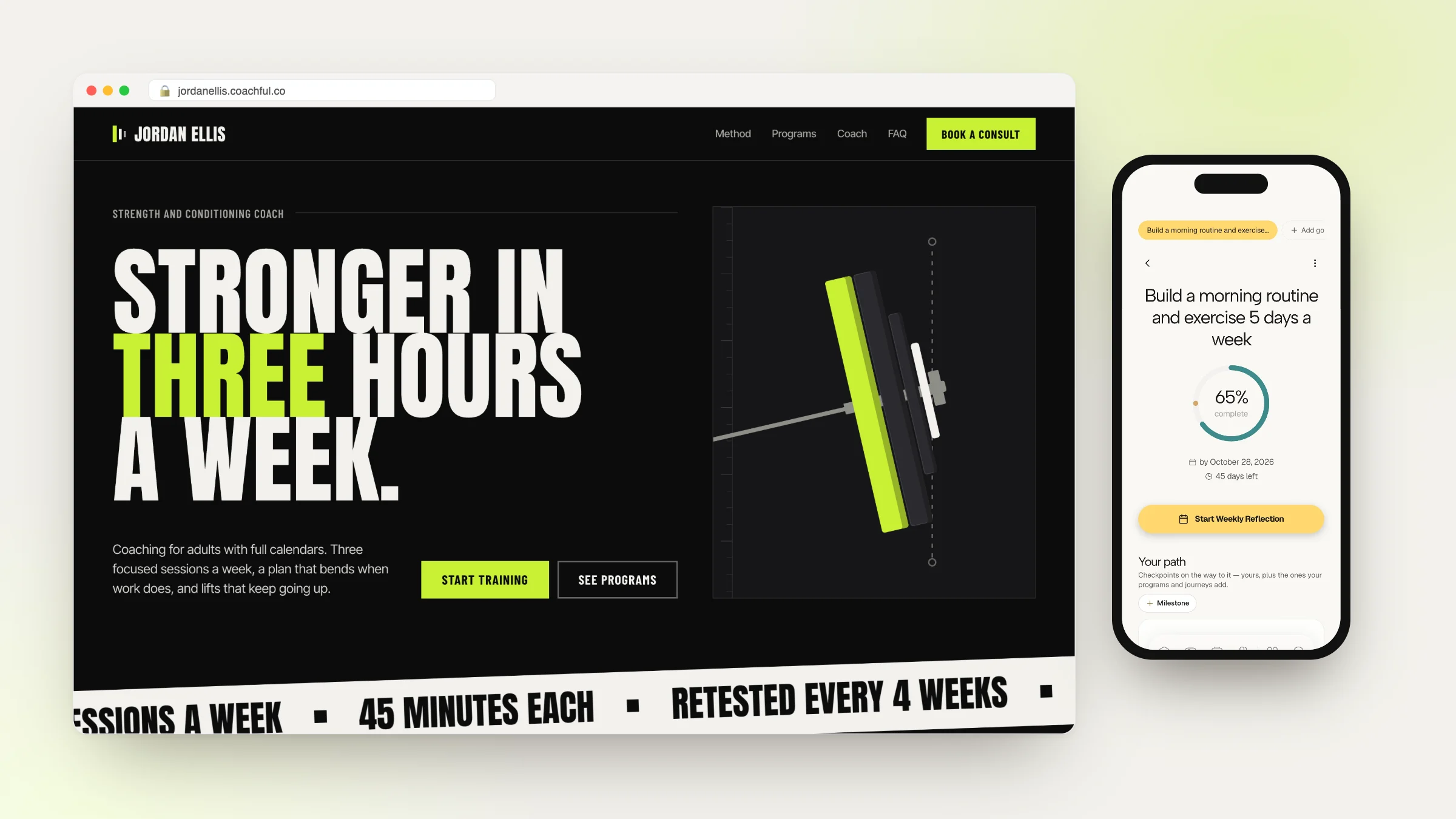
A coach's website should be specific about their approach and credentials. The sample template above, with a fictional nutrition coach, puts the credential and approach up front ("no points, no cleanses") and offers a first call. That is the tone to look for.
Find a weight loss coach on Coachful
Coachful's Find a Coach directory is public and needs no account to browse. Start with the Health and Fitness category, or search "weight loss", "nutrition" or "health coach" to find coaches whose headline or bio mentions those words. You can browse coaches or their programs, including group programs.
Prefer to be matched? The Find My Coach quiz asks what you want to improve, where you are now, your preferred coaching style and your monthly budget, and returns a shortlist. Read the credentials line on each profile, then book a discovery call from the coach's calendar or send a message, and use the questions above.

Are you a health or weight loss coach?
Read how to become a health coach for training and the NBHWC route, and how to become a nutrition coach for the dietitian boundary. Coachful's page for health coaches covers check-ins, habits and programs, and the team will build your website or program for you at no extra cost through the free white-glove service.
Frequently asked questions
What does a weight loss coach do?
A weight loss coach helps you change the habits behind your weight through regular sessions, tracking and accountability: realistic goals, routines for eating and activity, sleep and stress, and plans for setbacks. They do not prescribe medical diets or manage medication.
Is a weight loss coach worth it?
Structured behavioral programs with frequent contact have good evidence: the US Preventive Services Task Force recommends them for adults with obesity. A coach who provides that structure can help. Expect modest, gradual loss, and check first whether you qualify for a covered program.
How much does a weight loss coach cost?
Health and wellness coaching typically costs $75 to $200 a session, $900 to $2,000 for a three-month program or $300 to $700 a month for ongoing coaching, according to Coachful's 2026 Coaching Business Report. App-based programs with a coach run $17 to $149 a month.
What is the difference between a weight loss coach and a dietitian?
A registered dietitian is a credentialed nutrition professional who can provide medical nutrition therapy for conditions such as diabetes or kidney disease. A coach focuses on habits, motivation and accountability. If you have a medical condition, see a dietitian; a coach can work alongside.
Does insurance cover weight loss coaching?
Sometimes, through specific programs. Medicare covers the Medicare Diabetes Prevention Program for eligible people and obesity counseling in primary care for a BMI of 30 or more. Private plans and employers vary, so ask about CDC-recognized lifestyle programs.
How fast should I expect to lose weight with a coach?
The CDC says people who lose about 1 to 2 pounds a week are more likely to keep the weight off, and that losing 5 to 10 percent of your weight can bring health benefits. Be wary of any coach promising much faster loss.
Can a coach help if I am taking a weight loss medication?
Yes, with habits around eating, activity and keeping weight off, provided they work within your prescriber's plan. A coach should never advise on starting, stopping or dosing medication.












