Coaching Circle: What It Is and How to Run One
A coaching circle is a small group, usually three to six people, that meets regularly and takes turns bringing a real issue while the others coach with questions rather than advice. There is often no expert in the room: each member is coach and coachee in the same session. Coaches run peer coaching circles to sharpen their skills and get support, and many run coaching circles for clients as a lighter, more affordable form of group coaching.
Below you'll find the main kinds of coaching circle, a well-documented peer format you can borrow, a step-by-step setup and a 75-minute agenda. If you decide to offer circles to clients, Coachful's team will build the sign-up page for you, free on every Coachful plan.
Three kinds of coaching circle
The phrase covers a few different formats. Knowing which one you are running avoids most of the confusion that sinks new circles.
| Kind | Who is in it | Who leads | Purpose |
|---|---|---|---|
| Peer coaching circle | Coaches, or professionals at a similar career stage | Nobody; roles rotate | Support on real issues and practice at coaching each other |
| Mentor-led circle | Coaches working toward a credential | An experienced mentor coach | Feedback on coaching skill, sometimes toward credential requirements |
| Client coaching circle | Your clients, grouped by a shared goal or stage | You, as facilitator | Group coaching that relies on members coaching each other |
A coaching circle is also different from a peer practice group, where coaches rotate through coach, client and observer roles to practice a skill on chosen topics. We wrote a separate peer coaching group agenda for that. A circle works on members' real dilemmas, so the stakes and the confidentiality are higher. It also differs from a coaching mastermind, which is usually business-focused and welcomes advice; a circle mostly holds back from advice.
If you are credential-minded, note that ICF credential applications include mentor coaching, part of which can happen in a group led by a qualified mentor. A peer circle with no mentor does not count as mentor coaching. Our guide to ICF mentor coaching explains the rules.
A peer coaching circle format you can borrow
One of the clearest public write-ups of the peer format comes from the University of Washington's ADVANCE center, whose Peer Coaching Circles model grew out of a peer group described in the book Every Other Thursday. Its handout describes a meeting structure that adapts well to coaches:
- Sign-up: each person signs up for individual work time, and everyone works in every meeting.
- Work time: the member gives a short check-in on how they are, a dilemma statement (the feeling, what it stems from, what they have tried) and the support they want from the group. The group asks clarifying and open questions first and offers specific solutions last, if at all.
- Contract: work time ends with a short commitment phrased as "I will…", not "I should…", which the member reports on at the next meeting.
- Strokes: the meeting closes with each person sharing a positive observation about someone else's work that day.
Two of its ground rules are worth copying. "No rescues": don't solve someone else's problem for them. And don't insert your own story into another person's work time. Both are harder than they sound, and both are what make a circle feel different from a chat over coffee.
The model also uses three rotating roles: a facilitator who sends the reminder and runs the meeting, a time keeper who gives a two-minute warning before each work time ends, and a themer who listens for patterns across everyone's issues and names them at the end. Each role moves on one seat at the next meeting.
How to run a coaching circle, step by step
- Decide the purpose in one sentence. "A space for new coaches in their first two years to work through real business and client dilemmas" is clear. "Support each other" is not.
- Choose three to six members. Four or five is ideal. Look for people at a similar stage who are willing to be honest. Avoid having a member's manager or a direct competitor for the same clients in the same circle.
- Agree the ground rules in writing. Confidentiality (nothing identifying leaves the room, including client details), no rescues, questions before suggestions, attendance, and what happens if someone needs to leave.
- Set a rhythm. Every two or three weeks for 75 to 90 minutes, at a fixed time, online or in person. Commit to six meetings before deciding whether to continue.
- Assign the rotating roles for the first meeting: facilitator, time keeper and themer.
- Run the meetings with the same structure every time, so attention goes to the issues rather than the format. Use the agenda below.
- Review after six meetings. Ask each member: what has the circle helped you do, what should we change, do you want to continue? Then recontract or close well.
If you need people to start one with, a coach community is the easiest place to find them. In Coachful's Coach Corner, the coaches directory lists each coach's business name and a Message button, and posts in Introductions say who people coach. The screenshot below is from Coachful's demo community, with sample coaches.

A 75-minute coaching circle agenda for four people
| Time | Segment | What happens |
|---|---|---|
| 0:00 to 0:05 | Open | Facilitator welcomes everyone, restates confidentiality in one sentence, confirms work-time order |
| 0:05 to 0:10 | Contract check | Each member reports in one sentence on last meeting's "I will…" |
| 0:10 to 0:25 | Work time one | About 3 minutes to present, 10 minutes of questions, 2 minutes to name a contract |
| 0:25 to 0:40 | Work time two | Same structure |
| 0:40 to 0:55 | Work time three | Same structure |
| 0:55 to 1:10 | Work time four | Same structure |
| 1:10 to 1:15 | Themes and strokes | Themer names patterns; each member gives one positive observation; roles rotate for next time |
With five members, stretch to 90 minutes. With six, either give each person 12 minutes or split work time across two meetings. The time keeper's two-minute warning is not optional: the circle's trust depends on everyone getting their turn.

Questions that keep a circle coaching instead of advising
The urge to suggest is strong, especially among coaches who are used to being helpful. Keep a short list of open questions in front of everyone:
- What would you like to be different by the end of this?
- What have you already tried, and what did you learn from it?
- What is the part of this you haven't said out loud yet?
- Who else is affected, and what do they want?
- What would you do if you knew it would work?
- What is in your control here?
- What is the smallest step you could take this week?
- What support would make that step easier?
- What would you tell a client who brought you this?
- What do you want from the group right now: questions, perspectives or ideas?
If the presenter asks for ideas, give them as options ("one thing some people try is…") and hand the decision straight back.
Five mistakes that end coaching circles early
- Letting one issue take the whole meeting. Protect every member's work time, even when one dilemma feels urgent.
- Swapping stories instead of asking questions. "That happened to me too" is kind and almost never useful in work time.
- Skipping the contract. Without an "I will…", nothing carries into the next meeting, and the circle becomes a nice conversation.
- Inconsistent attendance. Agree up front how many meetings someone can miss, and say what happens after that.
- Treating it as therapy. A circle is for forward-focused work. If something serious comes up, encourage the member to seek the right professional support, and consider coaching supervision for the client-related material.
Running coaching circles for your clients
A client coaching circle is a quiet commercial opportunity. It costs clients less than one-to-one work, it lets you serve more people without more hours, and the peer element often helps clients more than another session with you would. You facilitate, members coach each other with your guidance, and the same structure applies: work time, questions, contracts, strokes.
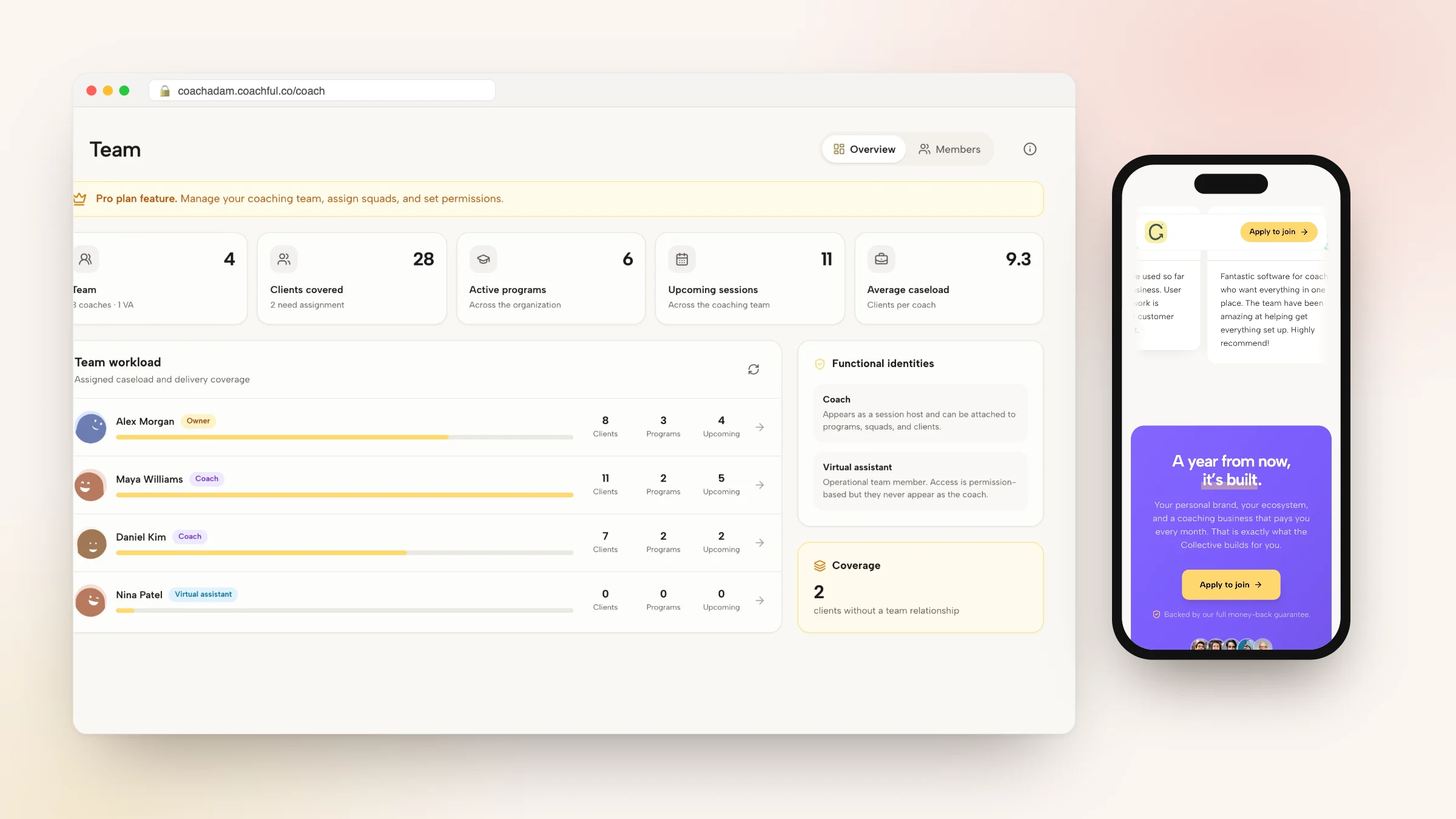
In Coachful, a circle is set up as a group program. Enrolling clients places them in a cohort group automatically, and you set the maximum group size, so a circle of five stays at five and a new group opens if more people sign up. Each group has its own member list, group chat and call card, and group sessions run on built-in video with attendance recorded per member.

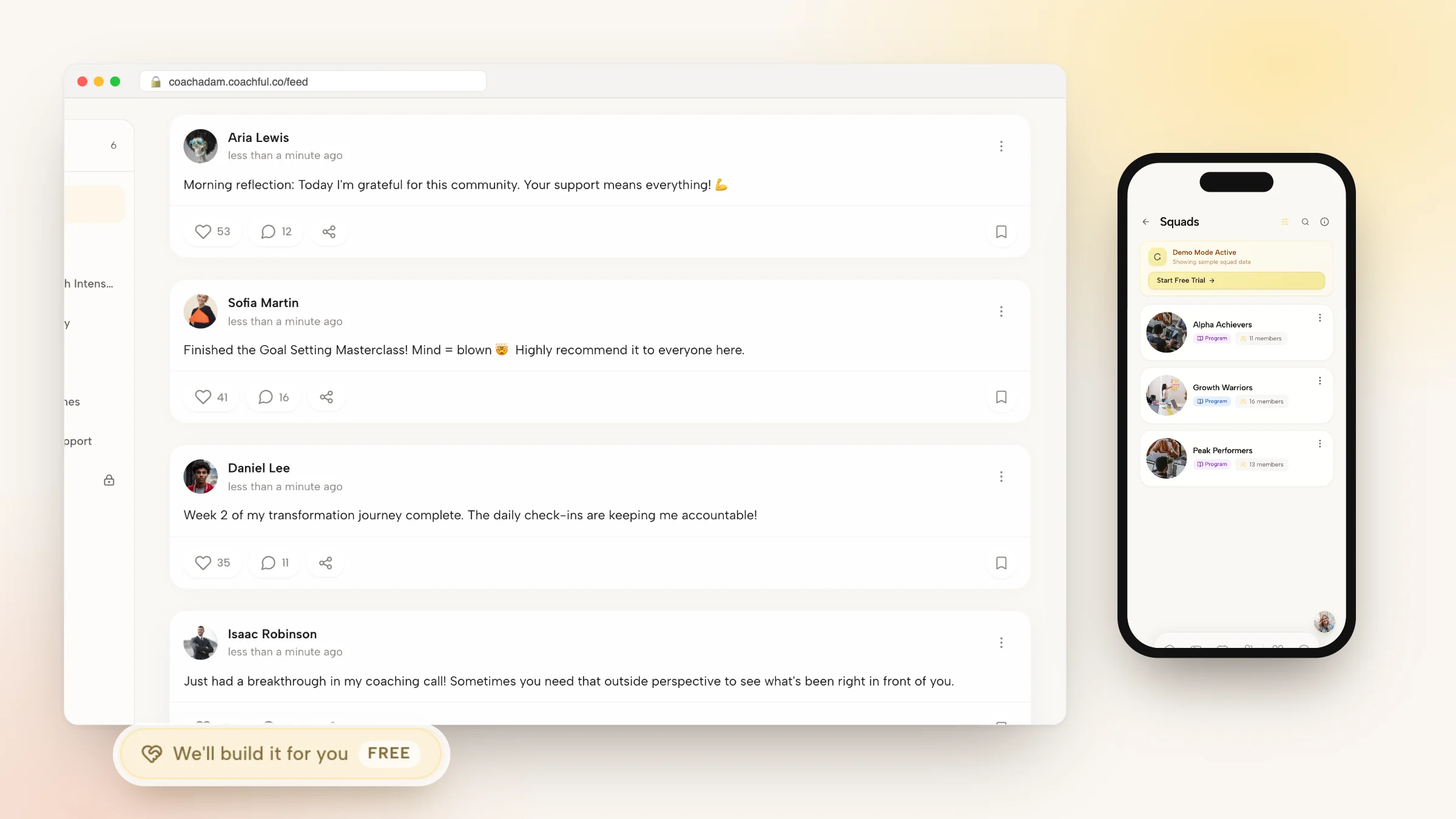
Between meetings, the group's community space can carry the contracts. A Commitment post from the Engage button lets each member tap "I'm in" on their "I will…", with an optional deadline and a Mark done step, so the contract check at the next meeting takes seconds. Chat channel settings decide who gets a direct chat with you and which group channels clients see.

Members also post wins between meetings, which matters more than it looks: hearing that another member followed through makes everyone's next contract a little more likely to stick.

The group coaching features and community features pages list what is included, and our playbook on how to create an online coaching community covers what to do once you have more than one circle running. For the coach side of the same idea, our coaching community guide explains why peers matter.
Get the circle's sign-up page built for free
A client circle needs a short page that explains who it is for, how a meeting works and what members commit to, plus a way to apply or enroll. Coachful's team will build it inside your account, free on every Coachful plan.
Open Create > We'll build it for you · FREE, or the Want us to build it for you? card on the Website or Funnels page, and describe the circle: who it serves, what pages you want and what visitors should do after they land. Add up to 8 reference links and 10 files, such as your logo, photos or notes. The team replies by email, usually within about 24 hours. It does not invent testimonials, credentials or prices, and anything missing is left for you to fill in. See the white-glove service guide for everything it covers.

Frequently asked questions
What is a coaching circle?
A coaching circle is a small group, usually three to six people, that meets regularly and takes turns working on a real issue while the others ask coaching questions. Members act as both coach and coachee, there is often no expert in charge, and each work time ends with a commitment the member reports on next time.
How does a peer coaching circle work?
Each meeting follows the same structure: a check on last time's commitments, individual work time for each member (a short dilemma statement, questions from the group, a new "I will…" commitment), then themes and positive observations. Facilitator, time keeper and themer roles rotate each meeting.
How many people should be in a coaching circle?
Three to six, with four or five working best. That gives each member about 15 minutes of work time in a 75 to 90 minute meeting. Larger groups either need longer meetings or split work time across sessions, which weakens continuity.
How often should a coaching circle meet?
Every two or three weeks suits most circles. It leaves time to act on commitments without losing momentum. Agree on six meetings to start, then review together whether to continue, change the format or close.
What is the difference between a coaching circle and a mastermind?
A mastermind is usually focused on business goals and welcomes direct advice and shared experience in hot seats. A coaching circle holds back from advice: members help each other reach their own answers through questions, and solutions come last, if at all.
Can I run paid coaching circles for my clients?
Yes. A client circle works as a lower-priced group offer that you facilitate. In Coachful, set it up as a group program with a maximum group size, and enrolled clients land in their own cohort group with chat, group calls and a community space for commitments.
Will Coachful build a sign-up page for my coaching circle for free?
Yes. Request it from Create or the Want us to build it for you? card, describe the circle and attach any links or files. The Coachful team replies by email, usually within about 24 hours, and builds the page inside your account at no extra cost on any plan.
Start small: three peers, six meetings, one agenda. A circle proves its worth in the contract check, when someone says "I did it" about a thing they had put off for months.