Chronic-Condition Clients? When a Health Coach Needs a Second App

You have narrowed it down to three platforms. Half your clients live with type 2 diabetes, high blood pressure or a fatigue condition that flares without warning. Every demo you sit through shows either macro targets and meal plans, or therapy notes and insurance codes. None of it looks like your work.
So the worry starts. Pick a general coaching platform and you may find it cannot hold the things that matter for these clients. Bolt on a tracker and by week three the client has three apps, two logins and has stopped logging in all of them. You pay for both either way.
When should a health coach pair their core platform with a specialist tracker? Less often than the demos suggest. Add one only when a specific measurement drives a decision in your coaching and something built for that measurement captures it better than a weekly check-in question can. Even then the tracker gets one job. The client keeps a single home for their plan, habits, messages, sessions and payments, and one weekly summary carries what matters from the tracker into that record.
A four-question test for adding a second app, what belongs in the core platform, what stays with the clinic, and the weekly summary that stops clients living in three places.
The examples below are made up to show the reasoning. Nothing here is medical, legal or privacy advice, and Coachful publishes this guide, so weigh the product section with that in mind.
The health coach question behind chronic-condition tracking
This guide started from a question a certified health coach asked in r/HealthCoaching while shopping for a platform:
Are any of the platforms useful for tracking clients with chronic conditions? From what I have seen online, most are geared towards nutrition and therapy.
The observation is fair. Nutrition and therapy tools are built around what those professions prescribe and bill for: meal plans, clinical notes, claims. A health coach working with someone who has a chronic condition does neither job. You help a person keep doing the unglamorous daily things their care team already asked for, and work out why they stop.
Underneath the software question sits a business one. If clients cannot see their own progress in one place, they stop renewing. If you spend the ten minutes before each session opening four dashboards, you cap your roster earlier than you planned. The platform choice decides both.
What a health coach tracks for chronic-condition clients, and what stays with the clinic
Start with scope, because it settles most of the tracking question. The NBHWC Health & Wellness Coach Scope of Practice says coaches "do not diagnose, interpret medical data, prescribe or de-prescribe, recommend supplements, provide nutrition consultation or create meal plans, provide exercise prescription or instruction". It also says coaches "who hold additional, active, national or state-recognized credentials may provide expert support and guidance within their professional scope for that credential", and that a coach working under the license of a qualified medical or allied health professional may support that professional's treatment plan.
Read that as a map of where data should live.
| What you are looking at | Example | Where it lives | Who makes sense of it |
|---|---|---|---|
| Daily behaviours | Walked after dinner, took readings on the planned days, lights out by 11 | Core coaching platform | Client and coach |
| The client's own goal | "Have the energy to garden for an hour" | Core coaching platform | Client, with the coach |
| How the week felt | Energy, stress, what got in the way | Weekly check-in in the core platform | Client and coach |
| Detailed food or training data | Macros, meal plans, sets and loads | A nutrition or training tracker, if you hold that credential | The credentialed professional |
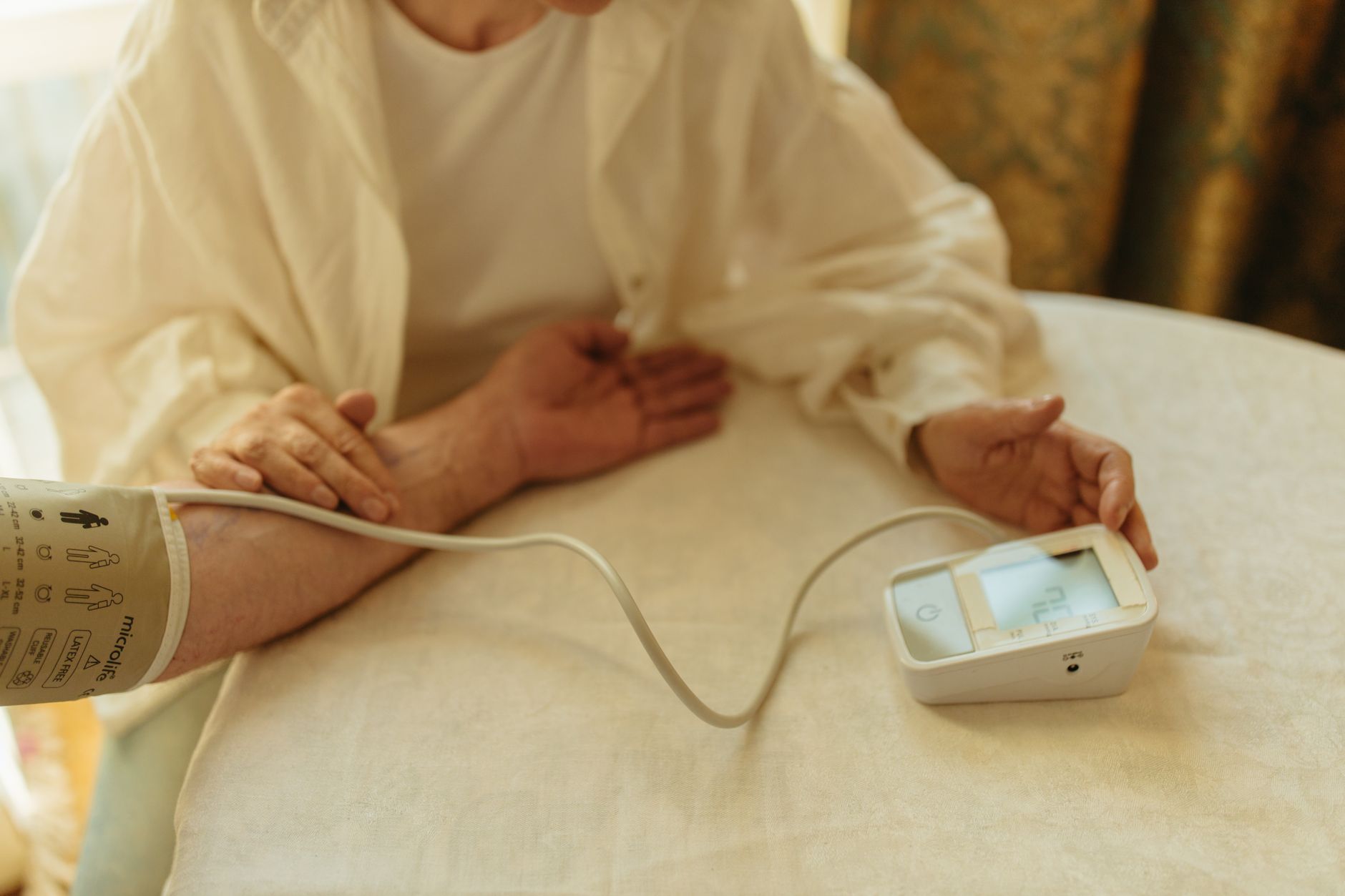
| Clinical readings | Glucose, blood pressure, lab results | The device's own app or the clinic's portal | The client's clinician |
The first three rows are your work, and they are what a coaching platform is built to hold. The last two are where a specialist tool does a job a coaching platform should not try to copy.
That split matches how public health bodies describe living with a long-term condition. The CDC video below is about self-management education. Its description says about half of US adults have one or more chronic health conditions such as heart disease, cancer, diabetes and arthritis, and that this kind of education helps people build strategies and confidence to manage a condition day to day. Day-to-day strategies and confidence are the part a coach can see and support.
What the wrong tracker decision costs a health coaching practice
There are two ways to get this wrong, and they cost different things.
Too little. You pick a platform with booking and invoices and nothing between sessions. You find out on the call that the client stopped their evening walk nineteen days ago. You spend the hour catching up on facts when you could have been coaching.
Too much. You add a food logger, a wearable dashboard and a symptom diary because each seemed sensible on its own. Now the costs stack up:
- The client has to remember which app is for what, and answers you in whichever one they opened last.
- You pay a second or third subscription to serve the same person.
- Session prep means logging in to each tool and stitching the week together in your head.
- At renewal the client cannot see their progress, because it is spread across places nobody reads end to end.
- You collect numbers you are not qualified to interpret, which is an awkward position if a reading looks alarming.
People managing a chronic condition often already carry a clinic portal, a device app and a pharmacy app. Yours should not be the one that tips them into giving up. If your tools have already multiplied, the order to reconnect them is covered in when separate coaching tools break.
Four questions before a health coach adds a specialist tracker
Run these in order for each kind of data you are tempted to collect.
- Does a coaching decision depend on it? If nothing you and the client do next week changes whatever the number says, do not collect it. "Nice to have" data is the main cause of app pile-up.
- Is something already capturing it? A glucose meter, a blood pressure cuff or a clinic portal already stores the reading. Asking the client to type it again somewhere else doubles their work and adds errors.
- Can you act on it within your scope? You need the credential for that data, or a clinician whose plan you are supporting. Without either, detailed data gives you more to worry about and nothing you are allowed to do.
- Would one weekly question cover it? "On how many planned days did you take your readings?" fits in a check-in. If a single self-reported answer tells you what you need, you do not need a second app.
A specialist tracker earns a place when the answers are yes, either way, yes and no. When question two is a yes, the tracker already exists and your job is to bridge to it, which the pairing section below covers.
When a specialist tracker earns its place alongside a coaching platform
- You hold a nutrition credential and work at food-log detail. If you set targets and review intake by nutrient, you need food search, portions and a log the client fills in at meals. A weekly check-in cannot carry that.
- You hold a training credential and write programs. Sets, loads and progression need a training log. Our fitness coaching software comparison covers tools built for it.
- The client's clinician already asked for home readings. The device and its app are the tracker. You coach the routine around the readings and leave the numbers with the care team.
- A clinic or employer you work under names the system. Then the decision is made for you, and it may change your core platform too. See the HIPAA note further down.
When a second app is the wrong call
- You want the data "just in case".
- The client would log the same thing twice.
- You would be reading clinical numbers with no credential and no clinician in the loop.
- The real gap is follow-through between sessions, which habits and check-ins in a core platform already cover. How to track client progress goes deeper on that.

How to pair a tracker with your coaching platform without splitting the client experience
The rule fits on a sticky note: one home, one job, one summary.

- Name the home. One place the client opens for their plan, habits, messages, sessions and payments. Say it in the first session: "Everything between us lives here."
- Give the tracker one job. "Your meter app records readings for you and Dr. Alvarez. That is all it is for." Messages and tasks stay in the home.
- Carry one summary across each week. Add a question to the weekly check-in in your core platform. For example: "On how many of your planned days did you take your readings, and is there anything from them you want to bring to our session or to your doctor?" The client reports the pattern in their own words, and you stay out of interpreting numbers.
- Decide when you open the tracker. If you are credentialed for that data, look before a review session or when the summary flags something. Checking it every day builds a habit you cannot keep up at twenty clients.
- Write down the handoff. One line in your agreement and onboarding: readings go to the clinician, worrying symptoms go to the care team or emergency services, and coaching continues alongside.
A made-up example. Priya is an NBHWC-certified coach with no clinical license. Her client Tom has high blood pressure, and his doctor wants home readings twice a day. Priya does not add a blood pressure app. Tom's cuff already stores readings for his doctor. In her coaching platform, Tom has two habits (take readings after breakfast, walk after dinner) and one weekly check-in question about how many planned readings he took and what got in the way. Tom has one coaching app. Priya preps for sessions from one screen.

What is mandatory and what is optional in a health coaching software stack
- Mandatory: one core platform that holds the client record, intake, booking, payments, messages, programs, habits and check-ins. Clients should be able to open it on their phone.
- Optional: one specialist tracker per kind of data that passes the four questions. Most coaches without a second credential end up with none.
- Avoid: a second place to message clients, a second scheduling tool, and a separate video subscription when your platform already includes calls.
For what the core layer tends to cost across platforms, see how much coaching software costs, and for a wider shortlist, the coaching client management software comparison.
Where Coachful fits as the core platform for health coaches, and where it stops
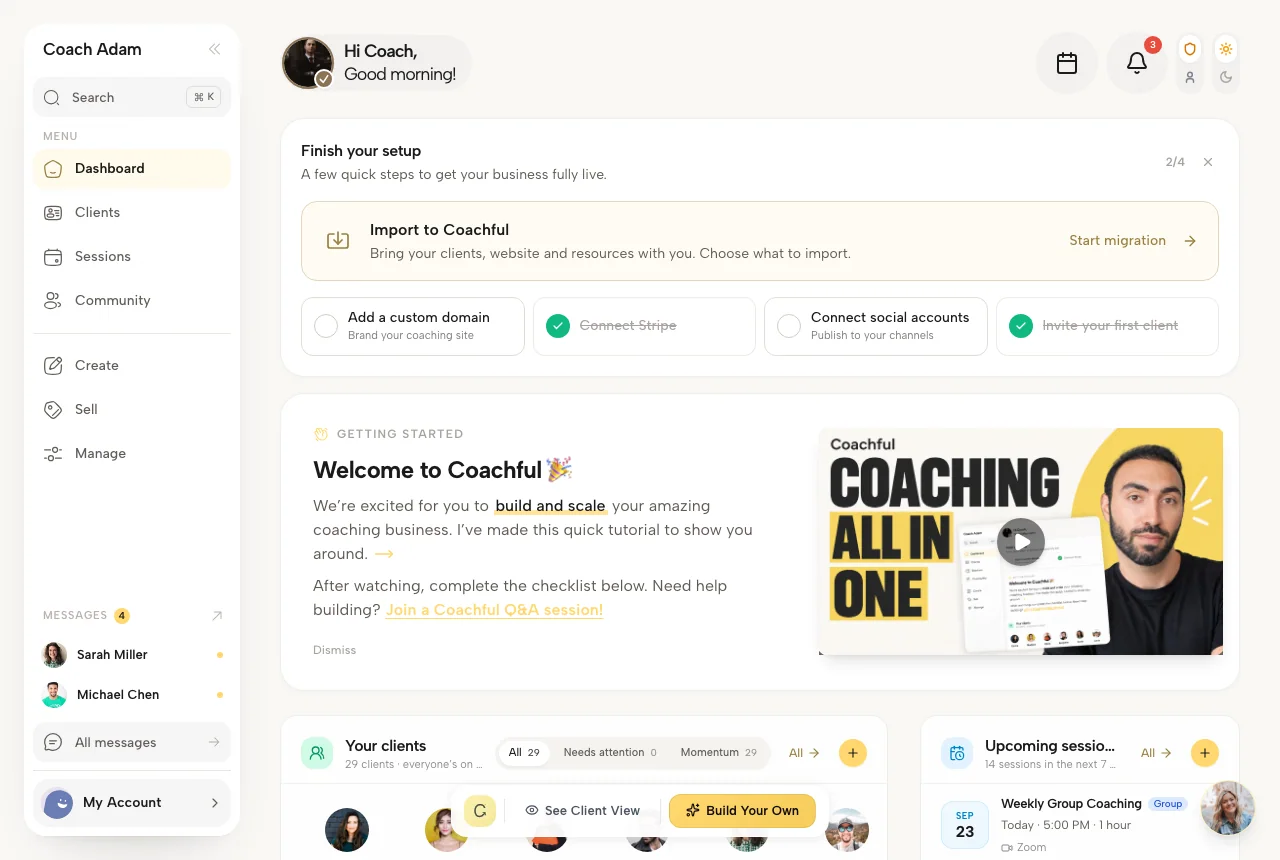
Coachful is built to be the home in that rule. For a health coaching practice that means:
- Behaviours and follow-through. Daily habits with streaks, morning and evening check-ins, weekly check-ins and goals with progress bars, all on the client record. See client accountability software.
- One client home. A branded client home on the web and in the iOS and Android app, covered on the coaching client app page.
- The practice around it. Programs, questionnaires attached to the client record, booking, payments, agreements and messages. Video calls are built into the subscription, so sessions do not need a separate video tool.
- Nutrition and training without a second login. The optional Fitness & Nutrition power-up tracks nutrition as habits, a written food journal, protein only, calories and macros, or a meal plan. It records weight, measurements and custom metrics you define, and clients see only the parts you switch on. If you hold the credential for that work, this can replace the second app.

Now the limits, in plain words:
- Coachful is not HIPAA-certified. It is GDPR-ready with full data export.
- The Fitness & Nutrition power-up is not a medical or diagnostic tool.
- It does not connect to Garmin, Fitbit, Whoop or Oura. Steps, sleep and weight can be brought in from a CSV export.
- Coachful's integrations list covers calendars, video calls, payments and Zapier. It does not include glucose meters or blood pressure monitors.
Pick a different core platform if you work for or under a clinic, insurer or physician practice and handle their patient information. In the US that usually means you need a vendor that will sign a business associate agreement, and you should ask the clinic's compliance lead before you choose. Our health coaching software comparison has a section on who needs HIPAA and which platforms claim it. A registered dietitian who needs clinical meal planning as the centre of the practice is also better served by a nutrition-first tool.
Objections health coaches raise about one platform plus a tracker
"My clients already use an app they like"
Good. That app is the tracker, and you did not have to sell it. Leave it alone, give it one job, and ask for a weekly summary in your own platform. Moving a client off a logging habit that works is a poor trade for a tidier stack.
"Without glucose charts I will look less professional"
Charts you cannot interpret do not add authority. Clients judge you on whether you remember their week and whether they can see their own progress. A clean record of habits, check-ins and goals does that. Being clear about what you do not read can itself build trust with a client's doctor.
"The clinic wants reports from me"
Ask what they want reported. It is usually attendance, goals and adherence, which come from your core platform. If they want clinical data handled in a specific system, that is a compliance requirement, and it decides your tooling for those clients.
"An all-in-one is always cheaper"
Not always. If you only need a booking link and a food log, two small tools can cost less. One platform wins when you would otherwise pay separately for scheduling, video, payments, programs and messaging. The all-in-one software comparison shows where that line falls.
Frequently asked questions about tracking chronic-condition coaching clients
Are any coaching platforms useful for tracking clients with chronic conditions?
Yes, for the part a coach tracks. A platform with habits, check-ins, goals and a client record covers daily behaviours, client-chosen goals and how each week went. Coachful has daily habits, morning and evening check-ins and weekly check-ins on the client record. Clinical readings such as glucose or blood pressure belong in the device's app or the clinic's portal.
Can a health coach track a client's blood glucose or blood pressure?
A coach can support the routine of taking readings and ask how it went. The NBHWC scope of practice says coaches do not diagnose or interpret medical data unless they hold another active credential that covers it. In practice, track whether readings were taken on the planned days, and leave the numbers with the client and their clinician.
Do health coaches need HIPAA-compliant software?
It depends on who you work for. In the US, HIPAA applies to covered entities such as clinics and insurers and to businesses handling patient information on their behalf. A coach in private practice may not be covered, while one working under a clinic usually is. Coachful is not HIPAA-certified. Ask the clinic's compliance lead or a lawyer before choosing.
Should clients log food in a nutrition app or in the coaching platform?
If you are not credentialed to review intake in detail, a food habit or a short written journal in the coaching platform is enough. If you are, use one logging tool. Coachful's Fitness & Nutrition power-up offers five ways to track nutrition, from habits and a written food journal up to calories and macros or a meal plan, inside the same client app.
How many apps is too many for a coaching client?
There is no researched number we can point to. A workable rule is one home plus at most one tracker per kind of data that passes the four questions above. If a client has to ask which app to open, or logs the same thing twice, you have one too many.
Does Coachful sync with Fitbit, Garmin or Oura?
No. Coachful's Fitness & Nutrition page states that it does not connect to Garmin, Fitbit, Whoop or Oura. Steps, sleep and weight can be imported from a CSV export, and you can define custom metrics with your own units. If live wearable data is central to your coaching, keep the wearable's own app as the tracker.
Do I need a separate video tool for health coaching sessions?
Not with Coachful. Video calls are built into the coaching software subscription, for both one-to-one and group sessions. That removes one of the extra logins that tends to creep into a health coach's stack alongside a tracker.