
Retirement Coaching: Planning the Life, Not Just the Money
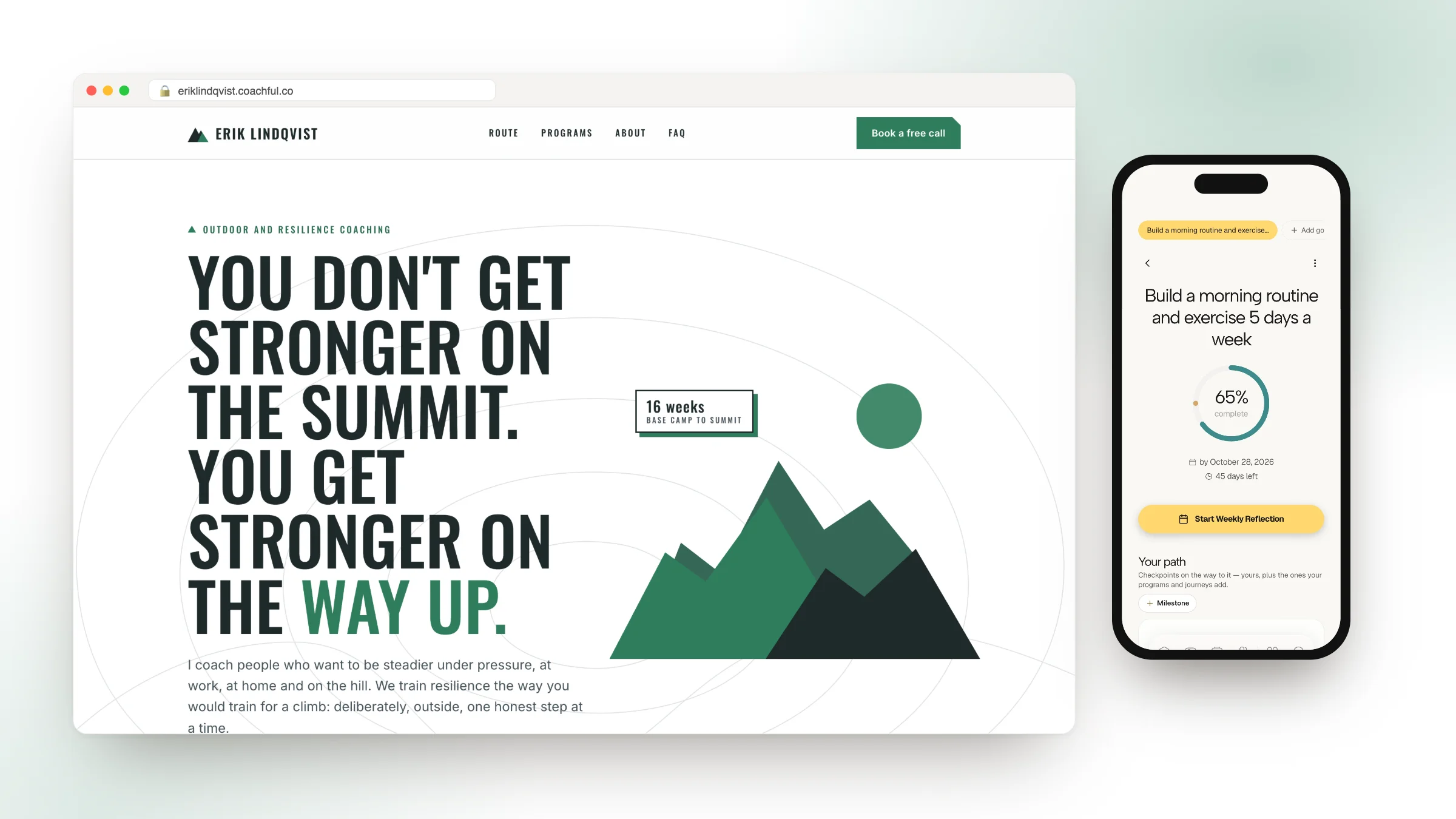
Retirement coaching helps you plan the part of retirement that a spreadsheet leaves out: what your days will be for, who you will see, how you will feel useful, and whether you want to stop work completely, phase out or start something new. A retirement coach works through those questions with you, before and after the last day, and helps you test ideas while the paycheck is still coming in. It is not financial advice. Pensions, Social Security timing and investments belong with a licensed financial professional.
Most retirement planning stops at the number. Then the farewell lunch happens, the calendar empties, and people discover that work was also their routine, their social life and a large part of who they were. Some love the freedom from day one. Others feel lost for a year. Research suggests both are normal. This guide covers what retirement coaching involves, how it differs from financial planning and therapy, what a coaching plan can look like, what the studies show about adjusting to retirement, what coaching costs and how to choose a coach.
What a retirement coach helps with
A retirement coach treats the move out of full-time work as a transition to design, not a date to survive. The conversations usually cover some mix of these:
- Identity. Who you are when nobody asks "what do you do?" and the title on your email signature is gone.
- Structure. What a good Tuesday looks like when nothing is scheduled. Many people need some rhythm to feel well.
- Purpose. Volunteering, mentoring, learning, caregiving, creative work, or a smaller paid role.
- Timing. Stopping in one go, cutting to part time first, or moving into a "bridge job" in a different field.
- Relationships. Two people at home all day for the first time, friendships that were really work friendships, grandchildren, ageing parents.
- Health routines. Movement, sleep and social contact, which are easy to let slide when the commute disappears.
- Place. Staying, downsizing, moving closer to family or somewhere warmer, and what you would lose or gain.
If the bigger question is a new career rather than retirement, our guide to career change coaching covers that path.
Retirement coach, financial planner or therapist?
| Who | What they do | Good to know |
|---|---|---|
| Retirement coach | Plans the life side: purpose, structure, relationships, timing, next roles | Unregulated title; credentials are voluntary |
| Financial planner or adviser | Models income, savings, withdrawals, taxes, pensions and Social Security timing | Ask whether they are a fiduciary and how they are paid |
| Financial coach | Budgeting, spending habits and money conversations | Unless separately licensed, should not recommend investments |
| Therapist or counselor | Treats depression, anxiety and grief that the change can bring up | Licensed |
| Estate attorney | Wills, powers of attorney, trusts | Licensed |
The two plans affect each other. Working two extra years part time changes the money, and the money changes which part-time work makes sense, so many people see a coach and a planner in the same season.
See a licensed professional when...
- You are deciding when to claim Social Security. Benefits can start at 62, claiming before your full retirement age reduces the monthly amount, and waiting past it, up to age 70, increases it (overview). A planner can model your situation, and the Social Security Administration publishes calculators.
- You need decisions about pensions, investments, withdrawals or taxes. A coach should never recommend financial products.
- Low mood, loss of interest, poor sleep or drinking more has crept in since you stopped working. Talk to your doctor or a therapist.
- Retirement was forced on you by illness, a layoff or caregiving, and it still feels like a loss. That can need more than coaching.
- You have thoughts of harming yourself. In the US, call or text 988 to reach the 988 Suicide and Crisis Lifeline.
A sample retirement coaching plan
Coaches vary, but a common shape is six to eight sessions spread across the last months of work and the first months after. Here is one version:
| When | Session focus | Between sessions |
|---|---|---|
| 6 to 12 months before | What you will miss about work and what you will not; your values and strengths | A wheel-of-life check and a list of what work gives you besides money |
| Next session | Picture a good week and a good year; options for purpose and structure | Talk to three people who retired in the last few years |
| Next session | Timing: full stop, phased exit or bridge job; conversation with your employer | Bring the money questions to your planner |
| Next session | Relationships and home: expectations with your partner, family and friends | Have the conversation you have been avoiding |
| Last month of work | A plan for the first 90 days, with a few fixed points each week | Book the first volunteer shift, class or project |
| 1 to 3 months after | What is working, what feels flat, what to adjust | Track energy and mood for two weeks |
| 6 months after | Review the year so far and set the next goals | Decide whether you need more support |
Coachful's Wheel of Life assessment is a quick way to start the first exercise yourself, and our guide to the wheel of life explains how coaches use it. For the values part, values clarification walks through a seven-step version.
Some coaches use a vision board for the next chapter: places, people and projects you want more of. It sounds soft, and it is surprisingly useful when you are choosing between options.

Others lay the transition out as a series of steps, so you can see where you are in it and what comes next.

Small routines matter more after work ends, because nothing outside you is holding them in place.

And a dated goal keeps the first year from drifting: "two volunteer shifts a week through spring" is easier to keep than "do something useful".

What the research says about adjusting to retirement
There are few studies of retirement coaching itself. Research on retirement adjustment is larger and useful for setting expectations:
- People do not adjust the same way. Using two samples of about 1,000 retirees each from the US Health and Retirement Study, Mo Wang (2007) found three distinct patterns of change in well-being coexisting among retirees, and concluded that retirees do not follow one uniform adjustment pattern. Factors such as working in a bridge job were linked to which pattern people followed (PubMed).
- On average, retirement does not raise the risk of depression. A meta-analysis of 41 studies covering more than 557,000 people found retirement was associated with a lower risk of depression overall, with high variation between studies (Odone and colleagues, 2021).
- Involuntary retirement is different. A meta-analysis of longitudinal studies found involuntary retirement was associated with about a 31 percent higher risk of depression compared with working (Zhai and colleagues, 2022).
- Loneliness is a real risk. The National Institute on Aging lists a major life change such as retirement among the risk factors for social isolation and loneliness, which are associated with higher risks of heart disease, depression and cognitive decline (NIA).
The practical reading: retirement goes well for many people, the ones who struggle often did not choose the timing, and social connection deserves as much planning as money. Those are exactly the areas a coach can help you plan for in advance.
What retirement coaching costs
Coachful's 2026 Coaching Business Report, which compiles published research and practitioner reports for the second quarter of 2026, has no retirement-specific rate. Retirement coaching is usually sold as life coaching, so those are the nearest benchmarks:
| Format | Typical price | Source |
|---|---|---|
| One session | $75 to $200 | PayScale and practitioner reports |
| Four-week starter, four sessions | $400 to $600 | Practitioner reports |
| Three months, eight sessions | $1,200 to $2,500 | Practitioner reports and a verified sample of published rates |
| Intensive planning day | $750 to $2,000 | Practitioner reports |
| Group coaching | $100 to $300 a month | Practitioner reports |
| Financial coaching, for comparison | $100 to $200 an hour | PayScale and practitioner reports |
US dollars, Q2 2026. Practitioner figures are estimates. See coachingrates.com for the life coaching data.
Two money tips. First, ask your employer: some offer retirement transition workshops or coaching as a benefit, and the report notes that nearly six in ten coaching clients worldwide are employer-sponsored. Second, a group program for people retiring in the same year is cheaper and comes with a built-in peer group, which is part of the point. More on value in is a life coach worth it.

How to choose a retirement coach
What to look for
- Coaching training. ICF credentials (ACC, PCC, MCC) show general coaching training and supervised hours (ICF credentialing).
- Experience with transitions. Ask how many clients they have coached through retirement, and whether those people chose the timing.
- A clear line on money. The coach should say plainly that they do not give financial advice and should be happy to work alongside your planner.
- Life experience helps. Some retirement coaches have made the move themselves. Useful, but not a substitute for training.
Questions to ask
- What does a typical engagement look like, and does it continue after my last day?
- Do you work with couples, or only with individuals?
- How do you handle it when someone is struggling more than coaching can help with?
- What would we do in the first two sessions?
Red flags
- Selling annuities, insurance or investments alongside coaching. That is a conflict of interest.
- One fixed formula for everyone, such as "find your passion in 30 days".
- Pressure to commit to a long package before you have retired or set a date.
- Dismissing grief, loneliness or low mood as "adjustment" that will pass.
Find a retirement coach on Coachful
Coachful's Find a Coach directory is public, so you can browse without an account. Search "retirement", "life transition" or "purpose" to find coaches whose headline or bio mentions them, or browse the Lifestyle, Mindset and Money and Finance categories. The Find My Coach quiz asks what you want to improve, where you are right now (exploring, stuck, scaling or transforming), your preferred style and your monthly budget, and returns a shortlist.

Profiles show what each coach has added about their background, credentials and method, their programs and prices, and a calendar to book a discovery call or a form to send a message.

Are you a retirement or life-transition coach?
Our guide on how to become a life coach covers training and first clients, and Coachful's page for life coaches shows the vision boards, journeys, goals and group programs this kind of work runs on. If you work on the money side too, see the page for financial coaches. The team will build your website or program for you at no extra cost through the free white-glove service.

Frequently asked questions
What does a retirement coach do?
A retirement coach helps you plan the non-financial side of retirement: purpose, daily structure, relationships, health routines and timing, including phased retirement or a bridge job. They work through it in sessions before and after you stop working. They do not give financial or investment advice.
Is retirement coaching worth it?
It can be, especially if work has been a big part of your identity or your social life. Research shows retirees adjust in different patterns, and involuntary retirement is linked to higher depression risk, so planning purpose and connection ahead of time is sensible.
How much does a retirement coach cost?
There is no retirement-specific figure. Life coaching, the nearest benchmark, typically runs $75 to $200 a session and $1,200 to $2,500 for a three-month package of eight sessions, according to Coachful's 2026 Coaching Business Report.
What is the difference between a retirement coach and a financial planner?
A financial planner models your money: savings, withdrawals, taxes, pensions and when to claim Social Security. A retirement coach helps you plan how you will live. The two plans affect each other, so many people use both.
When should I start retirement coaching?
Six to twelve months before your last day gives you time to test ideas, such as volunteering or part-time work, while your routine is still intact. Coaching after retirement is useful too, particularly in the first year.
Can couples do retirement coaching together?
Some coaches offer joint sessions, since retirement changes daily life for both partners. Ask on the discovery call; if the main issue is conflict in the relationship, relationship coaching or couples therapy may fit better.
What if I feel depressed after retiring?
Talk to your doctor or a therapist. Low mood that lasts, loss of interest or drinking more are reasons to get clinical help, which can come before or alongside coaching. If you have thoughts of harming yourself, call or text 988 in the US.












