Narrative Coaching: How Re-Storying Works in Sessions
Narrative coaching is coaching that works with the stories people tell about themselves and their lives. The coach listens for the dominant story ("I'm someone who always quits"), helps the client step back from it, finds the moments that don't fit that story, and helps them build and act on a fuller one. It draws on narrative therapy and narrative psychology, and its evidence base is small: one randomized trial of narrative group coaching, plus stronger research on how life stories relate to well-being.
This guide covers where narrative coaching came from, its core moves, what the research says, a session with sample dialogue and 12 questions, who it suits, the cautions around painful stories, and training routes. If you coach on Coachful, our team will build the timeline worksheet, journaling check-in and program described here in your account for free.
Where narrative coaching came from
The roots are in narrative therapy, developed by Michael White in Australia and David Epston in New Zealand and set out in Narrative Means to Therapeutic Ends (1990). Their best-known idea is that "the person is not the problem; the problem is the problem". By talking about a problem as something separate from the person, they found clients could see their own influence over it.
Coaching adapted the ideas in two main directions. David Drake developed narrative coaching as its own method in Narrative Coaching: The Definitive Guide to Bringing New Stories to Life. In Denmark, Reinhard Stelter developed what he calls narrative-collaborative or "third generation" coaching, described in A Guide to Third Generation Coaching, in which coach and client make meaning together, often in groups. Alongside both runs academic research on narrative identity, led by psychologists such as Dan McAdams, which studies how the stories people tell about their lives relate to their well-being.
The core moves of narrative coaching
| Move | What it means | Example question |
|---|---|---|
| Hear the dominant story | Let the client tell the story the way they usually tell it | "How do you usually explain this to people?" |
| Externalize the problem | Name the problem as something separate from the person | "What shall we call this thing that keeps telling you to quit?" |
| Map its effects | Trace where the problem shows up and what it costs | "When the Quitter voice is loud, what does it stop you doing?" |
| Find unique outcomes | Look for moments that don't fit the dominant story | "Was there a time you stuck with something when it was hard?" |
| Thicken the alternative story | Add detail, history and meaning to those moments | "What does it say about you that you kept going then?" |
| Connect to values | Link the alternative story to what the client cares about | "What were you protecting or honoring by staying?" |
| Write the next chapter | Choose actions that fit the new story | "What would the next chapter's first scene look like?" |
| Find witnesses | Share the new story with people who can see it | "Who would not be surprised to hear this about you?" |
Notice that none of these require the coach to know the "true" story. The coach is curious about which stories help the client act on their values and which ones keep them stuck.

What the research says about narrative coaching
- One randomized trial of narrative group coaching. Stelter and colleagues randomized 77 young sports talents to narrative-collaborative group coaching or a control. The coaching groups scored higher on social recovery and general well-being, and interviews showed participants especially valued making meaning together. A small trial in a specific group, but a real one.
- Life stories and well-being. A review by Adler and colleagues found that features of people's life stories predict well-being beyond personality traits and situations. The evidence was strongest for motivational themes (such as agency), affective themes (such as stories that move from bad to good) and themes of integrative meaning. That is correlational research, but it supports the idea that how people narrate their lives matters.
- Writing about experience. A meta-analysis of 146 randomized studies of expressive writing and disclosure found a positive but small average effect (r = .075), with several moderators. Journaling exercises in narrative coaching sit close to this research, and the honest summary is "helpful for some, modest on average".
We found no trials comparing narrative coaching with other coaching approaches, and most published narrative coaching work is case material and theory. Coaching in general has stronger support, such as a meta-analysis of workplace coaching showing positive effects across five outcome types.
How to run a narrative coaching session
- Invite the story. Ask for the story behind today's topic, and listen without fixing.
- Reflect the client's own words. Narrative work depends on exact language, so use theirs.
- Externalize. Ask the client to name the problem. Silly names often work best.
- Map the influence both ways. How does the problem affect them, and how have they affected the problem?
- Look for exceptions. Ask for moments the problem didn't win, however small.
- Thicken. Ask about the history, the people involved and what those moments say about the client.
- Link to values. Ask what those moments show the client cares about.
- Plan the next chapter. One action that fits the alternative story.
- Find a witness. Someone who could hear about the action and recognize it.
A short sample dialogue
Rosa is changing careers at 41. Illustrative, not a transcript.
Rosa: I've changed jobs four times. I'm basically a quitter.
Coach: That's the story you tell about yourself. If the quitting were a character, what would you call it?
Rosa: The Escape Artist.
Coach: When does the Escape Artist show up?
Rosa: When a job stops teaching me anything. Around year two.
Coach: Has there been a time you stayed when the Escape Artist wanted you to leave?
Rosa: I stayed three years at the clinic. I was training two new nurses and wanted to see them through.
Coach: What does staying for them say about you?
Rosa: That I stay when people are relying on me. And that I leave when I stop learning, which isn't the same as quitting.
Coach: If that's the story, what would the next chapter look like?
Rosa: A role where teaching is part of the job, so learning doesn't stop. I'll ask two former colleagues what they saw me do best.
12 narrative coaching questions
- How do you usually tell this story to other people?
- If this problem had a name, what would it be?
- When does it show up, and when is it quiet?
- What does it get you to believe about yourself?
- Has there been a time it didn't win? What happened?
- What did you do in that moment that made a difference?
- What does that say about what you care about?
- Who in your life would recognize that version of you?
- If this were a chapter in a longer book, what would the chapter be called?
- What would you want the next chapter to be called?
- What's one thing the person in the next chapter would do this week?
- Who could witness that, and what would you want them to notice?
Externalizing questions overlap with techniques in our guide to 25 coaching techniques, and the "unique outcome" move is a close cousin of the exception-finding in solution-focused coaching questions.

Who narrative coaching suits, and who it doesn't
It suits people in transition (career change, retirement, relocation, the end of a relationship); clients with a fixed, harsh story about themselves ("I'm bad with money", "I always quit"); leaders building a story for their team or their own next role; and groups, where hearing each other's stories is part of the method.
It suits less well clients who want a quick, practical plan for a narrow problem; people who are not ready to talk about the past; and anyone whose story centers on trauma that needs a therapist.
Cautions with painful stories
- Don't dig for trauma. Narrative coaching can bring up painful memories quickly. If a client starts reliving something, slow down, bring them back to the present and talk about support. Our guide to trauma informed coaching covers this.
- Don't impose a happy ending. Pushing for a redemption story ("so this all made you stronger") can feel dismissive. Some losses are just losses. Our grief coaching guide goes further.
- Respect culture and family stories. A story about duty or sacrifice is not automatically a problem story. Ask the client what it means to them.
- Protect the material. Life stories are sensitive. Keep private reflections private, and ask before sharing anything in a group.
- Writing can stir things up. Journaling about painful events is not always comfortable. Make it optional and short, and let the client choose the topic.
Narrative coaching training routes
Narrative coaching has no single accrediting body. Two routes we checked on their own sites in October 2026:
- David Drake's Moment Institute. It has been moving away from formal programs and now runs a membership community called The Threshold, built on Drake's work in narrative coaching and related ideas, with live sessions and course materials.
- Dulwich Centre, Adelaide. A home of narrative therapy, with an archive of Michael White's work, online courses such as "What is Narrative Practice?", intensives, and a Master of Narrative Therapy and Community Work offered with the University of Melbourne. It is therapy training, so take it to learn the ideas, not to change your scope.
For a coaching credential, combine either with ICF-accredited coach training; the ICF credentialing pages explain the ACC, PCC and MCC.
Running narrative coaching inside Coachful
Narrative coaching needs space for the client's own words between sessions, and somewhere safe to keep them. This is how coaches set that up in Coachful, all included in your membership.
A life timeline worksheet
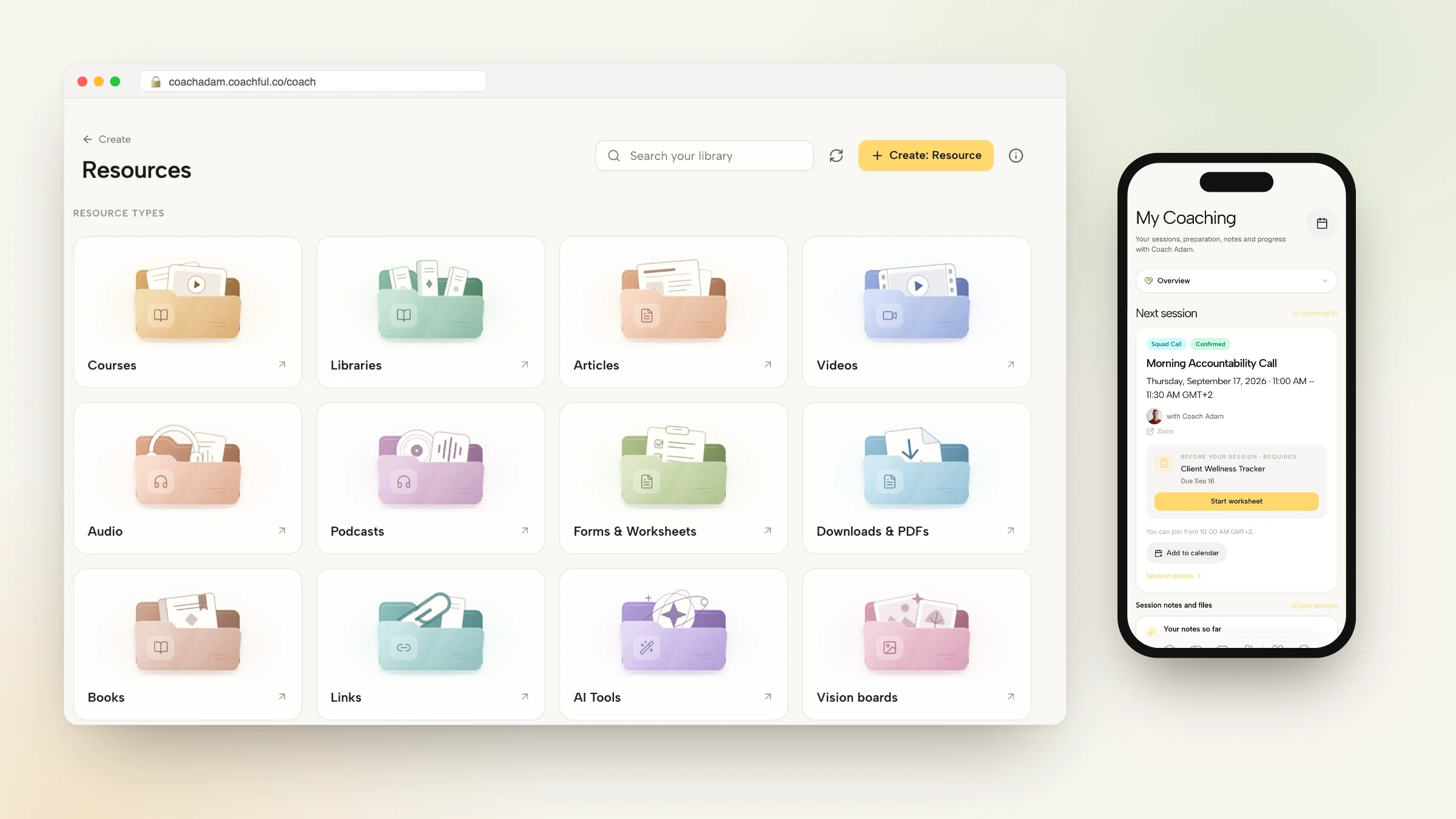
Tools > Explore includes an editable Life timeline template (event, impact, learning, future), plus Strengths story and Change story. A timeline makes a good first assignment: the client marks turning points, and you look for unique outcomes together.
Private journaling
A weekly coaching flow can include a Journal Page step, a private page only the client can read, plus one shared question you do see ("What moment this week didn't fit the old story?"). That split lets clients write freely while still bringing material to sessions.
Notes in the client's words
Write the client's own phrases into shared notes ("I leave when I stop learning, which isn't the same as quitting"). They roll up into Your notes so far on the client's My Coaching page, which becomes a kind of running record of the new story.

Group narrative coaching
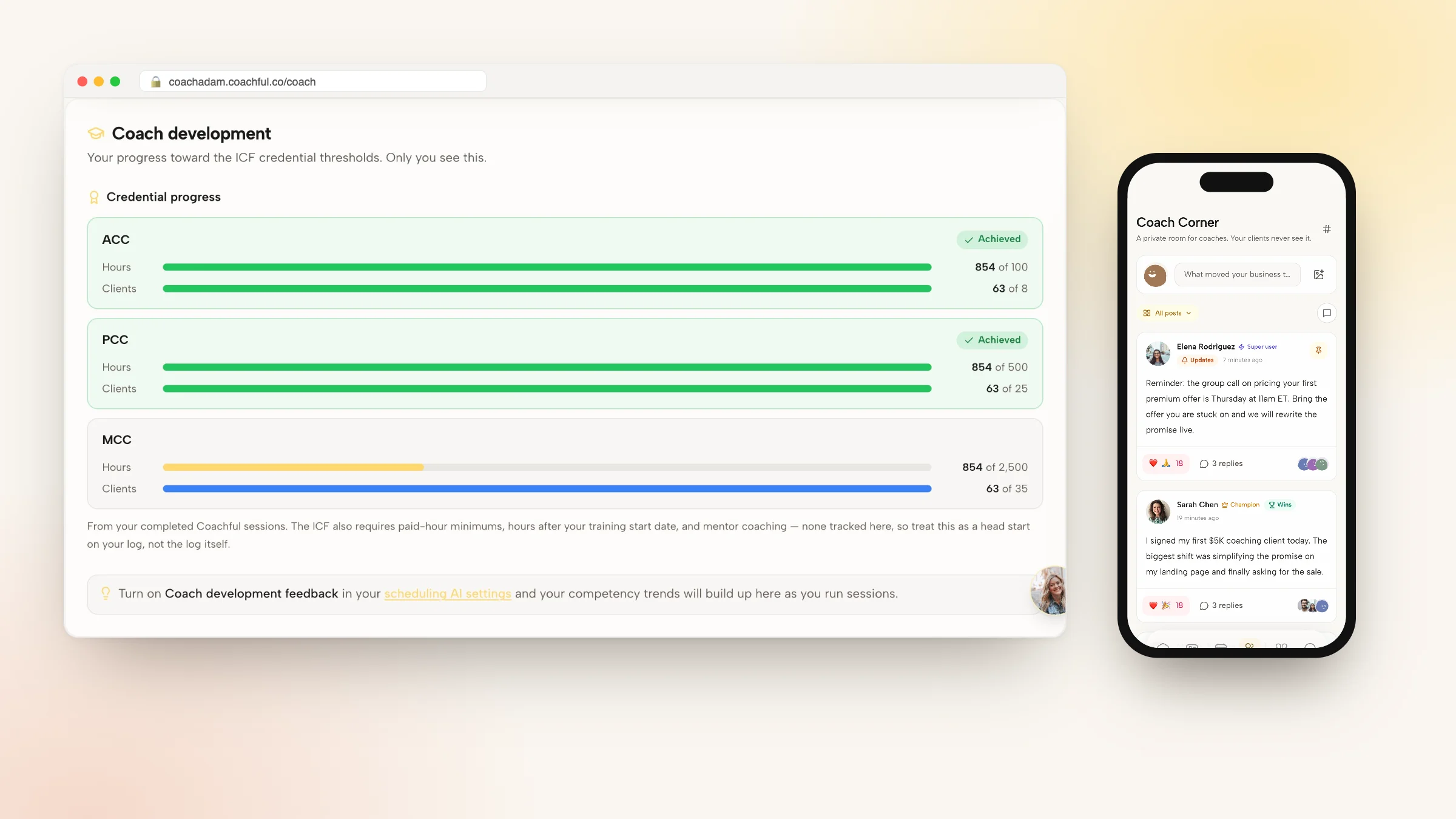
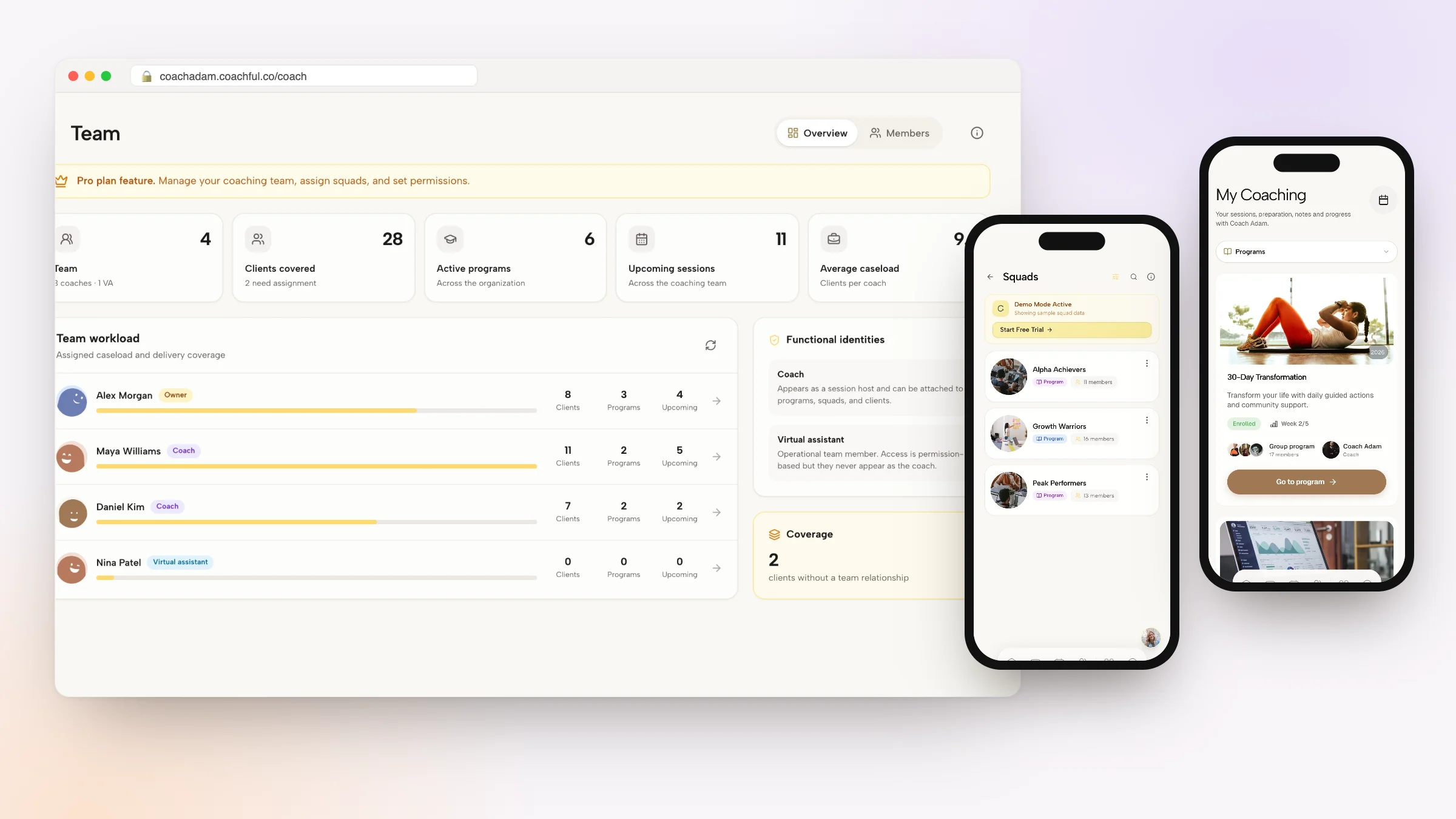
If you run Stelter-style group coaching, enroll clients in a group program. Each cohort gets its own squad with a community feed, group chat and group calls, while every member keeps an individual record.

A website for transition coaching
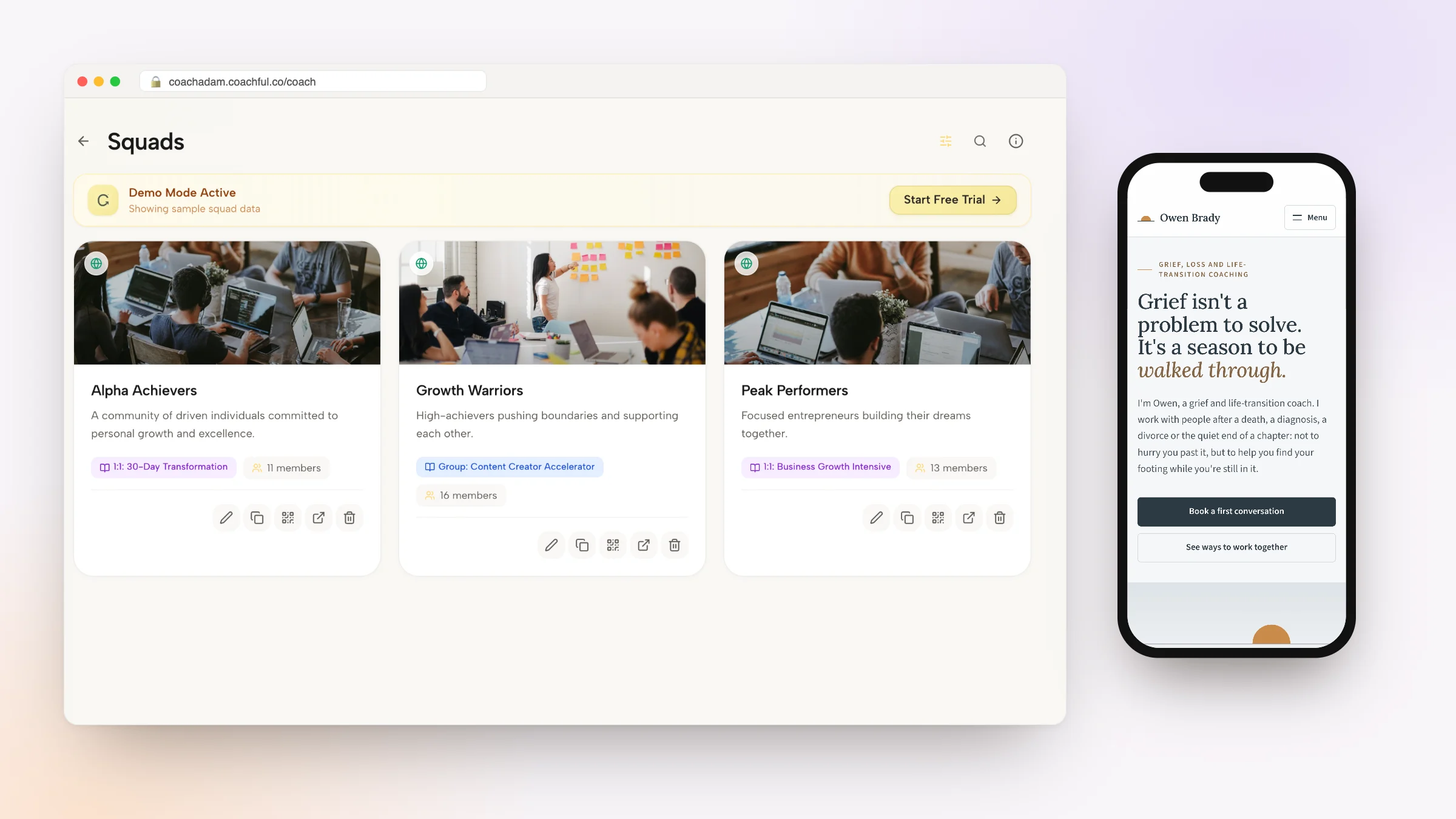
Coachful's designed homepage templates include one written for grief and life-transition coaching, filled in with your name, offers and links.

Have the Coachful team build it for you
Coachful's white-glove service is free on every plan. From Create > We'll build it for you, ask the team for a timeline worksheet, a journaling flow, a group program or a website. Attach your existing prompts or documents. The team replies by email, usually within about 24 hours, and builds it inside your account so you can edit it. Nothing gets invented, including client stories or testimonials. Read what the free white-glove service includes, and see our pages for life coaches and career coaches.

Related approaches: ontological coaching, which also works closely with language, and appreciative inquiry coaching, which builds from stories of people at their best.
Frequently asked questions
What is narrative coaching?
Narrative coaching works with the stories clients tell about themselves. The coach helps them separate from a limiting dominant story, find moments that contradict it, build a fuller story connected to their values, and take action that fits it. It draws on narrative therapy and narrative psychology.
What is the difference between narrative coaching and narrative therapy?
Narrative therapy, developed by Michael White and David Epston, is a clinical approach for people seeking help with distress or mental health problems. Narrative coaching borrows its ideas, such as externalizing, for work with functioning clients on goals, transitions and identity.
What does externalizing the problem mean?
It means talking about a problem as something separate from the person, often by giving it a name, such as "the Escape Artist" or "the Not-Enough voice". This makes it easier for clients to see how the problem affects them and how they have already pushed back against it.
Is narrative coaching evidence-based?
The direct evidence is limited. One randomized trial of 77 young athletes found narrative-collaborative group coaching improved social recovery and well-being. Broader research shows life-story themes predict well-being, and expressive writing has a small average benefit across 146 randomized studies.
Who founded narrative coaching?
David Drake is most closely associated with narrative coaching as a named method, and Reinhard Stelter with narrative-collaborative coaching. Both built on the narrative therapy of Michael White and David Epston, whose book Narrative Means to Therapeutic Ends appeared in 1990.
Can narrative coaching be done in groups?
Yes, and the only randomized trial we found used groups. Members tell and re-tell stories, act as witnesses for each other and build meaning together. Agree clear confidentiality rules first, and let people choose what to share.
Will Coachful build my narrative coaching program for free?
Yes. The white-glove service is free on every Coachful plan. Ask from Create > We'll build it for you and the team will build a timeline worksheet, a journaling flow or a group program in your account, usually within about 24 hours.