
Life Coach for Teens: A Parent's Guide to Safe, Useful Help
A life coach for teens works with a young person, usually 13 to 19, on goals they choose: getting organized for school, following through on plans, building confidence, handling friendships, or working out what to do after high school. It isn't therapy, and with a minor it is never just between coach and teen. A parent or guardian is part of the agreement, so before you book, settle three things in writing: what you will and won't be told, how the coach handles a safety concern, and whether a therapist or school counselor should be the first call instead.
Most parents land here after weeks of the same conversation. Homework that doesn't get started, a teen who seems stuck, a plan for next year that keeps getting pushed back. A good teen life coach can help, partly because they're not you. This guide covers what teen coaching is good for, where it isn't the right tool, how consent and confidentiality work for a minor, the safeguarding questions to ask, what it costs and how to choose.
What a teen life coach helps with, and what they don't
| Usually a good fit for coaching | Usually better with someone else |
|---|---|
| Planning homework and revision, and actually starting | Persistent low mood, anxiety or panic: a therapist or doctor |
| Motivation for a goal the teen cares about | Self-harm, eating problems or substance use: a clinician |
| Confidence, speaking up, handling a friendship change | Bullying or safety at school: the school, and you |
| Thinking through college, a gap year, work or an apprenticeship | Course choices and applications: the school counselor, alongside any coach |
| Routines: sleep, screens, sport, part-time work | Family conflict that has become constant: a family therapist |
| Following through on something they've already decided | A suspected learning or attention difference: an evaluation first |
The common thread is choice. Coaching works when the teen has a goal of their own and is steady enough to act on it. If the goal is really yours ("I want them to care about school"), say so to the coach, who will help the teen find a version they actually want, or tell you it isn't a coaching problem. If attention or organization is the main struggle, our guides to ADHD coaching and executive function coaching cover specialist options.
Coaching or therapy for a teenager?
Teen mental health is a real reason for caution. In the CDC's 2023 Youth Risk Behavior Survey, 40 percent of US high school students reported persistent feelings of sadness or hopelessness (CDC YRBS results). A coach is not trained to assess that, and a responsible one will say so.
See a licensed professional first when...
- Your teen's mood, sleep, eating or withdrawal has changed for weeks, not days.
- There's any sign of self-harm, an eating disorder, drug or alcohol use, or trauma.
- Your teen talks about not wanting to be here. In the US, call or text 988 to reach the 988 Suicide and Crisis Lifeline; elsewhere, call your local emergency number.
- School performance has dropped sharply and you don't know why.
Start with your family doctor, a licensed therapist or the school counselor. Coaching can come later, or alongside treatment if the clinician agrees. Our guide to life coach vs therapist explains the difference in detail.
Consent: who signs, and who the client is
In most US states the age of majority is 18; it's 19 in Alabama and Nebraska and 21 in Mississippi (age of majority). In practice that means a parent or guardian signs the coaching agreement and pays. The teen is still the client, and the coaching only works if they agree to it too. A coach who'll take a reluctant 15-year-old because a parent paid is setting everyone up to waste money.
The International Coaching Federation's Code of Ethics builds this in. Its definition of a "sponsor", the person paying for or arranging coaching, includes "those having parental responsibility for minors." It asks coaches to communicate with clients and sponsors before coaching begins, to reach "a clear agreement about what information is exchanged and how it is exchanged among all parties", and to agree in advance what confidential information may need to be disclosed to the appropriate authorities (ICF Code of Ethics, standards 1.1, 2.2 and 2.3). Whether or not your coach is ICF-credentialed, that is the standard to ask for.
A good setup usually starts with a three-way call: parent, teen and coach. Everyone hears the same explanation of what coaching is, the teen says in their own words what they want from it, and the confidentiality rules are agreed out loud before they're written down.

What parents hear, and what stays private
Teens won't open up to a coach who reports everything to their parents. Parents won't pay for a black box. The answer is an agreement that splits information into three groups:
| Shared with parents | Stays between teen and coach | Shared regardless, for safety |
|---|---|---|
| Attendance and cancellations | What the teen says in sessions | A risk of serious harm to the teen or others |
| The goals the teen has chosen to share | Details of friendships, feelings and worries | Signs of abuse or neglect |
| A short progress check-in, often with the teen present | Drafts, journals and reflections | Anything the law requires the coach to report |
| Billing and scheduling | Anything the teen hasn't agreed to pass on | The coach tells the teen first where it's safe to do so |
Reporting rules vary. Every US state designates groups of professionals who must report suspected child abuse and neglect, and states differ on whether other people must report too (Child Welfare Information Gateway). Ask the coach directly what they would do and who they would call. Our guide to confidentiality with clients covers the wording coaches use.
Safeguarding questions to ask before you book
Life coaching is unregulated, so nobody checks a teen coach's background for you. These questions do the checking:
- "Have you had a background check, and will you share it?" Coaches who also work in schools or youth sport may already have one.
- "Where will sessions happen?" Video calls from a room in the house with the door open, or in person somewhere public. Not in a car, not at the coach's home.
- "How will you message my teen?" Through a coaching app or platform you know about, not their personal social media or a private number you can't see.
- "Do you record sessions?" If so, who can see the recordings and how long they're kept.
- "What's your safety policy?" A good coach has a written answer, including who they'd contact in a crisis.
- "How many teens have you worked with, and on what?" Experience with this age group matters more than a general life coaching certificate.
- "What will you do if coaching isn't the right help?" Listen for a clear referral plan.

What teen coaching sessions look like
After the three-way start, most of the work is between the coach and your teen. Sessions are often weekly or every other week on video. A common pattern: a quick check on last week's actions, one topic the teen brings, one or two concrete steps for the coming week, and a written note of what they agreed to try.
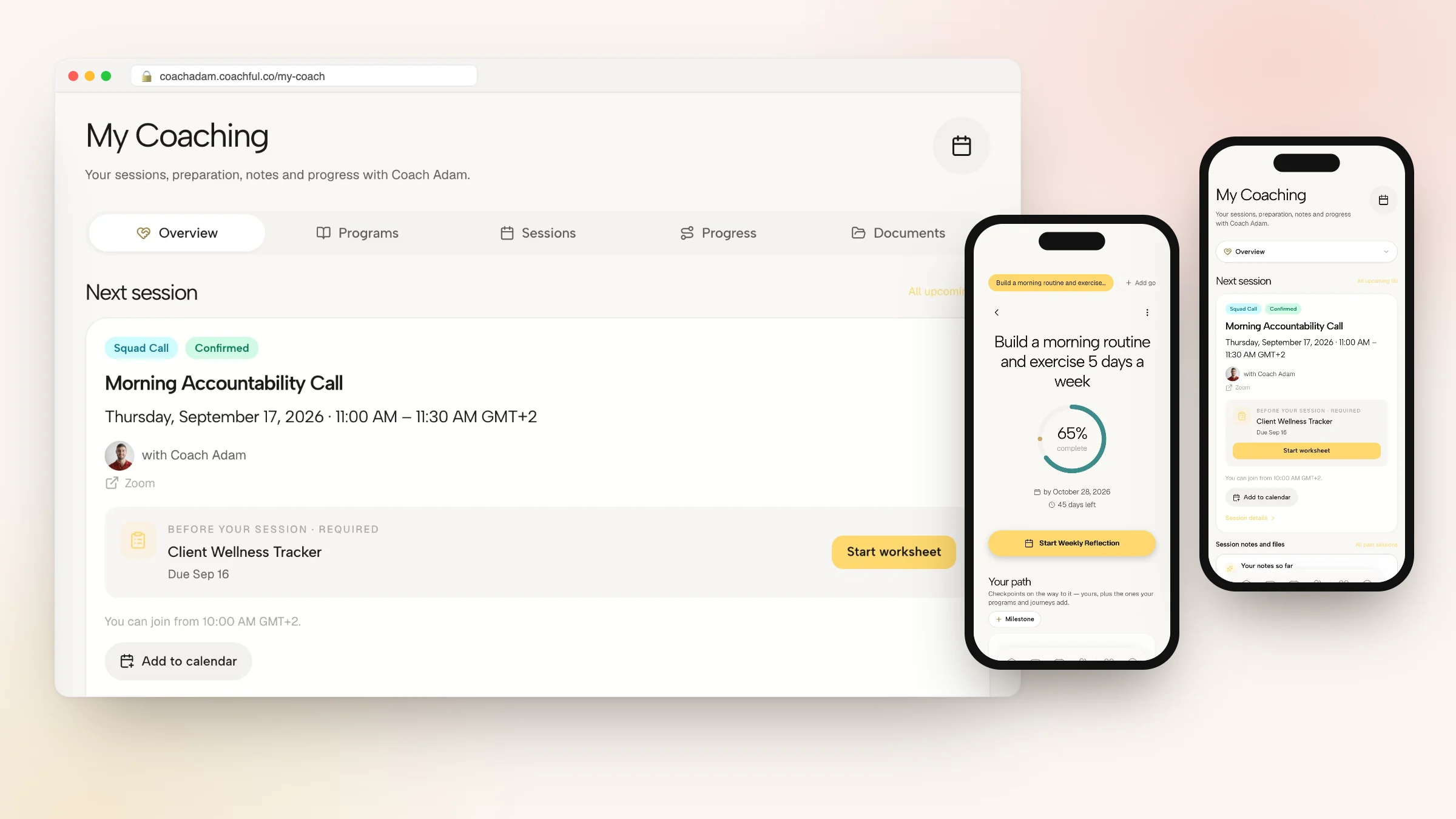
The between-session part matters more than parents expect. A reminder before the homework block, a goal they can see filling up, a short reflection on Sunday night. Many coaches give clients an app for this. Ask what your teen will be using and what you'll be able to see.


Every few weeks, there's usually a short review with the parent, ideally with the teen leading it. If the teen can explain what's changed in their own words, the coaching is working.
What the research says about coaching teens
There is some careful research, and it's modest. In one Australian study, 73 Year 11 students at two Sydney high schools were randomly assigned to ten weeks of cognitive-behavioral, solution-focused coaching, a positive psychology program or a well-being-as-usual control group. Coaching increased academic goal striving compared with both, but the gains weren't maintained at a nine-month follow-up, and changes in depression, stress and hardiness weren't statistically significant (Green, Norrish, Vella-Brodrick and Grant).
The honest reading: coaching can help a teen work harder toward goals they've set while it's happening, and the effects may fade without some way of keeping the habits going. That argues for a defined program with a clear end and a plan for afterward, rather than open-ended sessions.
What a life coach for teens costs
Coachful's 2026 Coaching Business Report has no teen-specific figures, so life coaching is the closest benchmark:
| What you buy | Typical price | Source |
|---|---|---|
| One session | $75 to $200 | PayScale and practitioner reports |
| Newer coach, per hour | $50 to $100 | Practitioner estimate |
| Four-week starter, four sessions | $400 to $600 | Practitioner reports |
| Three months, eight sessions | $1,200 to $2,500 | Practitioner reports and verified published rates |
| Group coaching | $100 to $300 a month | Practitioner reports |
US dollars, Q2 2026, from coachingrates.com.
A four-week starter is a sensible first step with a teen: long enough to see whether they engage, short enough that it's not a big loss if they don't. Before paying, check whether the school counselor can help with the same goal at no cost. For a wider view, see is a life coach worth it and how much life coaches charge.
Red flags in teen coaching
- Promises to "fix" your teen, or results guaranteed by a date.
- Secrecy in either direction. A coach who refuses to tell you anything, including attendance, or one who offers to report everything your teen says.
- Private channels. Messaging on the teen's personal social media, or asking them to keep conversations from you.
- Diagnosis talk. "Your son clearly has ADHD." Coaches don't diagnose.
- No written agreement, or terms that only the parent was asked to agree to.
- Pressure to book a long package on the first call.
Our guide on how to find a life coach has more questions for the discovery call.
Find a teen life coach on Coachful
Coachful's Find a Coach directory is public, so you can browse without an account. Search "teen", "student" or "young people" to find coaches whose headline or bio mentions working with them, or browse Mindset and Lifestyle. Each profile shows what the coach has added about their background, credentials and method, their programs, and either a calendar for a discovery call or a form to send a message.
Profiles are written by the coaches, so ask every one the safeguarding questions above. Book the discovery call yourself, then let your teen take the second conversation.


Are you a coach who works with teens?
Parents will read your page for exactly the things in this guide: your consent process, your confidentiality rules and your safety policy. Put them on your website. Specialist youth training exists, such as JST Coaching and Training's student and neurodivergent coaching courses, and our guide to parenting coaching covers the other side of the family. The Coachful page for life coaches shows the platform, and Coachful's team will build your site for you at no extra cost through the free white-glove service.

Frequently asked questions
Is a life coach good for a teenager?
It can be, when the teen has a goal of their own, such as getting organized, building confidence or planning what comes after school, and is steady enough to act on it. It's the wrong tool for persistent low mood, anxiety, self-harm or substance use, which need a licensed professional first.
What age can a teen start working with a life coach?
There's no legal minimum age for coaching itself, because coaching isn't regulated, so each coach sets their own age range. What matters more is whether your teen wants it. Because a minor can't usually sign the agreement alone, a parent or guardian signs and takes part in the first meeting.
Will the coach tell me what my teen says?
Not word for word, if the coach is doing it well. Agree in writing what you'll hear, usually attendance, the goals your teen chooses to share and short progress check-ins, and what the coach must pass on regardless, such as a risk of serious harm or signs of abuse.
What's the difference between a teen life coach and a therapist?
A therapist is licensed to assess and treat mental health conditions. A teen life coach works on goals, plans and follow-through with a young person who's well enough to do that, and refers to a therapist when something clinical comes up. Some teens see both, with the clinician's agreement.
How much does a life coach for teens cost?
Most life coaches charge $75 to $200 a session, and a four-week starter of four sessions typically costs $400 to $600, according to Coachful's 2026 Coaching Business Report. There are no teen-specific figures.
Should a teen life coach have a background check?
It's reasonable to ask for one. Life coaching isn't regulated, so no authority checks a coach before they work with minors. Ask to see it, along with their written safety policy.
Can my teen do life coaching online?
Yes, and many do. Agree where sessions happen at home, and that messages go through a coaching app or platform you know about rather than your teen's personal social media.












