
How to Find Executive Coaching Clients: A B2B Playbook
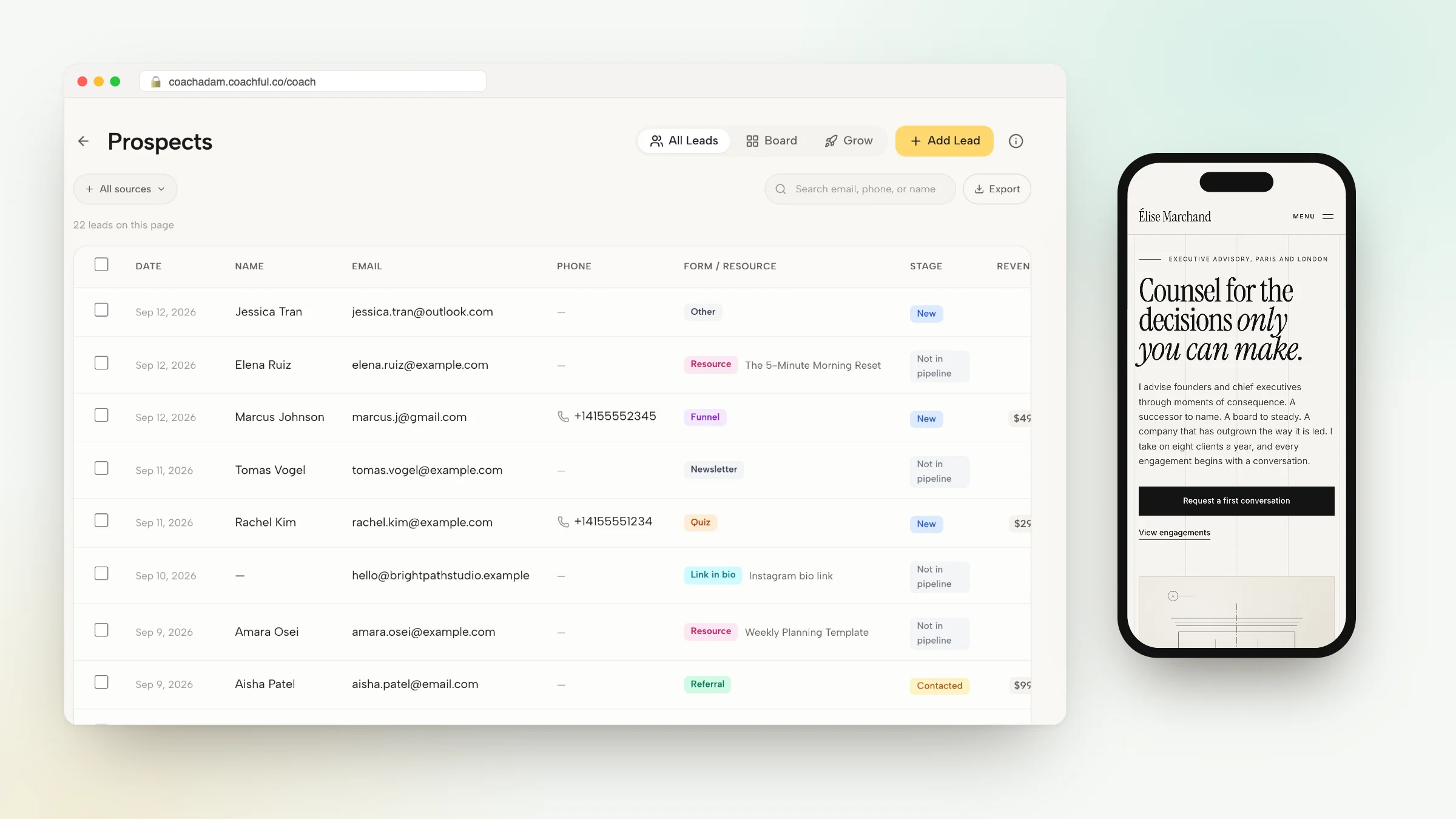
How to find executive coaching clients, in short: most executive coaching is bought by organizations, so the work is business-to-business selling. Your best sources are former colleagues now in senior or HR roles, HR and learning and development teams that keep panels of approved coaches, coaching firms that bring in associate coaches, and sponsors who refer you after an engagement that ended well. Build a clear engagement design and a one-page proposal, propose a small pilot, and treat every final stakeholder review as your next sale.
That makes the path different from consumer coaching, where content and a booking link can fill a calendar. Coachful's 2026 Coaching Business Report, drawing on the ICF's 2025 Global Coaching Study, puts the difference in numbers, and it is worth seeing before you plan anything:
| Factor | Consumer coaching | Corporate coaching |
|---|---|---|
| Average engagement fee | $1,500 to $8,000 | $10,000 to $50,000+ |
| Sales cycle | 1 to 3 weeks | 1 to 6 months |
| Credentialing | Preferred | Often mandatory |
| Primary channel | Social, referrals | LinkedIn, events, referrals |
| Decision-maker | The individual | HR, L&D or the executive team |
| Renewal likelihood | 35 to 50% | 55 to 65% |
Source: Coachful's 2026 Coaching Business Report, Q2 2026, from the ICF's 2025 study and practitioner reports. Details on coachingrates.com.
Fewer, larger, slower sales that renew more often. This guide covers who buys, the channels that reach them, the proposal, the pilot, scripts, a 30-day plan and the setup. If you are still building credentials, start with how to become an executive coach. Every Coachful plan also includes a free build of your website by our team, covered near the end.
Who actually buys executive coaching
- HR business partners and learning and development leads, who run coaching budgets, panels and leadership programs.
- Chief people officers, for senior leaders and succession candidates.
- CEOs and founders, for themselves or their leadership team, often self-funded.
- Line managers with budget, for a high-potential direct report or a new leader in trouble.
- The executive personally, paying out of pocket, usually at a transition point.
Each needs something different from you. HR wants process, reporting and a credential; a CEO wants judgment and discretion; a line manager wants the problem solved without drama. Write your positioning for one of them first.
Channel 1: people who have seen you lead
Most independent executive coaches win their first engagements through their own career network. Make a list of 50 people: former bosses, peers and direct reports now in senior roles, HR leaders you have worked with, and clients or suppliers from your previous career. Then have real conversations, not pitches. Ask what their leaders are struggling with this year, and how they currently choose coaches.
That second question is the one that opens doors. Many organizations keep a panel of approved coaches and review it once or twice a year. Knowing when, and what they look for, tells you exactly what to prepare.
Channel 2: HR and learning and development directly
When you approach HR, expect a procurement conversation. Have these ready before the first call:
- Your engagement design in one page: intake, stakeholder input, development plan, sessions, midpoint and final reviews.
- Your credential and training, plus supervision if you have it. The report notes credentialing is "often mandatory" in corporate coaching.
- Your confidentiality approach: what the sponsor receives and what stays between you and the leader. The ICF Code requires a clear agreement on what information is exchanged and how (ICF Code of Ethics, standard 2.2).
- How you measure impact, such as a short stakeholder survey at the start and end.
- Practicalities: invoicing, data handling, insurance and references.
Our guide to executive coaching assessments, contracts and scope covers the documents in detail, and coaching proposal examples includes a corporate version.

Channel 3: coaching firms and associate work
Leadership development providers and coaching firms sell coaching to large organizations and deliver much of it through associate coaches. Associate work pays less per hour than your own clients, but it brings steady engagements, corporate experience and hours toward a higher credential.
The bar can be high. The Center for Creative Leadership says fewer than 3% of its coach applicants are accepted, and it asks for at least five years as a full-time coach, an advanced degree, a credential from the ICF, CCE Global or EMCC, and a minimum of 200 hours of training (CCL, 2025). Other firms set lower bars, but the list is a good map of what corporate buyers value. If you are short of hours, see ICF coaching hours.

Channel 4: LinkedIn and the rooms HR leaders are in
The report names LinkedIn, events and referrals as the primary corporate channels. On LinkedIn, write for the buyer as well as the leader: what first-time executives get wrong in their first 90 days, how to tell whether coaching is working at the midpoint, what a good three-way meeting sounds like. HR leaders read that and think of you when a budget opens.
In person, speak where HR and leadership people gather: HR association chapters, industry conferences, executive education programs and founder groups. One good talk to 40 HR leaders is worth months of posting. Our guide to getting paid speaking engagements covers the pitch.
Channel 5: the pilot
A pilot lowers the risk for a buyer who has never used you. Keep it small and specific:
- One or two leaders, chosen with HR.
- A defined scope, such as six sessions over three months on one development goal.
- Stakeholder input at the start and the end, so there is evidence to review.
- A review meeting with the sponsor, booked before you start.
Our guide to pitching an employer-paid coaching pilot has the conversation and the proposal.
Channel 6: renewals and the next leader
With corporate renewal rates of 55 to 65% in the report, your existing engagements are your best pipeline. The end-of-engagement review is the moment: show the sponsor what changed against the goals, using the leader's words and the stakeholder feedback, then ask two questions. Is there more to do with this leader? Who else in the organization is facing something similar?
Engagements also expand sideways. A leader who did well often wants their team coached next; see team coaching. And our guide to stakeholder alignment meetings shows how to run the three-way conversations that make renewals natural.

Pricing the engagement
Coachful's 2026 Coaching Business Report gives these executive coaching figures from the ICF's 2025 study and practitioner reports:
| Engagement | Typical price |
|---|---|
| Leadership sprint: six sessions over three months, with assessments and summaries | $3,000 to $8,000 |
| Six-month contract: 12 sessions plus an EQ or DISC assessment, action plans and messaging | $8,000 to $20,000 |
| One-day intensive with a team briefing and 30-day follow-up | $3,000 to $8,000 |
| Annual retainer with monthly calls and quarterly reviews | $20,000 to $80,000 |
| Senior executive hourly rate in corporate engagements | $300 to $800 |
Price the engagement, not the hour. As the report puts it, executive coaching is sold to companies, so the fee is measured against an executive's salary rather than a household budget. More detail in executive coaching rates and executive coach salary.
Messages you can copy
To a former colleague now in HR:
"Hi Leah, it's been a while since we worked on the merger together. I've been coaching senior leaders for three years now, mostly first-time executives in their first year. I'd love to hear what your leaders are wrestling with this year, and how you usually choose coaches. Twenty minutes in the next couple of weeks?"
After a talk to HR leaders:
"Thanks for the question about measuring coaching at the midpoint. Here's the one-page stakeholder survey I mentioned. If a pilot with one or two leaders would be useful next quarter, I can share how I'd structure it."
At the final review with a sponsor:
"Marco's direct reports now describe his meetings as decisions rather than updates, which was the goal in March. Is there anyone else on the leadership team facing a transition this year where this kind of work would help?"
A 30-day plan to find executive coaching clients
Corporate sales take one to six months, so this month is about filling the pipeline.
| Days | Focus | Done when |
|---|---|---|
| 1 to 4 | Choose one buyer and one leader type. Write a one-page engagement design and a proposal template. | You could send a proposal tomorrow |
| 5 to 10 | List 50 people who have seen you lead. Contact ten. | Five conversations booked |
| 11 to 16 | Apply to two coaching firms or panels. Update your LinkedIn and website for buyers. | Applications sent |
| 17 to 22 | Publish four posts for HR and leaders. Pitch one HR or industry event. | A talk pitched |
| 23 to 30 | Contact the next 20 people on your list. Propose a pilot wherever there is interest. | At least one pilot proposal out |

Running executive engagements on Coachful
Coachful's Executive Coaching power-up gives each leader a shared space for goals, stakeholders, experiments, decisions, transitions, impact and key conversations, with editions for first-time managers, women in leadership and founders. You can run stakeholder feedback rounds every 30, 60 or 90 days through a page stakeholders open from a link, without an account, once consent is in place, and a weekly check-in step asks for a leadership win, an experiment update and energy from one to five. Around it:
- Agreements with e-signature, where you choose whether the leader or the sponsor signs, stored on the client record. See coaching contracts.
- Sponsors on each client's profile, so invoices and agreements go to the company while the coaching stays with the leader. Sponsors cannot see the leader's coaching workspace.
- Scheduling with two-way Google, Apple and Outlook calendar sync and automatic Zoom, Google Meet or Teams links.
- ICF hour tracking that counts completed sessions and distinct clients against the ACC, PCC and MCC thresholds. See ICF hour tracking.
- Payments through your own Stripe account with invoices for every transaction and a 0% Coachful platform fee.
Our page for executive coaches has the full setup.

Let the team build your executive coaching website
Corporate buyers check your website before they reply. Every Coachful plan includes a free white-glove build: on the Website page, the "Want us to build it for you?" card opens a short form asking which pages you want, what they should do, what visitors should do next and any sites you like, with room for reference links and files such as your bio and logo. The team replies by email, usually within about 24 hours, and builds it inside your account. One recent request came from a leadership coach whose Squarespace renewal was days away; the result was one clean, mobile-friendly homepage with a repeated "talk with me" button. See executive coach website for the pages buyers look for.


Frequently asked questions
How do executive coaches get clients?
Mostly through organizations: former colleagues now in senior or HR roles, HR and L&D teams with coach panels, coaching firms that use associate coaches, and referrals from sponsors after a successful engagement. LinkedIn and talks at HR and industry events keep the pipeline full.
How do I get my first corporate coaching client?
Start with people who have seen you lead and now hold senior or HR roles. Ask how they choose coaches, then propose a small pilot: one or two leaders, a defined scope and a review with the sponsor at the end.
How long does it take to win an executive coaching contract?
Coachful's 2026 Coaching Business Report puts the corporate sales cycle at one to six months, compared with one to three weeks for consumer coaching. Plan your pipeline accordingly and keep conversations going while proposals are reviewed.
Do I need a credential to get executive coaching clients?
Not legally, but corporate buyers often require one. The report describes credentialing as "often mandatory" in corporate coaching. An ICF PCC or MCC, or EMCC accreditation in Europe, opens more panels and firms.
How much should I charge for executive coaching?
The report puts a six-month contract with 12 sessions at $8,000 to $20,000 and corporate engagements at $10,000 to $50,000 per executive. Price the whole engagement rather than the hour.
Can Coachful build my executive coaching website for free?
Yes. Every Coachful plan includes a free white-glove build. Fill in the website form with the pages you want and what visitors should do, attach your bio and logo, and the team builds it in your account, usually within about 24 hours.
Should I work as an associate coach for a coaching firm?
It is a good way to gain corporate experience and hours, especially early on. The pay per hour is lower than your own clients, so many coaches keep associate work as one stream alongside direct engagements.












