
10 Mistakes New Health Coaches Make and How to Fix Them
The mistakes new health coaches make tend to cluster in the first year: launching as a general "wellness coach," selling single sessions for changes that take months, loading clients with five new habits at once, collecting certificates instead of clients, and skipping the health-history intake. Others show up later: no clinician network, programs designed around sessions rather than the week, progress measured only on the scale, a lead magnet nobody finishes, and no plan for what happens when the program ends.
For the realities behind these, from scope to insurance to FTC rules on health claims, read our list of things to know before becoming a health coach. This list is about what new coaches actually do, and the fix for each. One of the fixes is having your site and free-guide funnel built for you, which Coachful's team does for free on every plan (mistake 9).
The 10 mistakes at a glance
| # | The mistake | The fix |
|---|---|---|
| 1 | Launching as a "wellness coach" for everyone | Name one person and one change |
| 2 | Selling single sessions | Sell a program of at least a month, ideally three |
| 3 | Starting clients on five habits at once | One habit, small enough for a bad day |
| 4 | Collecting certificates instead of clients | One solid program, then practice |
| 5 | Skipping the health-history intake | Screen before session one |
| 6 | No clinician network | Build referral relationships both ways |
| 7 | Designing sessions, not the week | Plan the check-ins and habits first |
| 8 | Measuring only the scale | Agree three or four measures at the start |
| 9 | The 40-page lead magnet | One useful page, then a short sequence |
| 10 | No plan for the end | Build maintenance and a relapse plan in |
1. Launching as a "wellness coach" for everyone
The default first website says something like "Holistic health coaching to help you feel your best." It's warm, and it describes almost every health coach, wellness app and supplement brand on the internet. A prospect can't tell if you're the right coach for their perimenopause fatigue, their prediabetes diagnosis or their marathon training.
Coachful's 2026 Coaching Business Report rates health and wellness as very high on saturation and competing with apps, and flags women's health as underserved and growing. The pattern for new coaches is simple: specific gets chosen, general gets compared on price.
What to do: write one sentence naming the person and the change: "I help professionals recovering from burnout get their sleep and energy back before they think about anything else." Use your own lived or professional experience to pick it, then test it in ten conversations before you redesign anything. Our list of coaching niches has health examples, and our consumer guides to menopause coaching and stress management coaching show how those clients describe their problem.

2. Selling single sessions
A client buys one session, leaves motivated, and you don't hear from them again until they've slipped back. Behavior change takes repetition over weeks, and a single session can't hold anyone through the dip that comes after the first good fortnight.
The report's practitioner figures show how health coaches usually package instead: a four-week reset (four 60-minute sessions with a habit tracker and a simple food and movement plan) at $400 to $800, a three-month program of eight to ten sessions with weekly check-ins at $900 to $2,000, and ongoing monthly coaching at $300 to $700 a month. Health and wellness coaches overall charge $75 to $200 an hour (PayScale and practitioner reports).
What to do: lead with a three-month program, offer the four-week reset as a smaller first step, and make the monthly option the place clients go when the program ends. Our guide to what health coaches charge goes further into pricing models, and creating a health coaching program covers the structure.
3. Starting clients on five habits at once
Session one goes well, and the new coach sends the client off with a plan: drink more water, walk 8,000 steps, sleep by 10:30, add vegetables to lunch, and meditate for ten minutes. By day four the client has done two of them twice and feels like a failure. By week two they've stopped opening the app.
Enthusiasm on both sides causes this. The client wants everything fixed; the coach wants to show value. But each new habit competes for the same limited attention, and failing at five at once teaches the client that they "can't stick to things."
What to do: start with one habit, chosen by the client, small enough to do on their worst day (a ten-minute walk after lunch, not a daily workout). Add the next only when the first feels routine. Track it simply so both of you can see the streak. Our habit tracker template shows a format, and motivational interviewing questions help the client choose the habit themselves.

4. Collecting certificates instead of clients
Health coaching attracts lifelong learners, which is a strength until it becomes a hiding place. The first training is followed by a gut-health course, then a hormone course, then a functional nutrition program, and two years in the coach has spent thousands on education and coached almost no one.
More courses feel like readiness. Usually they're a way of postponing the uncomfortable part, asking people to pay. They also don't widen your scope: a weekend course on hormones doesn't let a coach diagnose or treat anything.
What to do: choose one solid training route for the career you want. If that's clinic or employer work, it's likely an NBHWC-approved program toward board certification. Then start coaching practice clients while you finish it. Add a specialty course only when real clients keep asking for something you can't yet help with. Our health coach certification guide and holistic health coach certification compare the routes honestly.
5. Skipping the health-history intake
A new coach books a client straight from a call into session one without asking about diagnosed conditions, medications, pregnancy, injuries, who's on their care team or any history of disordered eating. Three weeks later it emerges that the client has type 1 diabetes, or a heart condition, or an eating disorder history, and the plan you built was never appropriate.
What to do: send a short intake form before the first session and read it before you plan anything. Ask about conditions and medications, who treats them, any recent changes, and their history with dieting and food. For anything that involves new exercise, a readiness questionnaire such as the PAR-Q+ helps decide whether to ask for medical clearance first. Write into your agreement what you'll do if something outside your scope comes up. Our health coaching templates include intake forms, and the chronic conditions tracker shows how to keep notes on clients with ongoing care.

6. No clinician network
Most new health coaches have a list of clinicians to refer clients to only in theory. When a client needs a dietitian, a physical therapist or a therapist, the coach searches online in the moment. And they never think of those same clinicians as a source of clients.
Doctors, dietitians and physical therapists often see patients who need help with the daily habits behind a plan: following the eating advice, building the walking routine, keeping up the exercises. A coach who stays in scope and communicates clearly is useful to them.
What to do: build a short list of two or three trusted clinicians in your niche before you need them. Introduce yourself with a one-page description of who you help, what you do and what you never do, and ask how they'd like you to refer. Follow up when you send someone their way, with the client's permission. Over time, referrals tend to flow both ways.
7. Designing sessions, not the week
New health coaches often plan session content carefully and leave the six days between sessions empty, or handle them through scattered texts, emails and Instagram messages. The client's progress lives in their head, the coach's notes live in a document, and nobody can see the pattern until the next call.
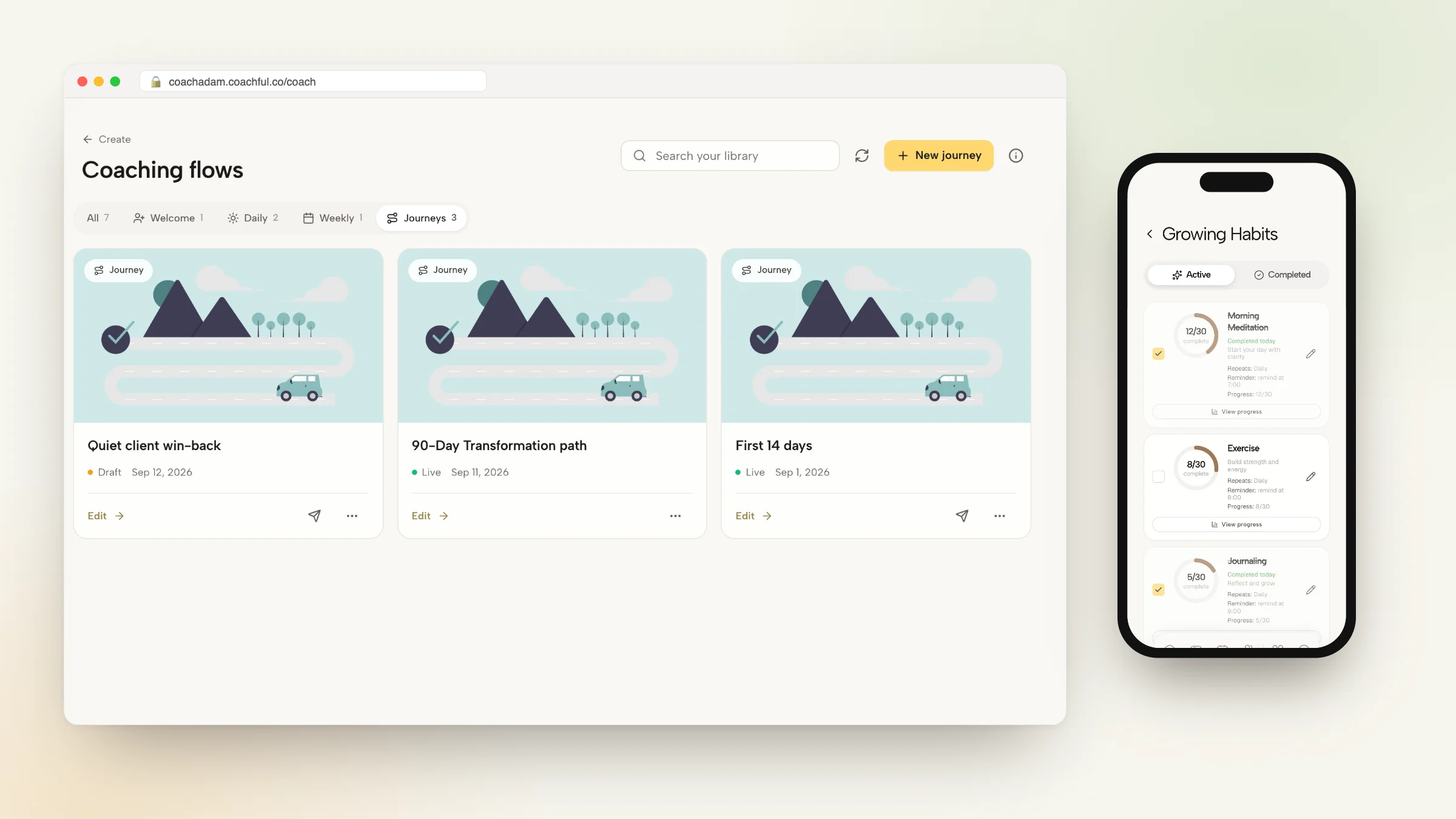
What to do: design the week first. One short weekly check-in that asks about energy, sleep, the habit and one win. A daily habit tick. A prep question before each session. Keep it in one place, so you both see the same picture, and so sensitive health details aren't spread across personal messaging apps. Our guide to keeping clients engaged between sessions has examples, and Coachful's client app keeps habits, check-ins, programs and messages together.

8. Measuring only the scale
Weight is easy to measure and emotionally loaded. If it's the only number you track, a two-week stall can wipe out a client's motivation even when everything else is improving: they're sleeping better, cooking more, walking daily and feeling less anxious at work.
What to do: agree three or four measures at the start that match the client's goal. Habit consistency (days the habit happened), a weekly energy or sleep rating, a practical marker (walking up the stairs without stopping, cooking dinner four nights a week), and, if they want it, a measurement their doctor tracks. Review them monthly rather than daily. Clients who can see progress in more than one place are less likely to quit during a plateau.

9. The 40-page lead magnet
To attract clients, the new coach writes a beautiful 40-page guide to gut health, designs it for weeks, and offers it on their website. Few people download it, fewer read it, and almost nobody books a call afterwards, because a long guide gives away the plan without starting a relationship.
What to do: offer one small, useful thing a person can use the same day: a seven-day meal guide, a one-page sleep reset checklist, a five-question energy audit. Deliver it by email, follow with a short sequence of three or four emails that each teach one idea and invite a call, and make booking easy. Our guides to creating a lead magnet and a lead magnet welcome sequence walk through it.

Have the site and free-guide funnel built for free
Coachful's team builds coaching websites, program pages and free-guide funnels, with the emails behind them, for free on every plan, inside your own account. Coachful itself is a paid subscription with a free trial. Open Funnels or Website and click Fill in a form on the "Want us to build it for you?" card. Say who the guide is for, what they get and what should happen next, and attach the guide as a file. A recent build for a menopause and midlife health coach starting from nothing produced a five-page site with every button leading to a free 20-minute consultation, with prices left for the coach to set. The team replies by email, usually within about 24 hours (typical, not guaranteed), and invents nothing: no credentials, health claims or testimonials. See what the free build covers, and the Coachful page for health coaches shows the rest of the setup.

10. No plan for the end
The program finishes, the client thanks you, and three months later most of the habits have faded, because the structure that held them up has gone. The client concludes that "it didn't work long term," and so might the people they would have referred to you.
What to do: build the ending into the program. In the last month, write a relapse plan with the client: their early warning signs, what they'll do on a bad week, and who they'll tell. Offer a lighter maintenance option, such as monthly check-ins or a group, so they have somewhere to go. Use an automated check-in a few weeks after the end to catch clients drifting before they're gone. Our guide to the renewal conversation covers timing.

The bottom line
New health coaches rarely fail for lack of knowledge. They stall because the practice around the knowledge is missing: a specific client, a program long enough for habits to form, one habit at a time, enough training without endless courses, a proper intake, clinicians to refer to, a designed week, more than one measure, a small lead magnet and a planned ending. Fix those, and the coaching you trained for has room to work. For the career path itself, see how to become a health coach, and for the skills, health coach skills.
Frequently asked questions
What is the biggest mistake new health coaches make?
Launching as a general wellness coach. Health and wellness is one of the most crowded coaching niches, and a general offer competes with apps on price. Naming one kind of client and one change makes you easier to choose and to refer.
How many habits should a health coach start a client with?
Usually one, chosen by the client and small enough to do on a bad day. Add the next habit once the first feels routine. Starting with several at once tends to overwhelm clients and leads to early dropout.
Should a health coach sell single sessions or programs?
Programs. Behavior change takes weeks to months, so most health coaches sell a three-month program, with a short reset as a first step and a monthly option afterwards. Coachful's report puts three-month programs at $900 to $2,000 in practitioner figures.
What should a health coach ask at intake?
Diagnosed conditions, medications, who treats them, recent changes, pregnancy and injuries, history with dieting or disordered eating, and the client's goals. For new exercise, a readiness questionnaire such as the PAR-Q+ helps decide whether medical clearance is needed first.
How do health coaches get referrals from doctors?
By staying clearly in scope and making it easy. Introduce yourself to a few clinicians in your niche with a one-page description of who you help and what you don't do, refer patients to them when appropriate, and communicate (with permission) when you work with someone they treat.
How many certifications does a health coach need?
One solid training route is usually enough to start. Choose an NBHWC-approved program if you want clinic or employer work, then add specialty courses only when real clients keep asking for something you can't yet help with. More certificates don't widen a coach's scope of practice.
Will Coachful build my health coaching website and funnel for free?
Yes. Coachful's team builds health coaching websites, program pages and free-guide funnels for free on every plan, inside your own account. Coachful is a paid subscription; the build costs nothing extra. The team replies with next steps, usually within about 24 hours.












