
9 Things to Know Before Becoming a Life Coach
The things to know before becoming a life coach are mostly about the parts of the job that happen outside the session: who actually buys, what the first year pays, how much of your week goes to finding clients, and what you do when a client brings you something that isn't coaching. The coaching itself is learnable in months. The business around it takes longer, and most people underestimate it.
This list is the lived-experience companion to our step-by-step guide on how to become a life coach. That guide covers training, credentials and setup in order; this one covers what surprises people once they start. If the website is the part you dread, Coachful's team will build it for you for free on every plan, which we come back to in item 9.
The 9 things at a glance
| # | What to know | What to do about it |
|---|---|---|
| 1 | Nobody searches for "a life coach"; they search for their problem | Name the problem in your first line |
| 2 | Most of the job is not giving advice | Record sessions (with consent) and count your questions |
| 3 | Clients will bring you things that aren't coaching | Write your referral script before client one |
| 4 | A certificate matters more to you than to most clients | Train for skill, not for the wall |
| 5 | Year one is mostly marketing, and the income shows it | Keep another income and block marketing hours |
| 6 | Clients pay for the week between sessions | Design the check-in before the session plan |
| 7 | Renewals and referrals make the business | Plan the renewal talk before the package starts |
| 8 | It's a lonely job, and doubt comes with it | Get peers, supervision or a mentor coach |
| 9 | The tools can swallow your first three months | Put everything in one place, or have it built |
1. Nobody searches for "a life coach"; they search for their problem
Picture the person you want to help at 11pm. They aren't typing "life coach near me." They're typing "how to stop people pleasing at work," "what to do after a divorce at 45" or "why do I feel stuck when everything is fine." Life coaching is a category you know about because you're entering it. Your future client mostly knows the problem.
Coachful's 2026 Coaching Business Report puts it bluntly: life coaching is "the easiest niche to enter and the hardest to monetise, because the outcome is the least measurable," with saturation rated extremely high and barriers to entry low (ICF Global Coaching Study 2025 and practitioner reports, as compiled in the report). The same report's small verified sample of published life coach session rates runs from $50 to $980, which tells you something: the spread isn't about talent alone. Coaches who name a specific change can charge for it.
What to do: write the first line of your website and your bio in your client's words, not coaching words. "For people rebuilding a normal week after a breakup" beats "Become your best self with holistic life coaching." Our coaching niches list has dozens of starting points, and you can test one with a small paid pilot before you commit.

2. Most of the job is not giving advice
New life coaches are usually the friend everyone already calls for advice. That's why they're drawn to the work, and it's the habit that gets in the way. A client asks, "Should I quit my job?" Your instinct is to weigh in. The coaching move is closer to: "What would have to be true for quitting to feel like the right call six months from now?"
The difference matters because advice moves the decision to you. If it goes badly, it was your idea; if it goes well, the client learned that they need you to decide. Coaching skills, the kind the ICF assesses in its credentials, are mostly about listening for what the client means, asking open questions and letting the silence do some work. It feels slow at first, and many new coaches describe the first months of training as unlearning.
A quick way to see where you are: record three practice sessions with permission, then count how many of your sentences were questions and how many were suggestions. Most beginners are surprised by the ratio. Our guide to core coaching skills breaks the craft into parts you can practice, and motivational interviewing questions are a useful set of open questions to borrow while you build your own. If you want the craft mistakes laid out in one place, see common coaching mistakes.
3. Clients will bring you things that aren't coaching
It happens sooner than people expect. Session three, a client who hired you for a career decision mentions they haven't slept properly in months, or that they drink most nights to switch off, or that they sometimes don't want to be here. None of that is a reason to panic. It is a reason to stop coaching the career question for a moment.
Life coaching isn't licensed in the US, the UK or Canada, which is exactly why the scope line is your job to hold. A coach works on goals, decisions and follow-through; diagnosing and treating depression, trauma or addiction belongs to licensed clinicians. Our explainer on life coach vs therapist draws the line in detail, and whether you need a license covers the legal side.
What to do before your first paying client:
- Write a scope clause in your agreement that says coaching isn't therapy and that you'll suggest other support if it's needed. Our coaching agreement template has wording.
- Build a referral list of two or three therapists and local services, and keep crisis numbers handy. In the US, the 988 Suicide and Crisis Lifeline takes calls and texts.
- Practice the sentence out loud: "What you just told me matters more than the plan we were working on. I'd like to help you find someone qualified to support you with it, and we can keep coaching alongside if that's right for you."
Our guide to trauma-informed coaching covers how to notice when a conversation has moved out of coaching.
4. A certificate matters more to you than to most clients
The evidence points two ways at once. Coachful's report notes that 73 percent of coaches say clients and organizations expect certification (ICF Global Coaching Study 2025). It also notes that in consumer coaching, client outcomes and testimonials carry more weight than credentials. Both are true. Employers, coaching platforms and corporate buyers check for credentials. A woman hiring a coach for life after divorce mostly checks whether you seem to understand her.
So train for the right reason. A good program teaches you the skill in item 2 far faster than books, gives you observed practice and feedback, and starts the clock on coaching hours if you later want an ICF credential. The report puts the average ACC holder's income at $63,000 a year, 21 percent above coaches without a credential (ICF 2025, as compiled), though some of that gap is experience, since the hours take years to collect.
What to avoid is the third and fourth certificate bought instead of the first clients. Pick one solid program, start practice clients while you train, and log every hour from day one. Before you pay for anything, read seven checks before you enroll, and compare options in the best life coach certification programs. Our piece on life coach qualifications covers what clients actually look for.
5. Year one is mostly marketing, and the income shows it
The published rates look encouraging. Coachful's 2026 report puts life coaches at $75 to $200 an hour (PayScale and practitioner reports) and $47,000 to $72,000 a year (PayScale, ZipRecruiter, Glassdoor). What it also shows is where new coaches sit: across coaching, people in their first year typically earn $20,000 to $30,000 (PayScale and practitioner reports), and the bottom quarter of the profession earns under $25,000, mostly part-time and early-stage (ICF 2025, PayScale and practitioner estimates).
The gap between a rate and an income is the hours you can't bill. An illustrative week for a part-time coach with four clients might look like this:
| Activity | Hours (illustrative) | Billable? |
|---|---|---|
| Client sessions | 4 | Yes |
| Prep, notes and between-session replies | 2 | No |
| Posting, writing and showing up where your clients are | 4 | No |
| Discovery calls and follow-ups | 2 | No |
| Admin: invoices, scheduling, bookkeeping | 1 | No |
That's a pattern, not a measurement, but most coaches recognize it. What to do: keep another income while the practice grows, put marketing hours on your calendar like sessions, and follow up every lead within a day. The full numbers are in our life coach salary guide and on coachingrates.com, and how long it takes to become a life coach lays out a realistic timeline.

6. Clients pay for the week between sessions
A client gets an hour with you and 167 hours without you. The breakthrough in session two fades by Thursday if nothing holds it in place. New life coaches tend to plan the sessions in detail and leave the week empty, then wonder why clients arrive saying "I didn't really get to it."
Clients rarely say this out loud, but the thing they value is that someone remembers. A short check-in on Wednesday, a single habit they tick each morning, a worksheet before the next call: small, regular contact keeps the work alive. It also gives you better sessions, because you start from what happened instead of a recap.
What to do: design the between-session rhythm before you design the session plan. One daily or weekly check-in, one habit, one prep question. Keep it light enough that a busy person will actually do it. Our guide to keeping coaching clients engaged between sessions has examples, and Coachful's client app puts habits, check-ins and worksheets on the client's phone.


7. Renewals and referrals make the business
A familiar scene keeps new coaches stuck at the starting line. A client finishes a three-month package, says it changed their life, and the coach says "Good luck, stay in touch." Then the coach goes back to finding a brand-new client from nothing.
Coachful's report puts renewal likelihood for consumer coaching at 35 to 50 percent, against 55 to 65 percent for corporate work. It also estimates that coaches who sell packages earn 40 to 60 percent more than hourly-billing coaches for the same hours (practitioner estimates). Put together: the money is in packages people finish happily, renew, and tell friends about. Typical life coaching packages in the report run from a four-week starter at $400 to $600 to a six-month engagement at $2,500 to $5,000 (practitioner reports).
What to do: decide what comes after the package before you sell the package. A lighter monthly option, a group, or a quarterly check-in gives a happy client somewhere to go. Raise it around two-thirds of the way through, as our guide to the renewal conversation explains, and ask for referrals at the moment a client tells you something worked. Our life coaching package examples show complete offers.

8. It's a lonely job, and doubt comes with it
Most life coaches work alone, often from home, holding other people's hardest conversations with no one to debrief with afterwards. Add a client who stops showing up, or a slow month, and the doubt arrives: "Who am I to coach anyone?" It's common enough that coaches joke about coaching clients through imposter syndrome while quietly having it themselves.
None of this means you're in the wrong job. It means the job needs support built in, the way therapists have supervision. Experienced coaches tend to have a peer group, a mentor coach or a regular supervision session, and they talk about tricky cases (anonymized) instead of carrying them.
What to do: find two or three coaches at your stage and meet monthly. Book mentor coaching, which you'll need for an ICF credential anyway. Keep a file of client wins and thank-you messages for the bad weeks. Our pieces on coach isolation and communities for life coaches cover where to look, and these questions for imposter syndrome work just as well turned on yourself.

9. The tools can swallow your first three months
The last surprise is the most avoidable one. New coaches often spend the first quarter building: a website on one tool, booking on a second, payments on a third, notes in a fourth, a spreadsheet tying them together. Every week spent there is a week not spent talking to people, which, as item 5 showed, is the real work of year one.
You need five things before the first paying client: a simple site, a booking link for a first call, a way to take payment, a signed agreement and somewhere for the between-session work. In Coachful those sit in one account and are included in your membership, from booking with calendar sync to payments through your own Stripe account with a 0% Coachful platform fee. The Coachful page for life coaches shows the full setup.
Have your website built for free
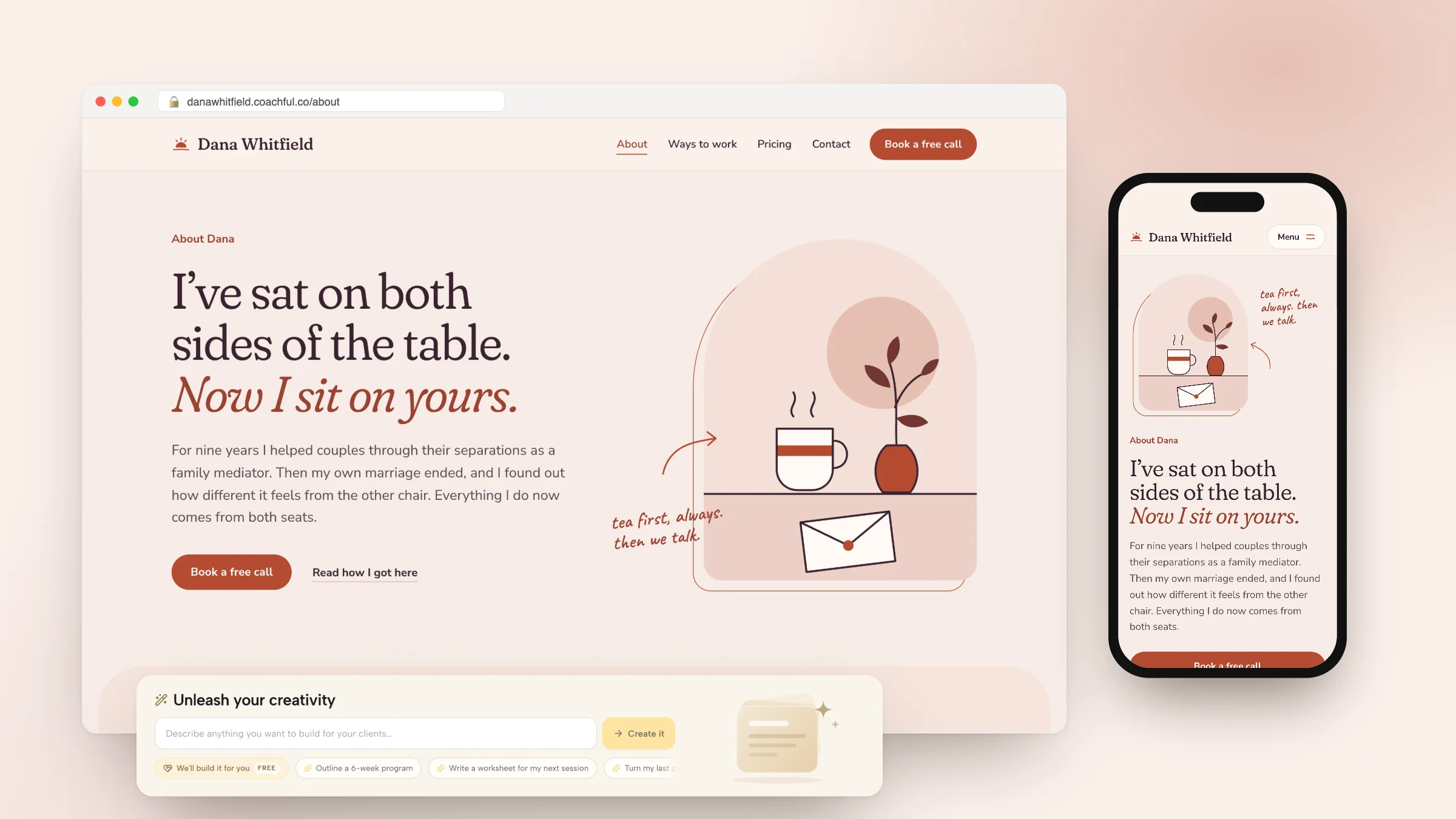
If the website is what stands between you and your first client, hand it over. Coachful's team builds coaching websites, offer pages and funnels for free on every plan, inside your own account. Coachful itself is a paid subscription, and you can start with a free trial. Open Website and click Fill in a form on the "Want us to build it for you?" card, or choose We'll build it for you · FREE under Create. Say which pages you want, what they should do and what visitors should do next, and add up to 8 links and 10 files.
The team replies by email with next steps, usually within about 24 hours, which is typical rather than guaranteed. Nothing gets invented: no credentials, testimonials or prices you don't have. The team doesn't design logos, record videos or run ads. Here's everything the free build covers.

The bottom line
Becoming a life coach is easier to start than almost any other coaching career and harder to make pay. The coaches who last tend to do the same few things early: they name one problem in their client's words, they learn to ask rather than advise, they hold the line on scope, they build the week between sessions, and they plan for renewals instead of chasing strangers. Before you start, read the mirror-image list of mistakes new life coaches make, then keep the step-by-step how to become a life coach guide open while you work through it.
Frequently asked questions
What should I know before becoming a life coach?
Know that clients buy a specific change rather than "life coaching," that the first year is mostly spent finding clients, and that some clients will bring problems that need a therapist. Know too that a training program builds the skill, but fit, results and referrals are what most individual clients judge you on.
Is becoming a life coach worth it?
It can be, if you're patient with the business side. Coachful's 2026 report puts life coaches at $47,000 to $72,000 a year (PayScale, ZipRecruiter, Glassdoor), while coaches in their first year typically earn $20,000 to $30,000. Most start part time and grow through packages, renewals and referrals.
How long does it take a new life coach to get clients?
Most new coaches sign their first paying clients from people who already know them, often within the first few months of offering coaching. Building a steady practice usually takes a year or more. Our guide to getting life coaching clients covers the first channels to try.
Do I need a certification before I start coaching?
No. Life coaching isn't licensed in most countries. A good training program is still worth it for the skill, and it starts your ICF hours if you want a credential later. Employers and coaching platforms are more likely to require one than individual clients.
What is the hardest part of being a life coach?
For most coaches it's the business, not the sessions: finding clients consistently, pricing with confidence and keeping clients past their first package. The emotional side is the other hard part, which is why experienced coaches build in peer support or supervision.
Can I be a life coach part time?
Yes, and most people start that way, coaching a few clients in the evenings or on weekends while keeping a job. Our profile of the part-time life coach shows what that path looks like.
Will Coachful build my life coaching website for free?
Yes. Coachful's team builds coaching websites, offer pages and funnels for free on every plan, inside your account. Fill in the request form from the Website page or Create, and the team replies with next steps, usually within about 24 hours. Coachful is a paid subscription; the build itself costs nothing extra.












